Standardized Testing Protocols for Packaging Barrier Protection against Photodegradation
Packaging light barrier protocols mandate USP 661.2 spectral transmittance below ten percent to prevent costly photo-degradation shelf life chargebacks.


Ray
Photodegradation begins when light energy absorbed by packaged contents triggers photolytic reactions. Direct sunlight and indoor retail lighting emit photons across the ultraviolet range from 290 nm to 400 nm and the visible spectrum from 400 nm to 700 nm. When light-sensitive active ingredients, food lipids, or cosmetic emulsions absorb this energy, covalent bonds break, forming free radicals that degrade product color, viscosity, and chemical potency.
Spectral Energy Absorption Mechanisms
Photo-oxidation occurs mainly when packaging transmits wavelengths that match the absorption bands of the enclosed product. Riboflavin in dairy products, for example, shows peak absorption at 446 nm, whereas pharmaceutical actives like nifedipine break down quickly under exposure to radiation below 450 nm. Resin formulations using high-density polyethylene or amber polyethylene terephthalate often include organic UV absorbers or carbon black to reduce photon penetration.
Clear glass offers no shielding against ultraviolet radiation.
Evaluating packaging light barriers begins by measuring spectral transmittance across ultraviolet and visible wavelengths using a spectrophotometer with an integrating sphere. Standard USP 661.2 sets strict transmission limits for light-resistant plastic packaging systems in pharmaceutical distribution: transmittance between 290 nm and 450 nm cannot exceed 10 percent for containers under 100 mL, or 5 percent for larger industrial formats.
USP 661.2 limits spectral light transmission to less than 10 percent between 290 nm and 450 nm for light-resistant plastic packaging systems.
Unstable organic molecules break down rapidly under direct light exposure.
When barrier materials fail to block critical spectral bands, photodegradation creates off-flavors, toxic photoproducts, and degraded active pharmaceutical ingredients. Packaging engineers evaluate both total transmittance and direct light scattering to confirm protection against photolytic breakdown. Over-specifying opaque barriers adds unnecessary container production costs, while under-specifying exposure tolerance leads to rapid product expiration in downstream supply channels.
Simulation
Accelerated laboratory stress testing speeds up light degradation, compressing months of real-world shelf stability testing into weeks. Inside environmental control cabinets, artificial radiation sources reproduce solar exposure and commercial indoor lighting under set temperature and humidity levels.
Xenon Arc and Fluorescent UV Exposure Regimes
Standard ASTM G155 details procedures for operating xenon arc test apparatuses on non-metallic materials. Filtered xenon arc lamps match daylight spectral power distributions more closely than carbon arc lamps or fluorescent tubes. Daylight filters cut off short UV wavelengths below 290 nm to simulate natural terrestrial sunlight, while window glass filters adjust the spectrum to replicate conditions inside retail display cases or warehouses.
Filtered xenon arc lamps provide a close match to natural sunlight.
Fluorescent UV test units operating under ASTM D4329 and ISO 4892-3 use UVA-340 lamps to simulate shortwave solar radiation. Peak output occurs at 340 nm, making these units effective for screening polymer matrix photo-oxidation and packaging yellowing. While fluorescent equipment costs less to operate than xenon rigs, it lacks visible light spectrum output, limiting its value when evaluating food dye bleaching or photosensitive active ingredient decay.
Optical filters isolate specific spectral ranges for targeted exposure testing.
| Protocol Designation | Radiation Source | Spectral Range | Irradiance Setting | Chamber Temperature |
|---|---|---|---|---|
| ASTM G155 Cycle 1 | Filtered Xenon Arc | 290 nm to 800 nm | 0.35 W/m² at 340 nm | 63°C Black Panel |
| ISO 4892-2 Method A | Xenon Arc with Daylight Filter | 300 nm to 400 nm | 60 W/m² at 300-400 nm | 65°C Black Standard |
| ASTM D4329 Cycle A | UVA-340 Fluorescent Tube | 290 nm to 360 nm | 0.89 W/m² at 340 nm | 60°C Black Panel |
| DIN 53387 Protocol B | Xenon Arc with Inner/Outer Glass | 300 nm to 800 nm | 0.51 W/m² at 340 nm | 55°C Black Panel |
Environmental Chamber Parameter Calibration
Accurate irradiance monitoring requires radiometers calibrated against national standards institutes. Black panel thermometers track sample surface heating from infrared radiation absorption, while relative humidity controls maintain setpoints between 30 percent and 80 percent to simulate ambient distribution conditions across varied climate zones.
Standard colorant additions do not guarantee protection from photolytic degradation unless supported by spectral transmission data across the critical 400 nm to 500 nm visible light band.

Assay
Measuring photolytic damage involves evaluating both physical packaging integrity and the chemical degradation of the enclosed contents. Standard ICH Q1B protocols define photostability testing criteria for new drug substances and products, splitting exposure requirements into two option categories.
Chemical and Physical Degradation Indicators
Option 1 employs light sources with broad output across both UV and visible spectrums, such as xenon or metal halide lamps. Option 2 exposes samples to a cool white fluorescent lamp delivering minimum 1.2 million lux hours alongside a near-ultraviolet lamp emitting minimum 200 watt hours per square meter.
Photons in the visible spectrum can also trigger catalytic degradation pathways.
Evaluating light-barrier efficacy relies on three primary analytical endpoints:
- Peroxide Value Titration measures lipid oxidation rates in edible oil formulations exposed to visible and ultraviolet light bands.
- High-Performance Liquid Chromatography determines percentage loss of photosensitive active pharmaceutical ingredients following standardized radiation dosage exposure.
- Spectrophotometric Colorimetry quantifies surface delta E color shifts in packaging films and transparent liquid formulations over time.
Packaging that attenuates ultraviolet wavelengths remains vulnerable if visible spectrum wavelengths trigger catalyst reactions in sensitive active ingredients.
Adding barrier materials increases overall resin formulation costs.

Worked Example of Barrier Degradation Arithmetic
Take a 500 mL clear polyethylene terephthalate bottle containing a photosensitive lipid emulsion. The unshielded liquid exhibits a photolytic breakdown threshold of 15,000 lux hours, beyond which peroxide value exceeds acceptable limits of 10 milliequivalents per kilogram. Standard retail display lighting supplies 1,000 lux per hour continuous illumination over a 14-hour daily operating window.
Without packaging light barriers, the product reaches its degradation threshold in 15 days on shelf. Incorporating a 1.5 percent titanium dioxide masterbatch reduces total light transmission across the 380 nm to 550 nm spectrum from 88 percent down to 6 percent. Transmitted illumination inside the bottle drops to 60 lux per hour under identical retail lighting.
Daily light exposure inside the protected bottle equals 840 lux hours per day. Dividing the 15,000 lux hour photolytic threshold by 840 lux hours yields a shelf life of 17.8 days under unshielded continuous display, or 178 days when taking into account the 94 percent light reduction provided by the barrier container. Calculating true commercial shelf life requires multiplying baseline stability by the reciprocal of the packaging transmission percentage across the target degradation spectrum.
Overall light protection correlates inversely with spectral transmittance curves across targeted degradation wavelengths.

Pallet
Light exposure profiles change as goods move through supply chain stages. Primary packaging sits enclosed within corrugated shipping cartons during transport, shielding contents from solar UV and ambient light. Storage warehouses, however, often use high-bay LED or metal halide lights operating continuously at elevated lux levels.
Corrugated outer boxes shield contents from direct light during transit.

Distribution Chain Exposure Realities
Unshielded stock frequently fails shelf-life testing when exposed during staging.
Break-bulk distribution centers strip secondary outer packaging to assemble mixed store orders. Pallets waiting in staging areas experience exposure to direct sunlight near open dock bays or overhead commercial lighting arrays. Film-wrapped pallets using transparent stretch film provide zero protection against ultraviolet or visible light degradation.

How Does Retail Light Exposure Compare to Accelerated Test Chambers?
Retail displays subject products to prolonged lighting designed for visibility rather than preservation. Modern supermarket end-cap displays utilize high-density LED fixtures emitting high intensity blue wavelengths around 450 nm, accelerating photo-oxidation in transparently packaged goods.
| Supply Tier Location | Dominant Light Source | Lux Level Range | Dominant Wavelength Spectrum | Protection State |
|---|---|---|---|---|
| Transit Container | Enclosed Dark | 0 lux | None | Fully Enclosed Carton |
| Distribution Warehouse Staging | High-Bay Metal Halide | 300 to 750 lux | 380 nm to 780 nm | Clear Stretch Film |
| Retail Supermarket Shelf | Cool White Fluorescent | 750 to 1,500 lux | 400 nm to 700 nm | Primary Pack Display |
| Retail Feature End-Cap | High-Intensity LED Spotlights | 2,000 to 5,000 lux | 440 nm to 460 nm Peak Blue | Bare Container Exposure |
Retail display cases frequently expose products to high-intensity blue light.
Failing to mandate outer carton retention during retail storage voids barrier performance guarantees under standard ISO 11607 transit packaging agreements.
Standard packaging supply agreements state that light barrier warranties apply exclusively while products remain inside opaque outer shipper cartons prior to final retail display stocking.


Liability
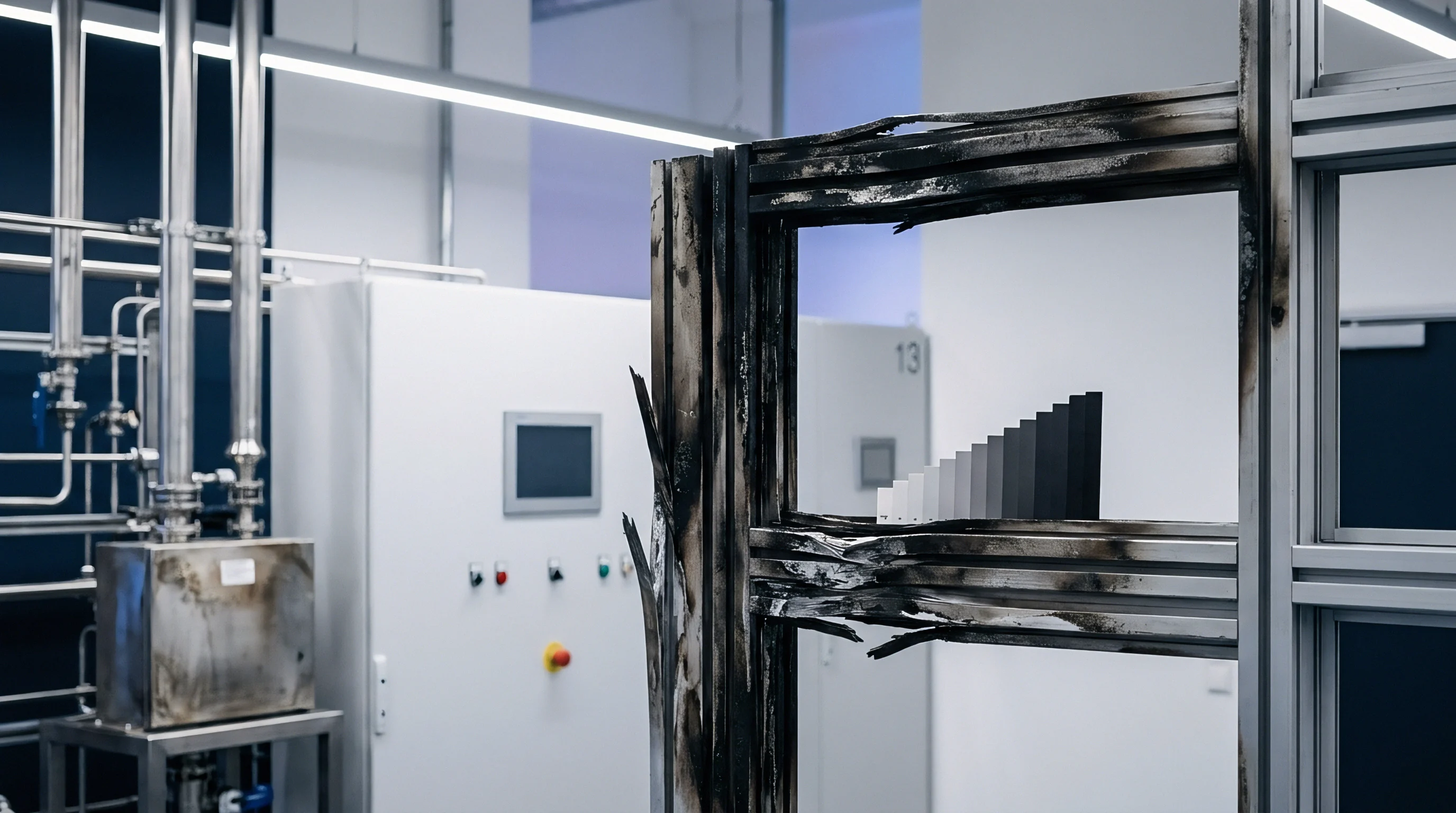
Inadequate light protection can lead to severe commercial losses across distribution networks. When light exposure causes color shifting, active ingredient potency decay, or off-flavor generation, retail buyers issue chargebacks, reject incoming shipments, and enforce delisting penalties against brand owners.
Unintended color shifts often lead to immediate shipment rejections.
Distributors routinely reject off-color liquid lots during intake inspection.
Commercial Penalty Structures for Photolytic Failure
Retail supply agreements assign full commercial financial responsibility for off-spec stock to the brand owner or master distributor. When quality assurance audits detect photolytic degradation, chargebacks land on remittance statements without advance notice.
Financial recovery mechanisms for light-induced quality failures include key operational chargeback types:
- Landed Cost Rejection recoups wholesale product cost, customs tariffs, freight charges, and port handling fees for degraded inventory.
- Rework and Repackaging Fees pass back labor costs incurred when replacing damaged primary packaging or adding outer protective sleeves.
- Hazardous Disposal Deductions bill suppliers for environmental destruction costs associated with degraded chemical or pharmaceutical stock.
- Administrative Delisting Charges assess financial penalties when shelf quality failures force immediate removal of SKUs from retail assortments.
Unplanned quality deductions rapidly erode net operating margins.
Distributors charge full landed cost plus destruction fees when light exposure alters product color beyond agreed lab tolerances.
Who bears the financial loss when a retailer strips outer shipping cartons early, exposing photosensitive goods to store lighting levels that exceed agreed technical specification parameters?

Dossier
Technical compliance documentation connects packaging engineering specifications with international trade enforcement. A comprehensive packaging qualification dossier establishes proof of light barrier protection under standardized laboratory conditions, protecting suppliers against unauthorized product returns and regulatory compliance actions.

Technical Compliance Documentation Steps
Building a valid light barrier compliance file requires completing specific verification steps across the supply chain:
- Spectrophotometric analysis records spectral transmission curves from 290 nm to 700 nm for all primary container components.
- Standardized accelerated exposure testing according to ASTM G155 or ISO 4892-2 confirms polymer matrix photo-stability under maximum expected light dosages.
- Active ingredient potency testing via HPLC validates chemical recovery percentages post-exposure in accordance with ICH Q1B options.
- Certificates of Analysis document UV absorber masterbatch loading concentrations per resin lot prior to blow molding or thermoforming operations.
- Final container qualification dossiers enter secure digital archives, serving as legal evidence of technical compliance during international customs audit reviews and commercial supply disputes.
Spectrophotometric testing logs exact light transmission rates across target spectra.
Technical dossiers must contain signed validation protocols matching production lot numbers to raw material spectral transmission reports. Brand owners submit these dossiers to regulatory bodies and enterprise retail procurement desks to prove packaging compliance before initial purchase orders clear financial approval filters.