Cryogenic Guarded Hot Plate Measurement Protocols for Polymer Matrices
Cryogenic guarded hot plate testing demands active load compensation and microvolt guard balancing to prevent interface contraction and edge leak measurement error.
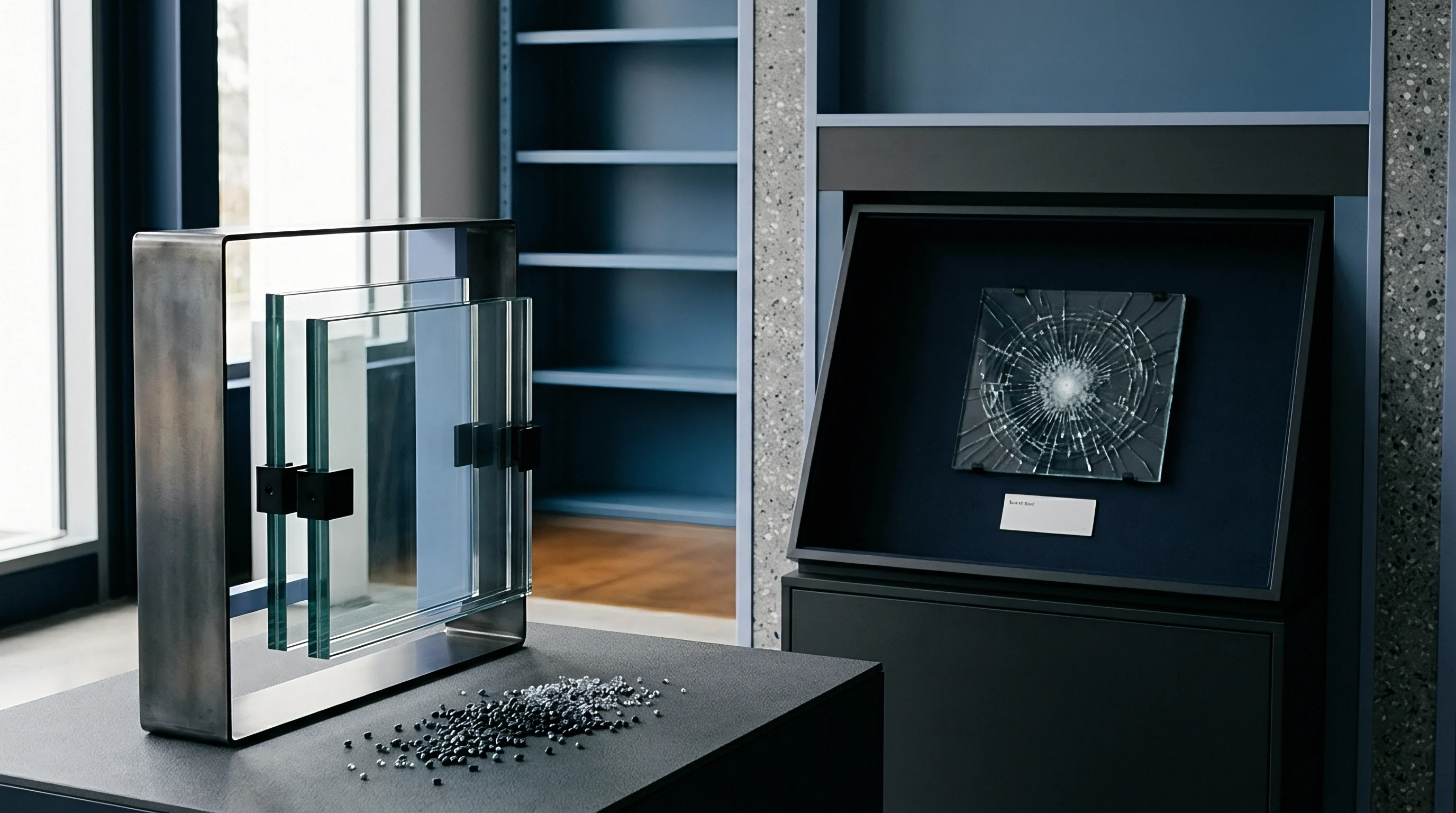

Plate
Liquid helium boil-off monitors record 4.2 kelvin across the auxiliary cold sink while metering instrumentation registers a 12-milliwatt electrical balance across the central specimen zone. Solid polymer specimens, including neat amine-cured epoxies and polyetheretherketone matrices, present thermal conductivities between 0.08 and 0.25 W/(m·K) at liquid nitrogen temperatures, dropping below 0.03 W/(m·K) as temperatures approach absolute zero. Obtaining defensible readings at these boundaries requires direct heat flux metering through a guarded hot plate assembly built inside a high-vacuum chamber.
Commercial buyers qualifying composite structural struts, tank liners, or potting formulations for orbital payloads evaluate these figures to prevent cryogenic fuel boil-off or structural fracture. Thermal conductivity plummets near liquid helium.
Guarded central heater power at 4.2 kelvin yields valid thermal conductivity only when secondary boundary offset stays under two millikelvin.
Steady-state guarded hot plate testing at cryogenic boundaries operates under ASTM C177 and ISO 8302, yet standard bench configurations built for building insulation fail when dropped into a cryostat. Cryogenic systems place the primary metering heater between two identical polymer specimens, surrounded by a coplanar guard ring heater designed to eliminate radial heat flow. Outer secondary heat sinks receive cooling from liquid helium or closed-cycle Gifford-McMahon cryocoolers.
At 10 kelvin, radiative heat transfer diminishes, whereas conductive solid-state contact resistances escalate exponentially due to matrix stiffening and differential thermal contraction between metallic cold heads and organic polymers.

Primary Metering Geometries and Thermal Boundary Conditioning
Instrumentation designed for sub-ambient polymer characterization uses either a double-sided symmetric configuration or a single-sided guarded arrangement. The double-sided layout sandwiches the central electrical heater between two matched test specimens of identical thickness and composition, bounded on the outer faces by liquid-cryogen-cooled heat sinks. This design establishes bidirectional axial heat dissipation, bisecting the supplied electrical power between the two test disks.
Symmetrical heat generation depends on identical surface finishes, identical mechanical clamping pressure, and precise matching of specimen density. Squeezing both sides equally prevents heat from disproportionately channeling into one boundary.
Single-sided configurations introduce an active back-guard heater directly beneath the primary metering disc, directing the entire measured power output through a single polymer specimen into an upper cold sink. This geometry simplifies sample mounting for expensive aerospace matrices where machining two identical, void-free specimens proves difficult. Back-guard assemblies demand tighter active control loops: any temperature difference across the separator substrate drives parasitic heat leakage directly away from the test matrix, corrupting the Fourier conduction equation.
Helium consumption escalates rapidly below twenty kelvin.
| Thermal Regime | Cooling Mechanism | Metering Power Range | Guard Gap Tolerance | Typical Matrix Conductivity |
|---|---|---|---|---|
| Liquid Helium (4.2 K to 20 K) | Continuous-flow liquid helium or pulse-tube stage | 0.05 mW to 5.0 mW | ±1.5 mK | 0.015 to 0.055 W/(m·K) |
| Liquid Nitrogen (77 K to 120 K) | Boiling nitrogen reservoir or secondary copper strap | 10.0 mW to 150.0 mW | ±10.0 mK | 0.110 to 0.280 W/(m·K) |
| Intermediate Dry Ice (195 K to 240 K) | Sublimation bath or single-stage Stirling unit | 200.0 mW to 1.20 W | ±50.0 mK | 0.180 to 0.380 W/(m·K) |
| Sub-Ambient Transition (250 K to 293 K) | Chilled recirculating ethanol loop | 500.0 mW to 3.50 W | ±100.0 mK | 0.220 to 0.450 W/(m·K) |
Guard ring gap design directly dictates measurement certainty in low-conductivity resins. The gap width separating the central metering area from the concentric guard ring cannot exceed the specimen thickness divided by eight, maintaining planar, unidirectional heat flux across the metering zone. Copper surfaces warp under uneven torque.
Differential thermal contraction between the copper guard ring and the internal ceramic heater core induces mechanical strain at 77 kelvin, shifting electrical resistance calibrations unless four-wire Kelvin connections monitor the heater traces continuously.
When the guard ring temperature drifts higher than the central heater by even five hundredths of a kelvin, edge-driven heat funnels inward into the polymer specimen, falsely deflating the recorded thermal conductivity figure. Balanced thermal fields require proportional-integral-derivative controllers tuned specifically to the slower thermal diffusion time constants of glassy polymers. Unfilled epoxies display glass transition shifts.
Steady-state equilibrium at cryogenic temperatures requires between four and fourteen hours per setpoint, converting a six-point temperature sweep into a multi-day test sequence.
Thinner sample geometries accelerate equilibrium while multiplying contact resistance errors at every mechanical joint.


Stack
Mechanical assemblies inside the cryostat endure profound dimensional distortion as temperature drops from ambient assembly conditions down to cryogenic baselines. A polymer specimen with an ambient thermal expansion coefficient of 50 × 10⁻⁶ K⁻¹ shrinks substantially more than oxygen-free high-conductivity copper plates, which contract at roughly 16 × 10⁻⁶ K⁻¹ over the same span. Clamping mechanisms designed without active load compensation loosen during cooling, introducing microscopic vacuum gaps across the measurement interface.
In a high-vacuum chamber operating below 10⁻⁴ pascal to suppress gas convection, an unbonded interface behaves like a radiation barrier, destroying axial heat flow.

Does Differential Contraction Compromise Interface Conductance?
Surface roughness and planarity deviations dominate the interfacial contact resistance between rigid polymers and metallic cold plates. At ambient temperature, mechanical clamping pressures of 0.2 to 0.5 megapascals deform surface asperities on relatively compliant polymer faces, establishing solid-to-solid contact points. Cooling a neat epoxy or polyimide below its secondary glass transition temperature, typically occurring between 140 and 200 kelvin, drives the storage modulus upward from 3 gigapascals to over 8 gigapascals.
The matrix hardens into an unyielding glassy slab that resists mechanical conformity. Neat resins contract sharply upon freezing.
Differential thermal contraction strips mechanical contact pressure unless spring-loaded bellows maintain continuous axial force throughout thermal drawdown.
Interfacial filler materials resolve microscopic boundary gaps but introduce secondary measurement liabilities at cryogenic temperatures. Standard silicone heat sink compounds crack, pulverize, and outgas into the vacuum space during thermal cycling, depositing siloxane contaminants onto cryostat radiation shields. Pure 99.99 percent indium foil, rolled to a thickness of 0.05 to 0.10 millimeters, serves as the standard compliant boundary layer between the specimen faces and the copper hot and cold plates.
Indium retains substantial ductility down to 4 kelvin, flowing plastically under mechanical pressure to fill interfacial voids.
The sequence for preparing and loading a cryogenic polymer specimen ensures boundary continuity without crushing the matrix:
- Surface lapping processes polish both faces of the polymer disc to a flat profile within five micrometers across a fifty-millimeter diameter, verified with optical flat tooling before chemical degreasing.
- High-purity indium foil discs undergo chemical etching in dilute nitric acid to strip native surface oxide films, followed immediately by rinsing in dry isopropanol and vacuum desiccation.
- Specimen discs, indium contact foils, and copper plate faces are stacked coaxially inside an alignment jig, avoiding lateral shear forces that wrinkle thin compliant foils.
- Pre-calibrated Belleville disc spring washers are installed onto axial tie rods, transferring an ambient pre-load of 0.8 megapascals directly through the vertical sample stack.
- The cryostat chamber undergoes rough pumping down to one pascal, followed by turbomolecular evacuation to reach a base pressure below 5 × 10⁻⁵ pascal prior to introducing liquid refrigerants.
- Cryogenic cooldown proceeds at a rate limited to two kelvin per minute, preventing thermal shock fracturing across brittle thermoset resin networks.
Indium foils gall under repeated cycling. The yield strength of indium climbs from roughly 1.6 megapascals at 293 kelvin to more than 15 megapascals at 77 kelvin, requiring adequate pre-compression during the initial room-temperature assembly phase. If the clamping bolt tension relaxes due to frame contraction, the stiffened indium foil cannot re-seat against the hardened polymer face.
Axial heat paths dominate steady state.
Thin vacuum grease formulations based on chlorofluorocarbons or specific low-temperature hydrocarbon greases provide alternatives for fragile, thin-film polymer matrices incapable of bearing high compressive loads. These greases must be applied in controlled layers under ten micrometers thick. Excessive grease thickness forms a low-conductivity parasitic layer whose thermal resistance rivals that of the polymer test coupon itself.
Omitting interface resistance calibration results in reported bulk conductivities that miss actual performance by up to forty percent, causing catastrophic thermal runaway or component overcooling in deployed hardware.


Gradient
Fourier’s one-dimensional rate equation governs thermal characterization in the guarded hot plate, expressing conductivity as the ratio of metered electrical power to the product of specimen cross-sectional area and temperature difference across the thickness. Establishing an accurate temperature drop across a low-conductivity polymer matrix at cryogenic levels presents severe experimental hazards. If the imposed temperature difference across a five-millimeter polymer disc is set too small, sensor resolution noise corrupts the calculated conductance.
If the temperature difference exceeds ten percent of the absolute setpoint, temperature-dependent conductivity curves smear across the measured interval, obscuring phononic transport thresholds.

Will Lateral Heat Leak Invalidate Guard Balance?
Guard heaters must maintain planar, strictly axial isotherms across the specimen radius. In polymer matrices filled with conductive particles, such as boron nitride, aluminum oxide, or carbon nanotubes, thermal conductivity anisotropic ratios often exceed ten to one between through-plane and in-plane axes. Anisotropic matrices exacerbate lateral heat diversion toward the guard gap if even slight thermal imbalances emerge.
Guard balance drifts over twelve hours. Precision differential thermocouples or calibrated resistance temperature detectors spanning the guard gap must maintain a zero-voltage balance.
Calibrated differential thermopiles must resolve guard ring imbalances to within five microvolts to prevent edge heat leakage from distorting raw polymer flux readings.
Parasitic heat transfers bypass the polymer specimen through sensor lead wires, heater wiring, and structural support struts. Fine-gauge phosphor-bronze or manganin wiring with low thermal conductivity replaces standard copper wiring for all sensor connections entering the cryogenic guarded hot plate stage. All lead wires must wrap around dedicated thermal heat-sinking posts thermally anchored to the guard ring or intermediate thermal shields before landing on the primary heater stage.
Skipping this thermal intercept step allows room-temperature ambient heat from feedthrough ports to travel down the copper wire cores straight into the metered zone.
Systematic measurement distortions originate across several identifiable mechanical and radiative mechanisms:
- Sensor self heating occurs when excitation currents across germanium or ruthenium oxide resistance sensors dissipate excessive electrical power, generating local temperature rises that register as elevated specimen boundary temperatures.
- Radiation shielding failure develops when the external multi-layer insulation blanket or thermal radiation shield runs hotter than the guard ring, radiating infrared energy directly across the exposed perimeter of the polymer disc.
- Sensor wire conduction channels parasitic heat from warmer exterior feedthrough flanges down metallic lead wires, discharging energy into the central metering disc independently of the regulated power supply.
- Lateral gap convection manifests inside degraded vacuum spaces above 0.1 pascal, allowing residual gas molecules to transfer sensible heat across the concentric separation channel between the primary and guard rings.
- Microcracking damage forms inside unreinforced glassy polymers subjected to rapid thermal transients, severing conductive phononic paths and causing anomalous drops in thermal transport during sequential cooldown sweeps.

Edge Loss Corrections and Vacuum Chamber Coupling
Edge losses from the outer boundary of the guard ring to the cold cryostat enclosure modify the radial temperature profile within the guard itself. Mathematical corrections documented in ASTM C177 model the two-dimensional heat equation across the test sandwich, accounting for specimen thickness, edge insulation, and the ambient environment temperature inside the shroud. In cryogenic guarded plates, edge insulation rarely uses fiber bats or loose powders due to outgassing and vacuum compatibility issues.
Highly polished gold-plated copper radiation shields operating at an actively controlled intermediate guard temperature enclose the entire hot plate assembly.
Radiation shields intercept lateral chamber heat. Uncontrolled radiant coupling between a room-temperature chamber wall at 293 kelvin and a guarded hot plate stage idling at 77 kelvin introduces a radiative heat flux of roughly 400 watts per square meter, calculated using the Stefan-Boltzmann relationship for blackbody surfaces. Polished gold surfaces with an emissivity of 0.02 cut this radiative load down to eight watts per square meter, shielding the delicate milliwatt-scale primary measurement zone.
The test run stops immediately.
| Polymer Matrix System | Filler Concentration (wt%) | Mean Temperature (K) | Apparent Conductivity W/(m·K) | Boundary Correction Factor |
|---|---|---|---|---|
| Bisphenol-F Epoxy (Neat) | 0% | 10.0 | 0.032 ± 0.003 | 1.14 |
| Bisphenol-F Epoxy (Neat) | 0% | 77.0 | 0.145 ± 0.008 | 1.06 |
| Bisphenol-F Epoxy (Neat) | 0% | 200.0 | 0.210 ± 0.011 | 1.02 |
| Al₂O₃ Filled Epoxy | 35% | 10.0 | 0.088 ± 0.006 | 1.22 |
| Al₂O₃ Filled Epoxy | 35% | 77.0 | 0.480 ± 0.024 | 1.09 |
| Al₂O₃ Filled Epoxy | 35% | 200.0 | 0.890 ± 0.040 | 1.04 |
| Cyanate Ester Matrix | 0% | 77.0 | 0.160 ± 0.009 | 1.05 |
| PTFE (Polytetrafluoroethylene) | 0% | 77.0 | 0.240 ± 0.012 | 1.08 |
At temperatures below 20 kelvin, heat capacity in non-metallic solids falls as the cube of the absolute temperature, following the Debye model. Because polymer matrices exhibit vanishingly small volumetric heat capacities at liquid helium temperatures, minute power surges from electrical noise induce rapid thermal spikes, making steady-state temperature regulation extraordinarily sensitive to environmental vibration and instrumentation grounding. Vacuum seals degrade after thermal cycling.
Whether phononic mean free path saturation inside amorphous polymer networks creates a true plateau in apparent thermal conductivity between 5 and 15 kelvin remains an active point of divergence across international metrology laboratories.


Discrepancy
Commercial material datasheets frequently advertise thermal performance measured at ambient room conditions or rely on transient optical techniques that produce inflated numbers when extrapolated downward. A supplier quoting an aerospace grade potting resin might publish a thermal conductivity of 0.35 W/(m·K), hiding the reality that the property was evaluated at 25 degrees Celsius via laser flash analysis. When that same formulation serves as an electrical isolator in a liquid hydrogen valve operating at 20 kelvin, actual thermal conductivity drops by more than eighty percent.
Raw resin pellets exhibit batch variations.

Datasheet Flattery and Transient Method Divergence
Laser flash analysis according to ASTM E1461 measures thermal diffusivity through a thin disc, calculating thermal conductivity by multiplying diffusivity by mass density and specific heat capacity. At ambient temperatures, this transient approach generates fast, reliable data. When applied inside cryogenic cryostats, laser flash encounters catastrophic systematic errors when testing unfilled or lightly filled polymers.
Semi-transparent matrices permit direct optical penetration of the incoming laser pulse, depositing heat beneath the surface rather than purely at the front face. Calculating specific heat capacity via differential scanning calorimetry below 77 kelvin introduces independent measurement errors exceeding fifteen percent, compounding errors in the derived thermal conductivity figure.
A contract line specifying guarded hot plate characterization per ASTM C177 at liquid helium temperature eliminates transient analytical discrepancies before composite tool release.
Transient plane source and transient hot-wire techniques experience comparable pitfalls when deployed at sub-ambient baselines. The sensor probe acts simultaneously as heat source and temperature monitor, surrounded by a thin protective polymer coating such as Kapton. At 20 kelvin, the thermal contact resistance between the Kapton-clad sensor and the solid polymer specimen dominates the short-duration temperature response curve, falsely registering as a lower thermal diffusivity unless the operator employs advanced multi-parameter non-linear curve fitting models.
Steady-state guarded hot plate testing measures heat flux and temperature gradient directly across a macro-scale thickness, avoiding the algorithmic assumptions of transient mathematical models.

Screening Thresholds for Production Resin Qualification
Engineering departments validating cryogenic insulation must identify which thermal test data warrants commercial rejection. Consider a satellite propulsion contractor procuring structural standoffs made of custom glass-fiber reinforced epoxy composites. The thermal insulation budget limits total conductive heat leakage from the fuel tank to five watts across a cross-sectional area of 0.02 square meters over an operational gradient spanning 20 kelvin to 100 kelvin.
Cryogenic sensors lose calibration below seventy kelvin.
Thermal resistance calculations expose the financial danger of testing errors. The conductive heat transfer rate through a uniform component is governed by the integral form of Fourier’s law:
Q = (A / L) · ∫ λ(T) dT
where Q represents heat leakage in watts, A is cross-sectional area, L is length, and λ(T) is thermal conductivity as a function of temperature. Assume a standoff geometry where L equals 0.05 meters and A equals 0.02 square meters. If the material supplier provides an idealized constant room-temperature conductivity of 0.30 W/(m·K), the calculated heat leak across an 80 kelvin gradient (20 K to 100 K) equals:
Q_nominal = (0.02 / 0.05) · 0.30 · (100 – 20) = 9.60 watts
To meet the 5.0-watt thermal budget, the engineering team lengthens the strut to 0.096 meters, adding 1.2 kilograms of parasitic structural mass to the airframe. Guarded hot plate cryogenic measurement across the exact operating span reveals that the true mean integrated conductivity of the matrix is 0.12 W/(m·K):
Q_measured = (0.02 / 0.05) · 0.12 · (100 – 20) = 3.84 watts
The original component length of 0.05 meters actually complied with the thermal specification without modification. Over-designing the strut added launch mass costs priced at roughly 20,000 dollars per kilogram in commercial launch environments, generating 24,000 dollars in unnecessary payload penalties per support strut simply because the initial design used room-temperature supplier datasheets. Rejection penalties hit invoice balances directly.
Procurement dossiers for high-consequence cryogenic matrix qualifying must verify several raw data parameters before accepting certified test reports:
- Raw differential thermopile data demonstrating that the guard-to-metering gap voltage remained centered on zero microvolts throughout the dwell cycle.
- Direct interface pressure logs proving that mechanical clamping was maintained dynamically as the specimen contracted during cooldown.
- Specimen thickness verification measuring actual post-test thickness at room temperature to detect mechanical creep or compressive crushing under clamp loading.
- High vacuum readouts confirming that chamber vacuum remained lower than 10⁻⁴ pascal to verify suppression of convective gas coupling.
Material suppliers routinely claim that transient flash testing provides identical property trends at a fraction of guarded hot plate testing fees, defending their published datasheets on commercial feasibility grounds.
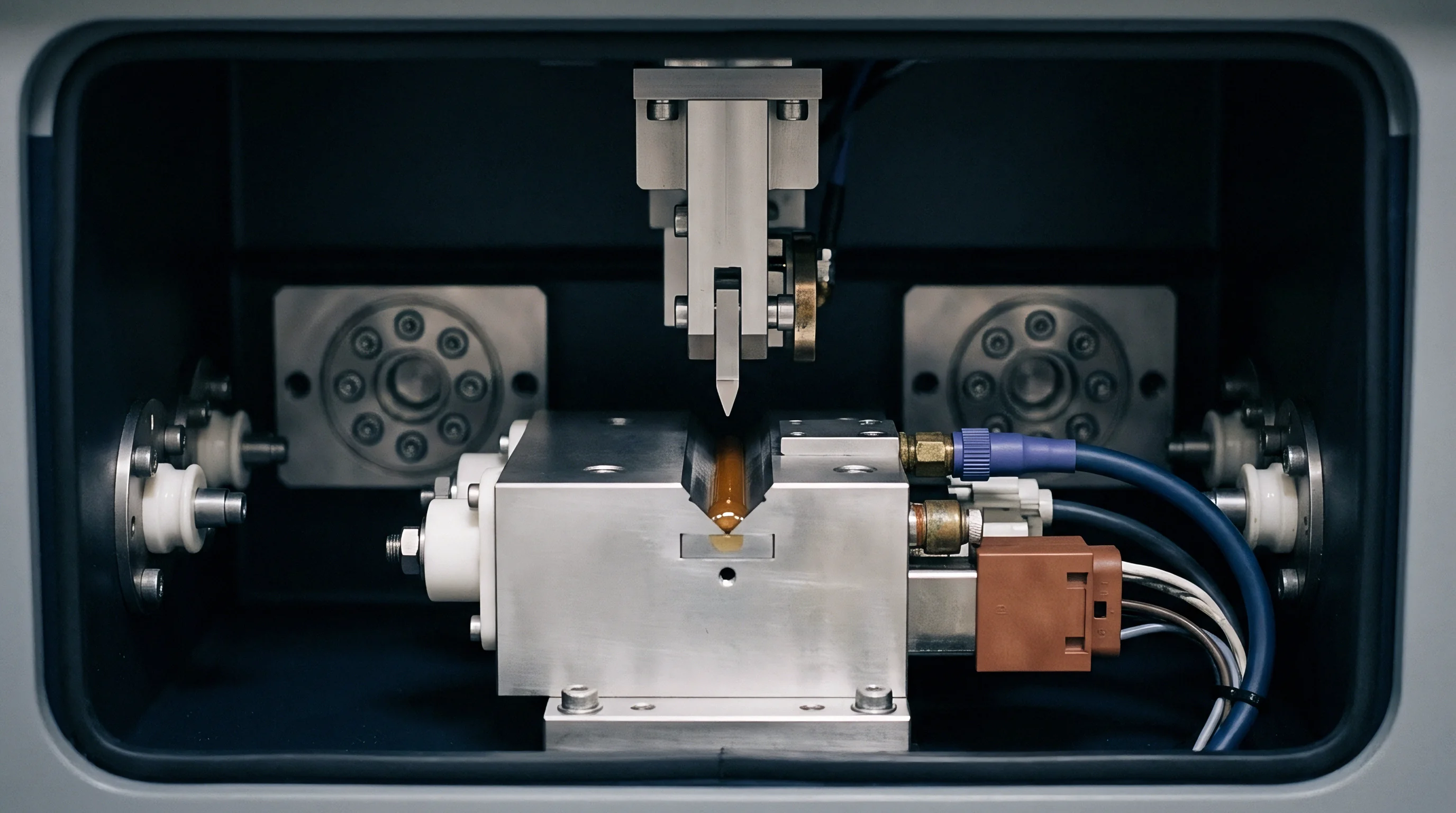

Commitment
Deploying polymer matrices into extreme thermal environments requires allocating testing capital early in the component qualification cycle. Specialized cryogenic guarded hot plate characterization costs between 4,500 and 12,000 dollars per sample run, driven by liquid helium consumption and the twelve-to-twenty-four-hour dwell times required to achieve steady-state conditions at each setpoint. Standard industrial programs that defer this validation routinely experience flight hardware failures or fail thermal vacuum qualification tests, incurring redesign cycles that exceed testing savings by two orders of magnitude.
Procurement Safeguards for Cryogenic Resin Systems
A purchase contract for aerospace structural composites or cryogenic seal matrices protects the buyer by anchoring performance verification to empirical guarded hot plate testing under ASTM C177 or ISO 8302. Engineering drawings must mandate thermal conductivity boundaries defined as temperature-dependent polynomials across the operational spectrum, accompanied by a rigorous statement of boundary conditions, contact pressures, and compliant interface media. Relying on room-temperature datasheets or unverified supplier assertions transfers technical and financial liabilities entirely onto the system integrator.
Independent qualification testing should evaluate samples selected randomly from production resin lots, rather than relying on hand-cast lab coupons cured under pristine conditions. Void content, moisture uptake, and microcracking within the resin matrix profoundly suppress phonon conduction at low temperatures. A one percent increase in matrix void fraction lowers the effective thermal conductivity of neat resins by approximately three to five percent at room temperature, while causing local thermal stresses that initiate structural microfractures upon reaching 77 kelvin.

Capital Exposure across Testing and Flight Batches
Allocating validation budgets requires weighing testing fees against component failure costs. In superconducting magnet assemblies, such as medical MRI systems or particle accelerator beamline steering units, epoxy matrices provide structural potting and electrical isolation around niobium-titanium or niobium-tin coil windings. Should the potting resin display lower thermal conductivity than modeled, heat generated by micro-frictional wire movement cannot dissipate into the liquid helium pool.
The magnet quenches, boiling off thousands of liters of cryogen and forcing emergency shutdown sequences costing hundreds of thousands of dollars.
The capital expenditure allocated for steady-state cryogenic guarded testing acts as insurance against thermal model discrepancies. Testing three production coupons across four cryogenic setpoints (4.2 K, 20 K, 77 K, and 150 K) incurs roughly 25,000 dollars in direct laboratory fees. When compared against the multi-million-dollar cost of a launch failure or orbital payload degradation, this investment represents sound engineering discipline.
Commercial launch vehicle builders routinely require formal data dossiers before signing release certificates for composite cryogenic propellant tanks.
Procurement contracts incorporate ASTM C177 compliance clauses requiring that thermal conductivity values at liquid helium temperatures be validated by steady-state guarded hot plate testing under a documented contact pressure of 0.5 megapascals before raw resin shipments receive final receiving inspection sign-off.