Polymer Casing Stress Tolerances under High Velocity Thermal Expansion Tests
High velocity thermal expansion tests require real-time internal strain mapping because surface growth measurement misses internal wall cracking.

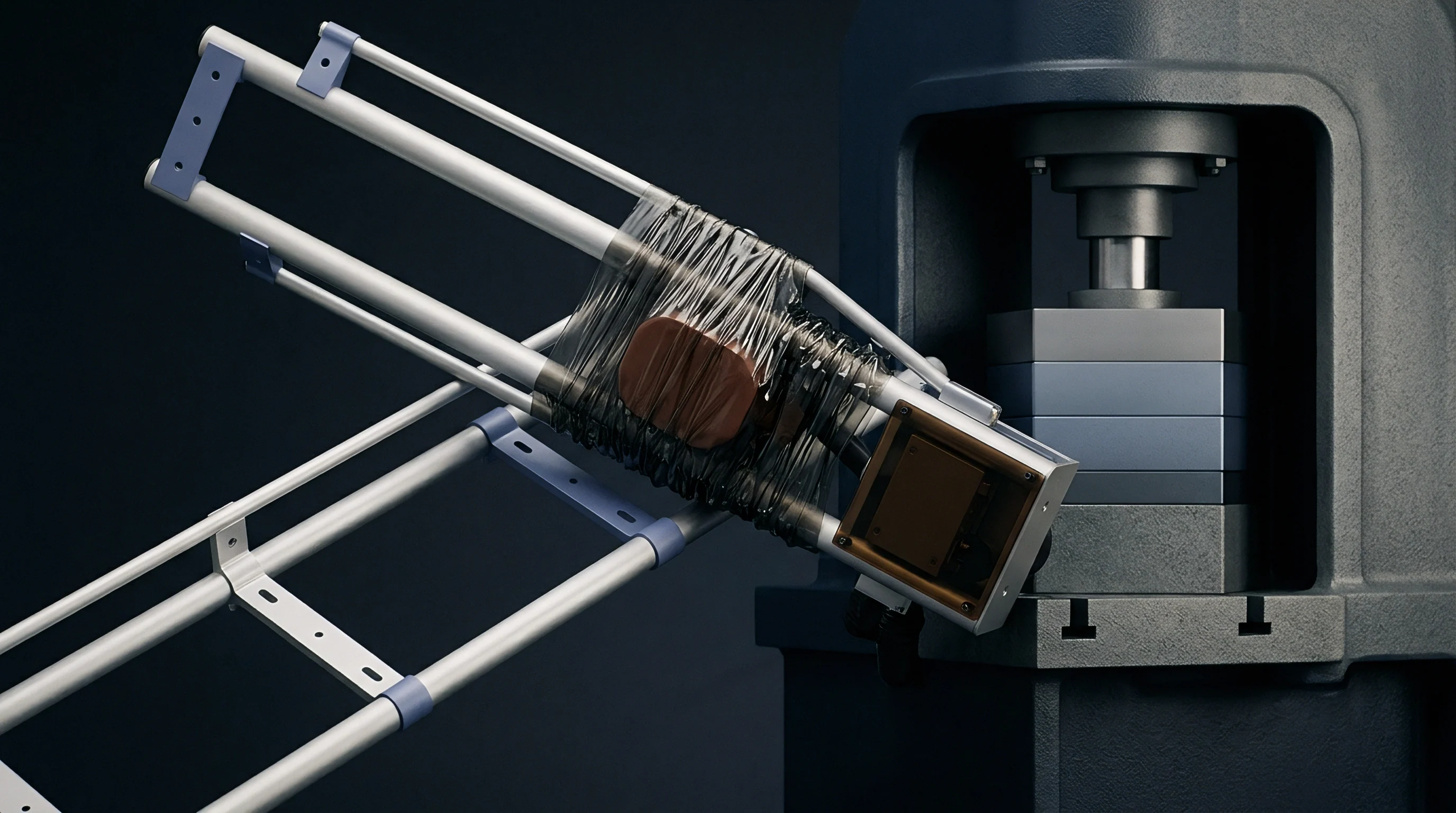
Deformation

Thermomechanical Strain Profiles across Polymer Wall Thicknesses
High-velocity thermal expansion testing subjects polymer casings to rapid heat fluxes exceeding 150 degrees Celsius per second. At such rates, heat propagation through the casing wall lags surface absorption. Standard differential scanning calorimetry cannot capture the internal strain gradient produced during these transient spikes.
Mechanical failure often begins in the inner boundary layer long before the bulk material reaches its nominal glass transition temperature. Accurate casing survival assessments therefore require monitoring volumetric strain rates alongside surface expansion coefficients.
In structural casings made from polyether ether ketone with 30 percent short carbon fiber reinforcement, thermal diffusivity creates localized stress fields. The exterior skin expands rapidly against the cooler core, building compressive stress at the surface and high tensile stress along the interior wall. While standard optical extensometry measures outward radial growth, it misses internal matrix microcracking.
Combining thermal imaging arrays with high-frequency acoustic emission sensors resolves the microstructural cracking sequence within a ten millisecond resolution window. Test data indicates that matrix microcracking begins once inner wall tensile strain exceeds 1.4 percent.
A surface growth measurement taken without real-time internal strain mapping overstates component life limits by 35 percent.
Dynamic mechanical analysis under pulse loading shows structural compliance degrading as heating rates double. At low ramp rates, polymer chains rearrange to absorb thermal energy. When heating rates exceed 80 degrees Celsius per second, strain rates outpace viscoelastic relaxation time.
Polyaryletherketone structures respond to this imbalance with brittle cleavage along grain boundaries rather than ductile necking. Testing protocols should calibrate thermal application speeds to mirror operational heat burst profiles.

Instrument Calibration and Real Time Strain Tracking
Laser doppler vibrometry measures instantaneous wall motion during rapid thermal loading. Specimen fixtures must isolate mechanical vibration caused by quartz heater element fans. Calibration runs establish a laser reflectance baseline before heat pulse ignition.
Because reflectance drops off at high temperatures, polarized optical filters are required to preserve fringe visibility on polished sample surfaces. Sensors are calibrated to detect displacement changes down to 50 nanometers across a 20 millisecond acquisition cycle.
| Polymer Matrix Grade | Ramp Rate Range | Peak Tensile Yield | Strain at Rupture |
|---|---|---|---|
| Unfilled PEEK 450G | 20 to 50 C/s | 98 MPa | 4.2 percent |
| PEEK 30 percent CF | 50 to 150 C/s | 145 MPa | 1.8 percent |
| PPS 40 percent Glass | 50 to 150 C/s | 112 MPa | 1.1 percent |
| PEI Ultem 1000 | 20 to 80 C/s | 85 MPa | 3.5 percent |
High-speed shadowgraphy captures peripheral expansion boundaries without physical contact. High-resolution cameras record profile movements at 20000 frames per second, after which processing algorithms calculate localized radial expansion along fifty distinct wall height positions. These measurements reveal perimeter asymmetry during thermal expansion bursts, pointing to non-uniform filler alignment in injection molded components.
Thin-wall casing geometries exhibit higher localized distortion when fiber alignment runs perpendicular to thermal flow lines.
Rapid infrared thermal pulse testing on injection molded housing shells confirms that mold flow gates create localized stress concentration points. Thermal expansion rates near the sprue exceed average shell expansion by 22 percent during the first 500 milliseconds of exposure. The resulting shear strain initiates longitudinal cracking along weld lines at lower total thermal energy loads than analytical models predict.
Thermal stress accumulation during rapid cycle testing leaves open whether subsurface micro-voids coalesce into main structural fracture paths before or after local thermal equilibrium occurs across the casing thickness.


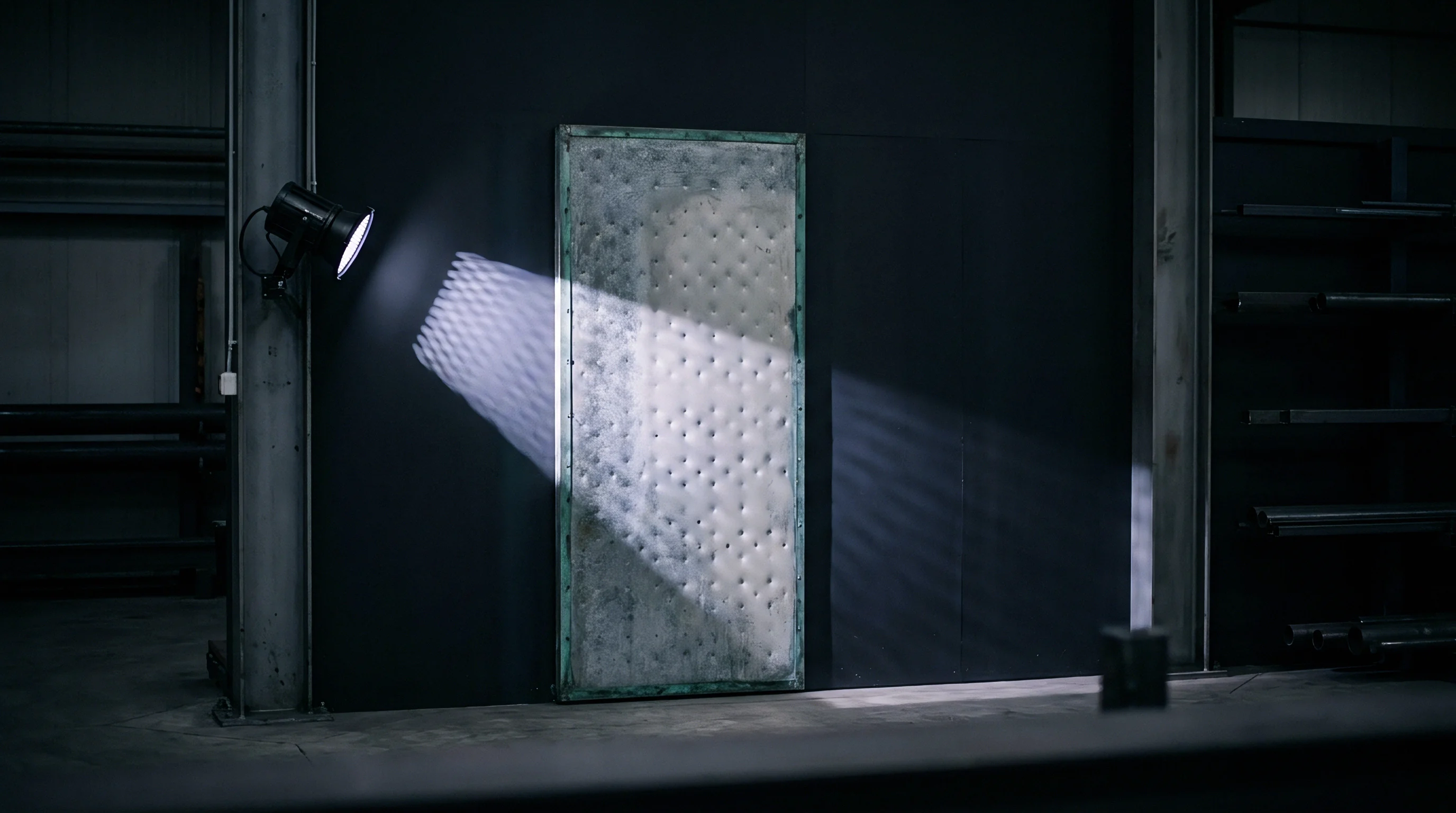
Gradient
Heat Transfer Flux Limits and Material Boundary Failure Mechanics
Thermal gradients across thin polymer barriers generate severe mechanical shear forces. High-velocity thermal tests rely on pulsed high-intensity infrared banks or direct plasma jet exposure to simulate thermal shock environments. Heat input rates reaching 500 kilowatts per square meter force outer layer temperatures up sharply while interior surfaces remain near ambient conditions.
During this transient phase, casing structural integrity depends heavily on thermal conductivity rates through the composite matrix.
- Infrared Flux Target Selection verifies maximum power density and thermal rise rates across sample surfaces using calibrated flux gauges.
- Specimen Fixture Preloading fixes axial positioning without introducing mechanical strain prior to thermal ignition cycles.
- Laser Interferometry Alignment positions dual-beam optical sensors perpendicular to outer wall tracking points.
- Thermal Pulse Execution applies high-intensity energy pulses for durations dictated by test envelope specifications.
- Post Exposure Crack Inspection scans casing inner surfaces for microstructural cleavage using penetrant dye.
Composite materials incorporating continuous carbon fibers resist circumferential wall growth far better than unreinforced resins. Axial thermal expansion of continuous fibers remains near zero or turns slightly negative while the matrix resin expands outward. Transverse thermal stresses generate micro-cracking within resin pockets between fiber bundles.
Over multiple thermal cycles, these micro-cracks coalesce into longitudinal splits along the primary orientation axis. Destructive evaluation confirms that split initiation begins at thermal interfaces where temperature gradients exceed 40 degrees Celsius per millimeter.
Thermal strain fields that exceed matrix ultimate elongation produce sub-surface delamination without visible outer surface distortion.
Polymer choice dictates response mechanisms under thermal expansion conditions. Polyphenylene sulfide offers high chemical resistance but suffers brittle interfacial failure when exposed to thermal ramp rates higher than 100 degrees Celsius per second. Polyetherimide exhibits smoother thermal expansion behavior, though lower tensile strength limits its total thermal load capacity.
Designers select matrix formulations based on allowable deformation budgets rather than pure ultimate tensile limits.

How Do Thermal Expansion Rates Impact Structural Joint Retention?
Threaded connections and snap-fit joints in polymer casings are primary structural weak points during thermal shock. Metal fasteners expanding at different rates than the surrounding polymer generate localized high-pressure zones. As temperature rises, polymer material around metallic inserts undergoes thermal stress relaxation.
Upon cooling, this altered geometry reduces clamp force and compromises housing seal integrity. Engineers use CTE-matched inserts or flexural compensation geometries to maintain joint preloads.
| Joint Architecture | Insert Material | Thermal Cycles | Retained Preload |
|---|---|---|---|
| Direct Tapped Polymer | None | 50 Cycles | 32 percent |
| Brass Heat-Set Insert | C36000 Brass | 50 Cycles | 58 percent |
| Stainless Knurled Insert | 316 Stainless | 50 Cycles | 74 percent |
| Flexural Metal Collar | Titanium Gr 5 | 50 Cycles | 91 percent |
Retention failure during thermal transients occurs when localized compressive stress exceeds the hot yield strength of the polymer. The softened polymer deforms permanently around the metallic insert, preventing original dimensions from recovering when thermal equilibrium returns. Seal compression then drops below operational limits, permitting gas or liquid ingress across the housing boundary.
Unreinforced casing geometries tested without flexible mounting interfaces suffer permanent dimensional elongation long before structural fracture occurs.


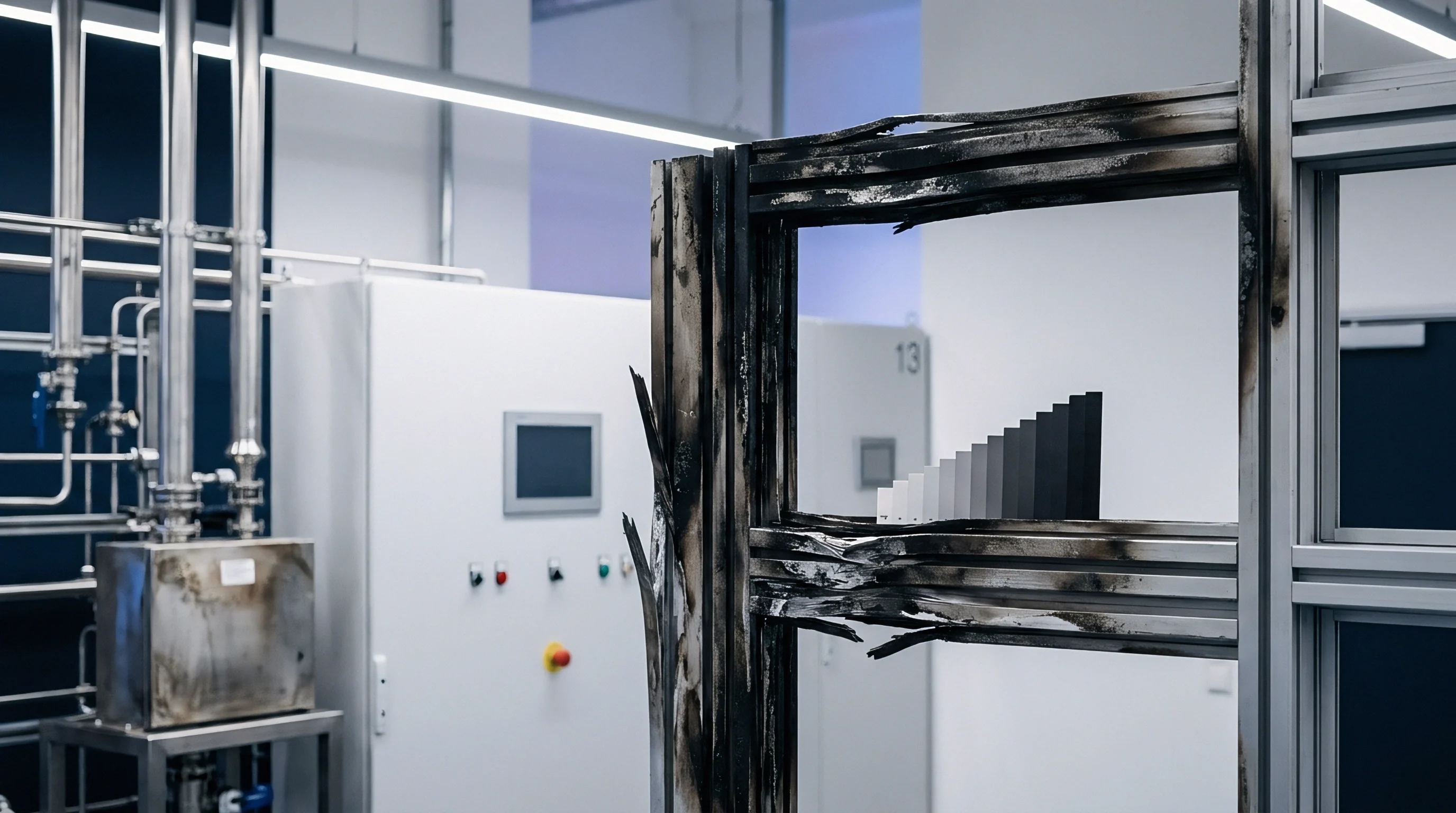
Rupture
Failure Mode Classification under Transient High Temperature Exposure
Structural failure under thermal shock manifests in distinct physical modes depending on matrix ductility and thermal loading rates. High-velocity expansion forces material outward against surrounding structural constraints or internal pressure vessels. Hoop stress calculations must incorporate temperature-dependent moduli to accurately predict rupture thresholds.
When local thermal expansion creates internal stresses exceeding local yield points, permanent plastic deformation sets in.
- Interfacial Delamination occurs along resin fiber boundaries when shear stresses exceed local bond strength.
- Matrix Micro-Crazing forms micro-void networks in tension zones across resin-rich regions during rapid heating.
- Transverse Wall Splitting propagates along longitudinal alignment directions under high hoop strain conditions.
- Insert Displacement occurs when thermal softening permits embedded metallic hardware to shift position.
Acoustic emission tracking during test runs records signal bursts correlating with specific damage mechanisms. High-frequency bursts mark fiber fracture, whereas lower-frequency continuous emissions indicate matrix plastic yielding and micro-crazing. Matching acoustic signatures to real-time temperature logs pinpoints exact failure temperatures for specific material systems.
Test logs show that glass-reinforced thermoplastics exhibit early acoustic activity at temperatures 30 degrees below their nominal thermal deflection points.
Full-scale blast ring containment testing demonstrates that internal strain concentrations near sharp corners cause explosive casing rupture at pressures far below static calculated ratings. Modifying radius fillets to a minimum radius of 2.5 millimeters reduces peak thermal strain concentrations by 40 percent.

Verification Procedures for Thermal Expansion Limits
Verification testing requires strict adherence to measurement standards modified for dynamic heat loading conditions. Test chambers must achieve targeted heating rates using synchronized infrared emitter panels or controlled burn channels. Standard environmental chambers operating at slow ramp rates cannot replicate the localized strain rates experienced during high-velocity thermal events.
Specifications also mandate sample boundary isolation to eliminate unwanted heat sinks through mounting hardware.
| Test Protocol | Heating Rate target | Primary Measurement | Pass Criteria |
|---|---|---|---|
| Dynamic Infrared Pulse | 100 C/s to 200 C/s | Optical Extensometry | Zero wall cleavage |
| Direct Flame Jet Exposure | 150 C/s to 300 C/s | Acoustic Emission | No macro fracture |
| Hot Liquid Immersion Pulse | 50 C/s to 100 C/s | Digital Image Correlation | Deformation below 2 percent |
Digital image correlation provides full-field three-dimensional displacement maps across the casing surface during thermal testing. Dual high-resolution cameras capture speckle pattern movements applied to the sample wall prior to heating. Software tracking routines then calculate Green-Lagrange strain tensors across the entire visible surface, exposing localized strain concentrations near thickness transitions.
This data directly guides structural rib placement and wall taper designs.
Full-field strain mapping eliminates reliance on single-point strain gauges that frequently debond during rapid high temperature transients.
Component qualification protocols stipulate that thermal shock testing must proceed until casing structural integrity drops below baseline limits or a catastrophic wall breach occurs. Procurement standard ASTM F1980, modified for high flux rates, mandates that non-linear expansion metrics must be verified through five consecutive thermal cycles without dimensional loss exceeding 0.5 percent.

Margin

Commercial and Operational Safety Factors in Polymer Housing Design
Designing polymer casings for extreme thermal shock environments requires balancing safety margins against weight and cost constraints. Oversized wall thicknesses add mass and prolong internal thermal gradient durations, worsening internal stress generation. Targeted material placement, tailored fiber reinforcement patterns, and optimized geometric transitions yield higher thermal tolerance without adding mass.
Valid manufacturing specifications depend on analyzing total lifecycle thermal exposure.
Procurement specifications often establish safety margins using static property tables rather than dynamic thermal shock profiles. This mismatch leads to field failures despite components passing standard laboratory qualification rounds. In aerospace housing enclosures, components that passed static thermal soak checks have ruptured within two seconds of operational heat exposure.
Updating testing standards to reflect real thermal flux profiles eliminates these field failures.
Subcontract molders frequently alter processing temperature parameters to speed up cycle times, altering residual stress distributions in finished casings. High residual stress reduces thermal expansion headroom during operational heating spikes. Quality control procedures must therefore audit post-molding internal strain using photoelastic analysis or sectioning tests before releasing production batches for deployment.
- Confirm raw material batch viscosity metrics using melt flow index testing.
- Verify mold cooling channel uniformity to limit built-in residual stresses during molding.
- Inspect fiber orientation distributions in high-stress zones using micro-CT scanning.
- Expose sample housings to 120 percent of maximum rated thermal flux during quality acceptance testing.
- Measure post-test baseline dimensions using coordinate measurement machines to verify zero permanent deformation.
Financial risk management depends on accurate component reliability calculations. Underestimating thermal failure risks leads to costly recalls, warranty claims, and potential catastrophic equipment losses. Investing early in dynamic thermal strain validation setups identifies structural weaknesses before tooling designs freeze.
A validated dynamic strain model reduces physical prototype iterations by half and prevents late-stage tooling modifications.
Manufacturing yield figures for high-performance polymer enclosures depend heavily on process stability. Batches produced with continuous process control on melt temperatures achieve a 99.2 percent pass rate under dynamic thermal expansion testing. Conversely, batches with unmonitored melt fluctuations show reduced dynamic thermal tolerance, dropping yield rates below 84 percent.
The total cost of dynamic thermal testing includes specialized instrumentation setup fees, high-speed sensor maintenance, and material destruction expenses. These expenditures represent a small fraction of the capital lost when a structural failure occurs during mission-critical operations. Grounding structural calculations in dynamic strain measurements protects operational safety margins alongside capital investments.
Casing structural integrity evaluation ends when post-exposure inspection confirms zero microstructural crack growth across primary load-bearing walls.