Capturing Serial Data Structure across Regional Logistics Nodes
Capturing serial data at regional logistics nodes demands standardized payload schemas, edge parsing verification, and automated line-item discrepancy reconciliation.


Payload
Automated identification systems across regional distribution centers process thousands of barcode reads per hour. Each scan event extracts a string of text containing product codes, unique identifiers, lot numbers, and expiration parameters. Data structure formatting determines whether an edge processor decodes that string in four milliseconds or routes the item to an exception lane for manual inspection.
Scan speed dictates margin.
Logistics facilities operating high-speed sorters handle packages moving at speeds up to 2.5 meters per second. Standardizing the sequence of encoded attributes prevents parsing delays. GS1 Application Identifiers supply a standardized mechanism by using fixed-length headers to partition serial records.
Application Identifier 01 specifies a fourteen-digit Global Trade Item Number. Application Identifier 21 isolates the serial component, up to twenty alphanumeric characters. When regional nodes process non-standard or custom-delimited strings, line throughput degrades immediately.
Line rates cannot pause.
Industrial vision systems operating at 2.5 meters per second achieve 99.85 percent capture rates when serial strings remain under 48 alphanumeric characters.
A regional hub taking in goods from sixty independent suppliers encounters structural variance in scanned code composition. Variable-length fields placed ahead of fixed-length fields force the parser to scan the entire string for group separator characters. Positioning fixed-length identifiers at the start of the string allows edge systems to extract essential records using static byte offsets.
Manual entry forfeits efficiency.
Inconsistent string architectures force facilities to deploy custom regular-expression rules at every scanning station, creating processing lag that causes physical conveyor backups and raises operating costs across the transit facility.

Junction
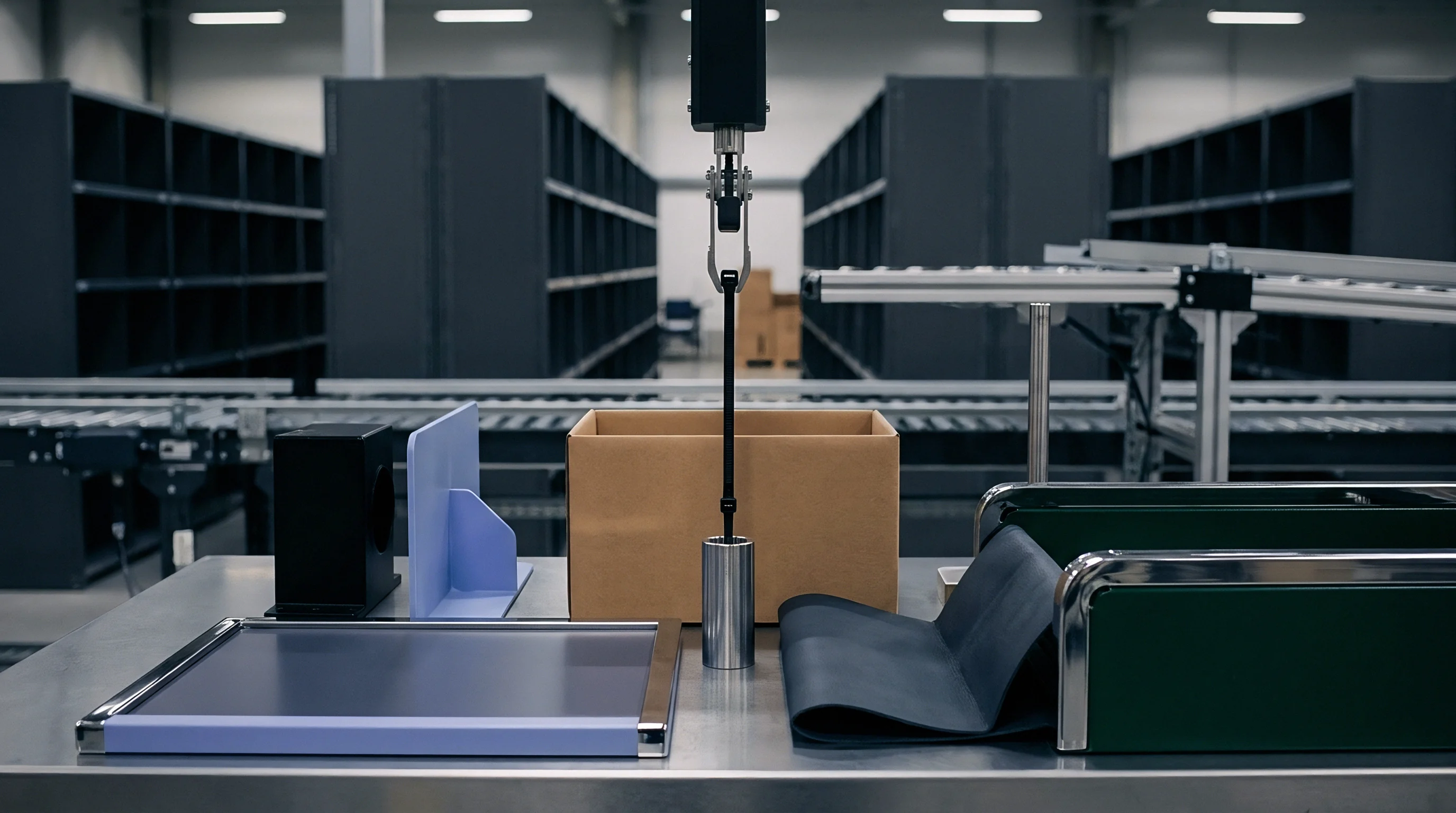
Regional sorting hubs sit between regional suppliers and localized delivery depots. Data translation occurs at these transit points to align inbound vendor formats with internal warehouse management schemes. Edge computing hardware located at the dock door reads incoming payloads, validates checksums, and transforms raw strings into normalized JSON payloads before transmitting them to central databases.

Which Data Schema Prevents Scan Latency at High Throughput Facilities?
Binary serial encoding formats like EPCIS 2.0 using JSON-LD bindings deliver lower transmission overhead compared to legacy XML structures. Parsing dense XML documents consumes CPU cycles that edge devices need for real-time image decoding. JSON-LD payloads carry explicit context definitions, allowing regional databases to process batch records without secondary schema lookups.
Latency compromises sorting speed.
Buffer space depletes fast.
Edge nodes cache records.
Deploying distributed parsing architecture insulates facilities from network instability. When WAN links suffer packet loss, edge nodes store validated serial records locally in append-only database logs. Once connectivity recovers, local buffers push batched data packets to central repositories using compressed gRPC streams.
This decoupled design maintains sorting belt velocity during internet disruptions.
Section 4.2 of the Cross-Border Logistics Master Agreement imposes a $2.50 handling surcharge for every carton routed to an exception lane due to corrupted data strings.
Data parsing failure modes degrade hub operations through predictable physical and operational breakdowns:
- Malformed Application Identifiers cause immediate sidetracking into manual exception bins, adding direct labor expense to unit processing costs.
- Unsynchronized NTP Clocks create chronological inversion across node databases, failing compliance audits during cross-border transit.
- Truncated Serial Strings break parent-child aggregation integrity between case pack and pallet layers during high-speed sorting.
- Unbuffered Network Sockets drop scan receipts during regional broadband outages, resulting in unrecorded inventory movements.
Edge node memory limits dictate that local storage arrays function as transient buffers rather than permanent archives.

Wire
Physical signal transmission media dictating capture latency vary by facility layout. Industrial facilities rely on industrial Ethernet, wireless mesh networks, or fixed optical lines to carry raw scan data from vision cameras to local program controllers. High-density storage environments introduce physical RF shielding, making cable selection central to scanner placement strategy.
Data dropouts trigger penalties.
Hardware costs compound quickly.
Mismatch fees multiply daily.
| Transmission Medium | Average Latency (ms) | Packet Loss Rate (%) | Installation Cost per Meter (USD) | Maximum Distance Without Repeater (m) |
|---|---|---|---|---|
| 1.2 | 0.001 | 14.50 | 100 | |
| 0.4 | 0.0001 | 38.00 | 10000 | |
| 8.5 | 0.120 | 0.00 | 75 | |
| 4.1 | 0.040 | 6.20 | 150 |
Fixed vision arrays attached to high-speed sorters transmit uncompressed image frames over dedicated fiber links to local image processing units. The processing units decode 2D barcodes, extract the embedded serial payload, and forward the string via Lightweight MQTT topics to the facility dispatch engine. Wireless networks struggle under the bursty load of hundreds of concurrent barcode scans, introducing packet jitter that stalls sorter execution.
Local edge validation prevents queue backpressure from stalling primary conveyor drives.
Scanner vendors often assert that their vision systems operate flawlessly over standard Wi-Fi networks regardless of ambient radio interference or facility metal density.

Relay
Financial performance across supply networks depends directly on barcode readability rates. Every missed scan converts an automated, fixed-cost throughput event into a variable-cost manual handling task. Freight contracts specify chargeback terms when unreadable barcodes force carrier personnel to generate replacement labels or manually log serial values into terminal systems.
Consider a regional hub processing 100,000 units per day. The facility evaluates two hardware architectures for capturing serial data from incoming freight: a high-resolution 2D industrial optical camera array versus a passive UHF RFID portal setup. The optical vision system carries an upfront installed cost of $120,000 with annual maintenance of $12,000.
The RFID portal setup carries an upfront installed cost of $210,000, but RFID tags add $0.08 per unit to pack materials compared to $0.002 per printed 2D label.
Assume the optical system achieves a 99.4 percent read rate on clean cartons, while the RFID portal achieves 99.8 percent on tagged items. Unread cartons incur a manual handling fee of $1.50 per unit assessed by the carrier under standard contract terms.
| System Component | 2D Optical Vision Array | UHF RFID Portal Array |
|---|---|---|
| $120,000 | $210,000 | |
| $200 | $8,000 | |
| 600 | 200 | |
| $900 | $300 | |
| $1,100 | $8,300 |
Over a 250-day operational year, the optical vision system incurs $275,000 in daily operational costs, whereas the RFID system incurs $2,075,000 in daily operational costs due to label consumable expenses. Despite the higher read rate of RFID portals, the low consumable cost of 2D optical barcodes preserves gross realized margin for high-volume freight facilities.
Uncaptured scan events turn fixed-fee transport contracts into open-ended labor liabilities.
Standardizing serial data collection across regional hubs requires a disciplined integration sequence:
- Audit physical barcode contrast ratios at receiving docks using ISO/IEC 15415 grading tools.
- Map incoming payload schemas against local edge parser dictionary tables before line ingestion.
- Configure store-and-forward buffer sizes to hold forty-eight hours of scan events locally.
- Reconcile edge timestamp records against central warehouse management system logs every six hours.
Clause 8.3 of the Master Service Agreement dictates that unverified serial payloads automatically shift freight liability back to the originating node upon transfer of custody.

Stamp
Cross-border regulatory frameworks mandate strict tracking of serialized pharmaceuticals and high-value cargo. Verification mechanisms validate data integrity before customs authorities grant release codes at regional transit borders. Scanned payloads carry cryptographic signatures, such as ECDSA strings, confirming that product origin matches authorized manufacturer dossiers.
Optical capture rates drop.
Throughput demands absolute consistency.
Audit trails prove compliance.
Carrier chargebacks compound rapidly.
Integrating digital signatures into 2D Data Matrix barcodes increases character density. Larger payload structures demand higher camera resolutions and optimized lighting setups at dock doors. When image acquisition fails due to label creasing or low print contrast, edge nodes report cryptographic validation failures to regulatory portals, holding shipments in customs bond.
Operational decision-makers rely on clear criteria when selecting serial capture infrastructure for regional nodes:
- Schema Standardization verifies that incoming serial structures conform to GS1 EPCIS standards prior to node arrival.
- Buffer Redundancy guarantees zero data loss during regional network degradation across transit routes.
- Payload Cryptography validates signature authenticity before clearing high-value goods through customs gateways.
Whether future cross-border regulations will mandate asymmetric cryptographic signatures embedded directly within 2D physical barcode payloads across all commercial freight classes remains an open question for regional logistics planners.