Contractual Material Non Compliance Penalties and Moisture Induced Stress Cracking Claims in Tier One Retail ESL Deployments
Material non-compliance claims from stress cracking occur when cleaning chemicals hit strained display housings, triggering batch penalties and labor chargebacks.

Solvent

Refrigerated Aisle Hygiene Protocols and Polymeric Degradation
Polycarbonate display housings and acrylic optical lenses suffer severe localized environmental stress cracking under ongoing tensile strain when exposed to low-molecular-weight organic cleaners. Tier one grocery operators clean produce and meat display cases with quaternary ammonium compounds, isopropyl alcohol mixtures, and hydrogen peroxide formulas to meet surface sanitation codes. Ultrasonic assembly welds, battery retention clip snaps, and mounting rail brackets create internal residual molding stresses between twelve and twenty-five megapascals.
Condensation cycles in cold-chain displays lower the critical strain threshold of the housing polymer, letting active surfactants penetrate micro-voids in the plastic matrix.
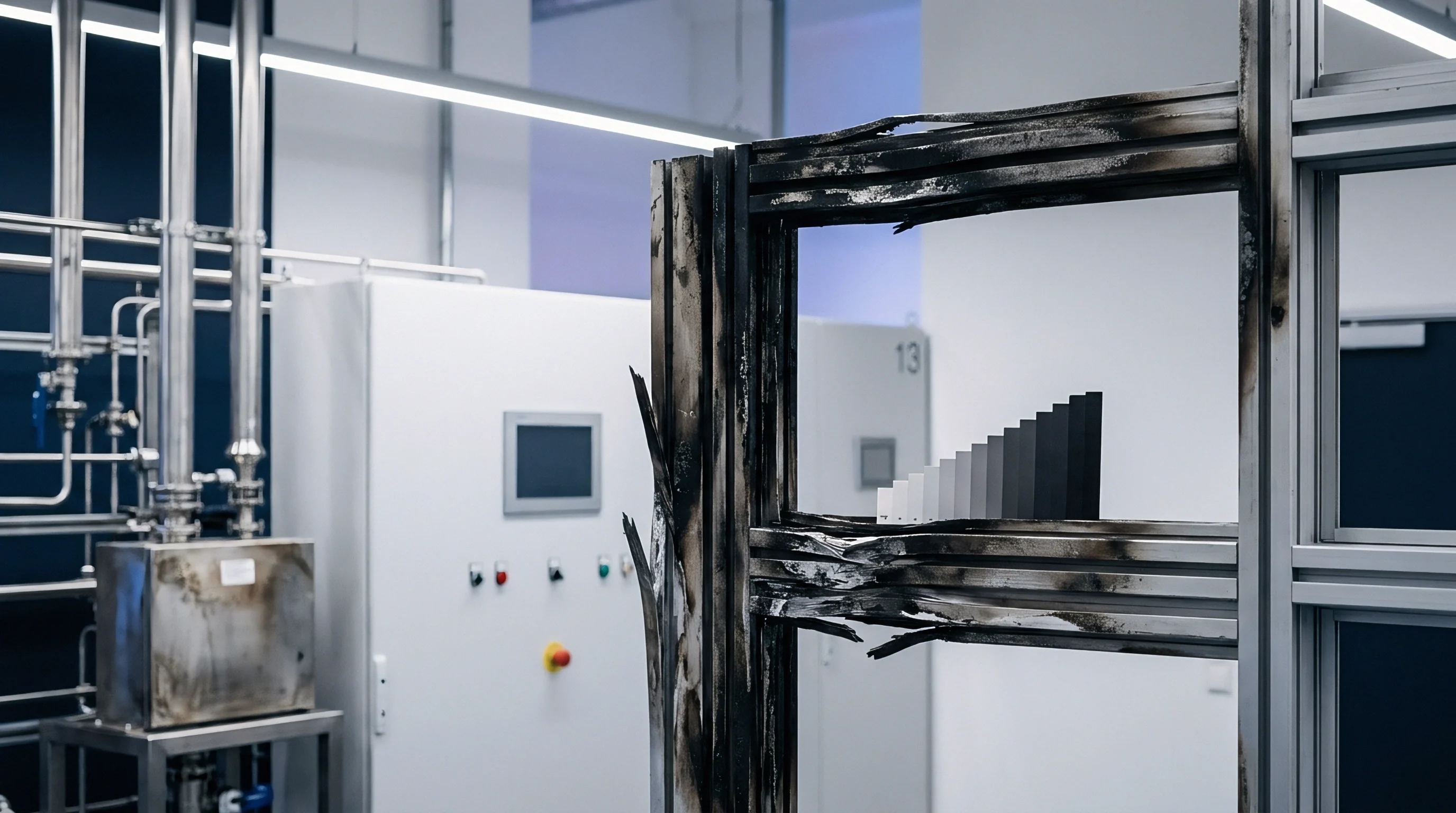
Chemical attack alters long-chain polymer structures without instantly melting the housing surface. Micro-crazing develops along lines of localized tension within forty-eight hours of exposure to cleaning sprays. Cracks propagate across structural screw bosses and rail latch tabs, causing structural lens separation and moisture ingress into electronic paper display layers.
Water vapor penetrating the ink capsule layer causes permanent visual shadowing and electrical shorting across the display driver printed circuit board. Retailers record these failures as operational hardware outages, placing the blame entirely on manufacturing material defects.
Cold-chain display humidity exceeding eighty-five percent reduces the critical solvent threshold of unstabilized polycarbonate housings by thirty-four percent at four degrees Celsius.

Chemical Resistance and Strain Interaction
Surfactant chemistry dictates the rate of polymer backbone chain cleavage under mechanical strain. Esters, aromatic hydrocarbons, and concentrated sanitizing agents act as plasticizers that reduce intermolecular cohesion between resin molecules. Internal stress from rapid injection-mold cooling schedules provides the driving force for crack propagation even without external mechanical loading.
| Housing Resin Selection | Chemical Cleaning Agent | Tensile Strain Level | Time to Micro-Crazing | Structural Failure Mode |
|---|---|---|---|---|
| Standard Molded Polycarbonate | Benzalkonium Chloride 0.5% | 18 MPa | 14 Hours | Lens Separation |
| Polycarbonate ABS Blend | Isopropanol 70% Wipe | 12 MPa | 36 Hours | Latch Bracket Fracture |
| Cyclic Olefin Copolymer | Hydrogen Peroxide 3% | 22 MPa | 310 Hours | Minor Surface Craze |
| UV Stabilized Polycarbonate | Quaternary Ammonium Spray | 15 MPa | 48 Hours | Screw Boss Crack |
Disinfectant residues remain inside housing crevices for weeks due to low evaporation rates in cold cases. Continuous exposure lowers mechanical fatigue limits, leading to structural cracking long after the initial cleaning application. Failure also stems from non-cleared chemical formulas applied outside approved operational parameters.


Defect

Contractual Material Non Compliance Criteria
Master supply agreements for tier one retail deployments define strict acceptance thresholds for hardware batches. Material non-compliance occurs when delivered items fail to conform to physical, chemical, or operational specifications outlined in the technical annex. Environmental stress cracking claims trigger these clauses when field failure rates exceed baseline allowances agreed upon during product qualification.
Warranty terms establish operational boundaries to govern such claims. Master service agreements set explicit operational boundaries, defining specific chemical exposure limits, ambient temperature ranges, and relative humidity maximums. Ambiguity in retail store sanitation logs complicates the legal boundary between manufacturing flaw and site mistreatment.
Section 14.2 of standard tier one master supply agreements converts batch defect rates above zero point five percent into immediate material non-compliance defaults.
Disputes over non-compliance classifications center on three primary failure attributes across large store footprints.
- Chemical Resistance Deviation occurring when the delivered housing polymer varies from the chemical compatibility profile specified during lab qualification trials.
- Residual Mold Stress Excess arising from improper injection molding cycle times that create excessive mechanical strain in structural latch mechanisms.
- Ingress Protection Degradation breaking down environmental seal integrity and permitting humidity entry into active display driver electronics.

Root Cause Allocation Boundaries
Determining liability demands isolating manufacturing variables from store maintenance practices. Injected resins containing unapproved regrind ratios reduce environmental stress cracking resistance below baseline engineering figures. Accelerated molding cycles deployed to meet high volume delivery dates leave elevated internal stresses across the entire production batch.
Store maintenance teams frequently alter cleaning chemical concentrations or substitute unapproved broad-spectrum disinfectants during disease outbreaks. Sanitizing protocols that leave liquid pooling inside display mounting rails create severe micro-environments that exceed standard environmental test metrics. When proof of improper chemical usage remains inconclusive, legal teams fall back on explicit wording inside master supply agreements.
Contract clauses state that any structural housing failure occurring within twenty-four months of installation constitutes material non-compliance unless physical proof establishes unauthorized chemical exposure.


Screening

Validation Testing Standards for Retail Environment Deployment
Standard laboratory testing procedures fail to replicate the combined mechanical and chemical stresses of active retail environments. ISO 22088-3 constant-strain testing measures polymer chemical resistance by applying fixed flexural strain while submerging specimens in test fluids. Standard test fluids rarely include the proprietary surfactant blends used by tier one retail cleaning contractors.
Test durations of twenty-four hours overlook long-term degradation mechanisms that unfold over months of daily store sanitation schedules.
Accelerated life testing must incorporate thermal cycling alongside chemical application. Moving units between room temperature ambient air and sub-zero freezer cabinets induces cyclic thermal strain on plastic housings. Combined environmental stress tests reveal housing vulnerabilities prior to mass manufacturing runs.
| Parameter | ISO 22088 Standard Test | ASTM D543 Chemical Immersion | Retail Field Operational Reality |
|---|---|---|---|
| Temperature Range | 23°C Static Ambient | 20°C to 25°C Static | -2°C to 24°C Thermal Cycling |
| Applied Tensile Strain | Fixed 0.5% to 1.5% Strain | Unstrained Immersion | 12 to 25 MPa Variable Weld Strain |
| Chemical Agent Exposure | Single Pure Chemical Fluid | Standard Pure Reagent | Mixed Surfactants with Quaternary Ammonium |
| Test Duration | 24 to 72 Hours | 7 Days Static Contact | 1,095 Days Continuous Retail Life |
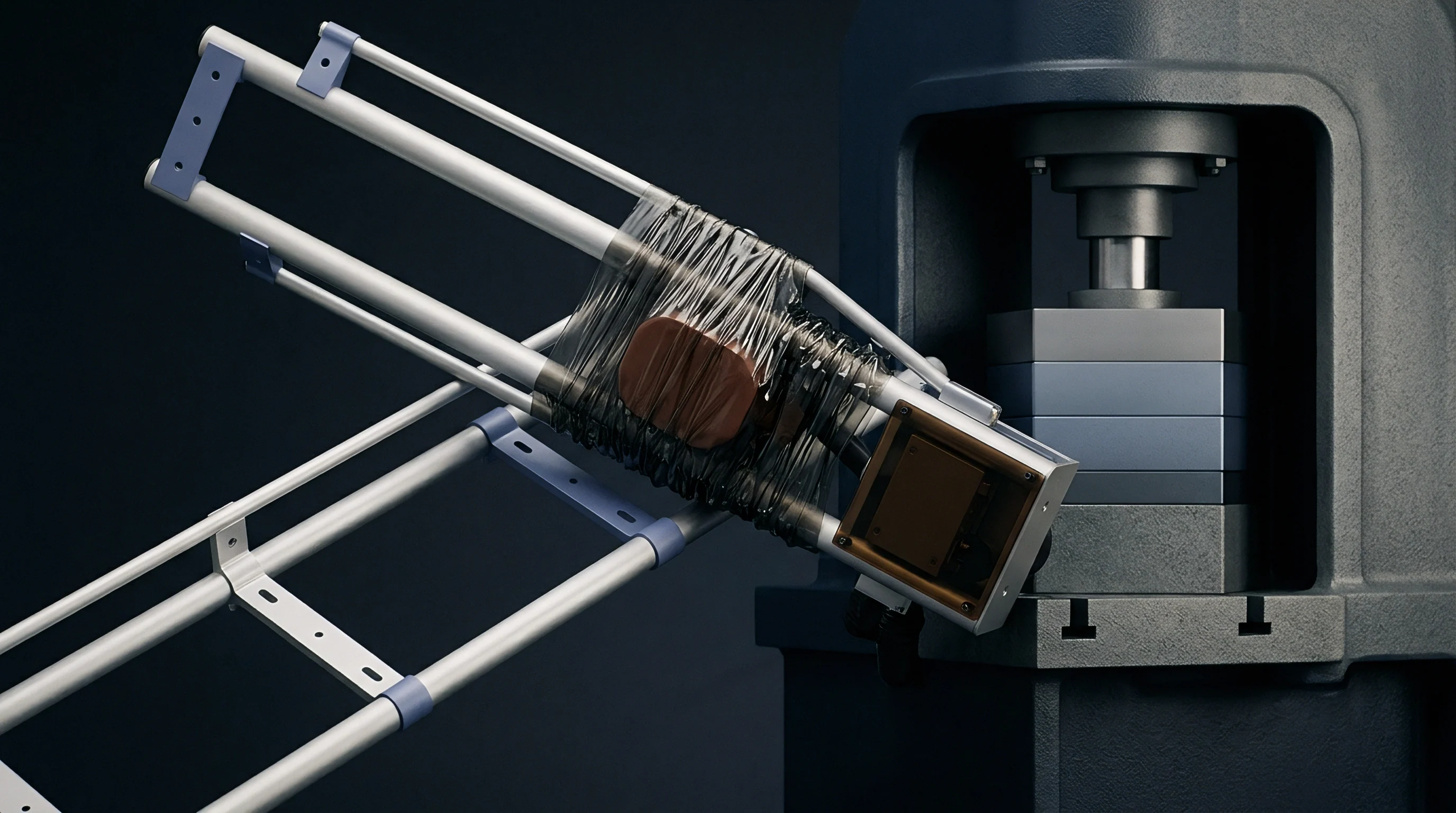
Polarized light stress analysis reveals internal strain patterns created during injection molding. Assemblies showing fringe patterns around screw bosses fail early when exposed to field sanitizers. Quality control audits measure stress patterns on sample units drawn from every batch.
Can Standard Immersion Tests Predict Field Failure Rates?
Immersion testing without mechanical strain produces misleading performance metrics for display tags. Unstressed plastic parts survive exposure to aggressive solvents for months without visual damage. Applying functional assembly torque during chemical exposure exposes structural flaws within hours.
Forensic evaluations follow a structured diagnostic sequence to determine exact failure causes.
- Spectroscopic gas chromatography testing of fractured housing surfaces identifies chemical residues left by store cleaning products.
- Differential scanning calorimetry measures polymer crystallinity changes to determine if improper mold temperature parameters caused resin degradation.
- X-ray computed tomography scans internal screw boss structures to detect internal micro-voids and assembly stress fractures.
- Strain gauge instrumented assembly measures mechanical force exerted on retention clips during rail installation.
Testing unexposed spare parts from the same batch confirms whether manufacturing residual stress alone caused micro-cracking. High strain levels in unexposed units indicate improper injection molding parameters. Low residual strain points to chemical mistreatment as the primary driver of failure.
Field experience yields clear operational guidelines for component design.
Design parts with low residual stress and verify chemical compatibility under real assembly strain levels before starting mass production.


Penalty

Contractual Material Non Compliance Penalty Structures
Material non-compliance declarations allow retailers to enforce financial remedies against hardware suppliers. Contracts include remedies ranging from replacing defective tags to levying financial damages for full operational disruption. Penalty clauses activate when hardware failure rates exceed agreed threshold percentages within defined operating periods.
Removing cracked tags from shelf rails requires manual labor, increasing operational costs for retail operators. Retailers calculate total non-compliance penalties by adding replacement hardware costs to store labor chargeback fees. Labor chargeback rates run between thirty-five and sixty-five dollars per hour per technician.
Replacing ten thousand tags in a regional chain incurs labor charges that easily exceed the initial hardware purchase value.
Contractual material non-compliance clauses permit tier one retailers to withhold up to one hundred percent of pending invoice payments upon formal claim filing.
Penalty frameworks rely on specific operational metrics to calculate final financial assessments.
- Batch Liquidated Damages assessing fixed percentage fees against the total purchase order value when defect rates exceed initial contract thresholds.
- Labor Cost Recovery Chargebacks billing suppliers for store associate hours spent removing, re-pairing, and re-mounting damaged display units.
- SLA Availability Penalties charging daily recurring fines for every store location where display tag availability falls below ninety-nine percent.
- Emergency Logistics Offset passing freight costs for expedited replacement hardware delivery directly back to the manufacturer.

Remedy Escalation and Commercial Impact
Notice of non-compliance initiates strict cure periods specified in vendor agreements. Suppliers receive thirty days to supply certified replacement units that meet chemical resistance metrics. Failure to supply compliant hardware within the cure period allows retailers to cancel master supply agreements and seek alternative supply vendors.
Retailers retain contractual rights to offset accrued non-compliance penalties against pending hardware and software subscription invoices. Commercial offsets reduce supplier cash flow, impacting operational capital during hardware production runs. Hardware manufacturers that fail to manage stress cracking exposures face severe margin erosion across long-term contracts.
Ignoring environmental stress cracking risks exposes display manufacturers to direct financial losses that wipe out project profitability across entire store rollouts.

Ledger

Financial Risk Modeling for Material Non Compliance Claims
Hardware suppliers must establish financial reserves to cover potential material non-compliance liabilities on large display rollouts. Tier one retail contracts involve initial shipments ranging from two hundred thousand to two million display units per customer deployment. Low unit gross margins leave suppliers vulnerable when stress cracking claims trigger field replacement costs and labor chargeback fees.
Calculations show how environmental stress cracking failures impact net realized revenue on a deployment of one hundred thousand units. A base unit list price of twenty-two dollars yields an initial gross contract value of two million two hundred thousand dollars. A three percent batch failure rate caused by stress cracking alters contractual financial balances.
| Financial Waterfall Component | Calculated Value (USD) | Unit Equivalent (USD/Unit) | Percentage of Gross Revenue |
|---|---|---|---|
| Gross Invoiced Contract Value | $2,200,000 | $22.00 | 100.0% |
| Direct Manufacturing Cost (COGS) | $1,450,000 | $14.50 | 65.9% |
| Initial Projected Gross Margin | $750,000 | $7.50 | 34.1% |
| Replacement Hardware Cost (3,000 Units) | $43,500 | $0.44 | 2.0% |
| Store Labor Chargeback ($45/hr, 0.1 hr/unit) | $13,500 | $0.14 | 0.6% |
| SLA Outage Liquidated Damages Clause | $120,000 | $1.20 | 5.5% |
| Expedited Air Freight and Logistics Fees | $18,000 | $0.18 | 0.8% |
| Total Non-Compliance Penalty Deductions | $195,000 | $1.95 | 8.9% |
| Net Realized Margin After Claim Settlement | $555,000 | $5.55 | 25.2% |
Net realized margin drops from thirty-four percent to twenty-five percent when managing a localized three percent defect rate. Higher defect rates that cross full batch non-compliance thresholds force full product rollbacks across all stores. Rolling back a multi-store rollout creates liabilities that exceed total initial gross margins for the contract.
Unhedged warranty reserves on tier one display contracts erode hardware vendor operating margins by up to nine hundred basis points during major material disputes.
Long Term Revenue Stream Exposure
Contracts for display tag deployments bind hardware purchases to recurring software license fees and management subscriptions. Declaring material non-compliance allows retailers to pause recurring software payments until hardware issues are resolved. Subscription payment holds disrupt predictable software revenue streams that drive total enterprise valuation for hardware vendors.
Insurance covers basic product liability claims involving property damage or personal injury, but standard policies exclude contractual non-compliance penalties and warranty performance claims. Suppliers absorb replacement labor costs and SLA liquidated damages directly onto corporate balance sheets. Balancing environmental testing expenses against potential failure liabilities forms a foundation for sustainable hardware margins.
Will future retail supply contracts shift environmental compliance risks back to retail store operations through standardized chemical cleaning regulations?