Defining Stripped Baseline Offerings across Tiered Industrial Distribution Channels
Stripping equipment to bare utility protects channel margins only when mechanical boundaries and warranty liabilities eliminate cross-tier arbitrage.


Perimeter
A standard forty-kilowatt screw compressor leaves the assembly line bearing an invoice price of 14,200 dollars, complete with digital telemetry, an extended five-year air-end service agreement, and four stages of pre-installed filtration. Stripping that machine to a bare cast-iron block, basic direct-on-line electrical switchgear, and standard one-year workshop indemnity drops factory gate production costs by thirty-two percent. The resulting baseline unit enters wholesale distribution at a net dealer price of 8,100 dollars.
That price change alters the buyer group, the competitive reference shelf, and the sales behavior of every intermediary handling the crate.
Industrial machinery buyers holding tight maintenance budgets calculate replacement costs through immediate capital outlays. When competing against refurbished grey-market equipment or regional fabrication shops, an equipment manufacturer offering only complete automation packages loses volume at the lower boundary of the market. Stripped baseline units defend that boundary.
They establish an official floor price that stops budget-constrained accounts from defecting to unbranded imports.
Equipment priced below 9,000 dollars in North American machinery distribution triggers immediate volume substitution against secondary rebuilders.
Distributors handle baseline lines differently than premium turnkey systems. A turnkey system incorporates field engineering, site commissioning, and factory-backed uptime guarantees that generate predictable dealer margins. A bare mechanical unit transfers those responsibilities entirely to the field.
The channel partner decides whether to resell the bare unit directly to cost-sensitive contractors or to integrate regional accessories and capture the margin differential locally.

Exclusion Criteria for Industrial Baselines
A bare mechanical package sheds all ancillary automation. Microprocessor controllers yield to electromechanical hour meters and pressure switches. Variable-speed inverter drives disappear in favor of standard induction motors operating at fixed frequency.
Sound-attenuating enclosures vanish, leaving open structural skids suited only for dedicated plant rooms or exterior utility sheds.
Factory service agreements undergo an identical excision. Premium equipment ships with manufacturer guarantees covering twenty-four-hour field dispatch, consumable replenishment, and predictive vibration monitoring. The stripped baseline offering limits factory liability to bench repair of defective castings delivered freight-prepaid to the origin plant.
On-site diagnostic labor falls outside factory indemnity.
Documentation packages reflect the same mechanical reduction. Turnkey industrial equipment includes site-specific electrical schematics, compliance dossiers for regional pressure vessel directives, and operator training modules. Stripped baseline machinery ships with a laminated line drawing, a basic terminal hookup diagram, and a standard spare parts register.

Unbundled Hardware and Factory Service Boundaries
Standard terms of delivery restrict factory field technician dispatch. The purchaser of a stripped unit acquires mechanical utility without technical support. Channel intermediaries accepting this tier agree to handle all initial alignment checks, fluid fills, and electrical connections using their own service personnel.
Removing factory accessories exposes clear functional boundaries across the bill of materials. The base machine operates within published continuous-duty tolerances, yet it lacks remote communication ports. Plant automation supervisors seeking Ethernet connectivity or Modbus integration purchase field-installable gateway modules separately through catalog channels.
Distributors failing to define these boundaries face immediate margin collapse through warranty leakage. When field sales teams sell stripped machines to unsophisticated operators without clarifying the absence of factory commissioning, the dealer absorbs unpaid support hours to preserve account relationships, erasing wholesale gross profit on the sale.

Flange
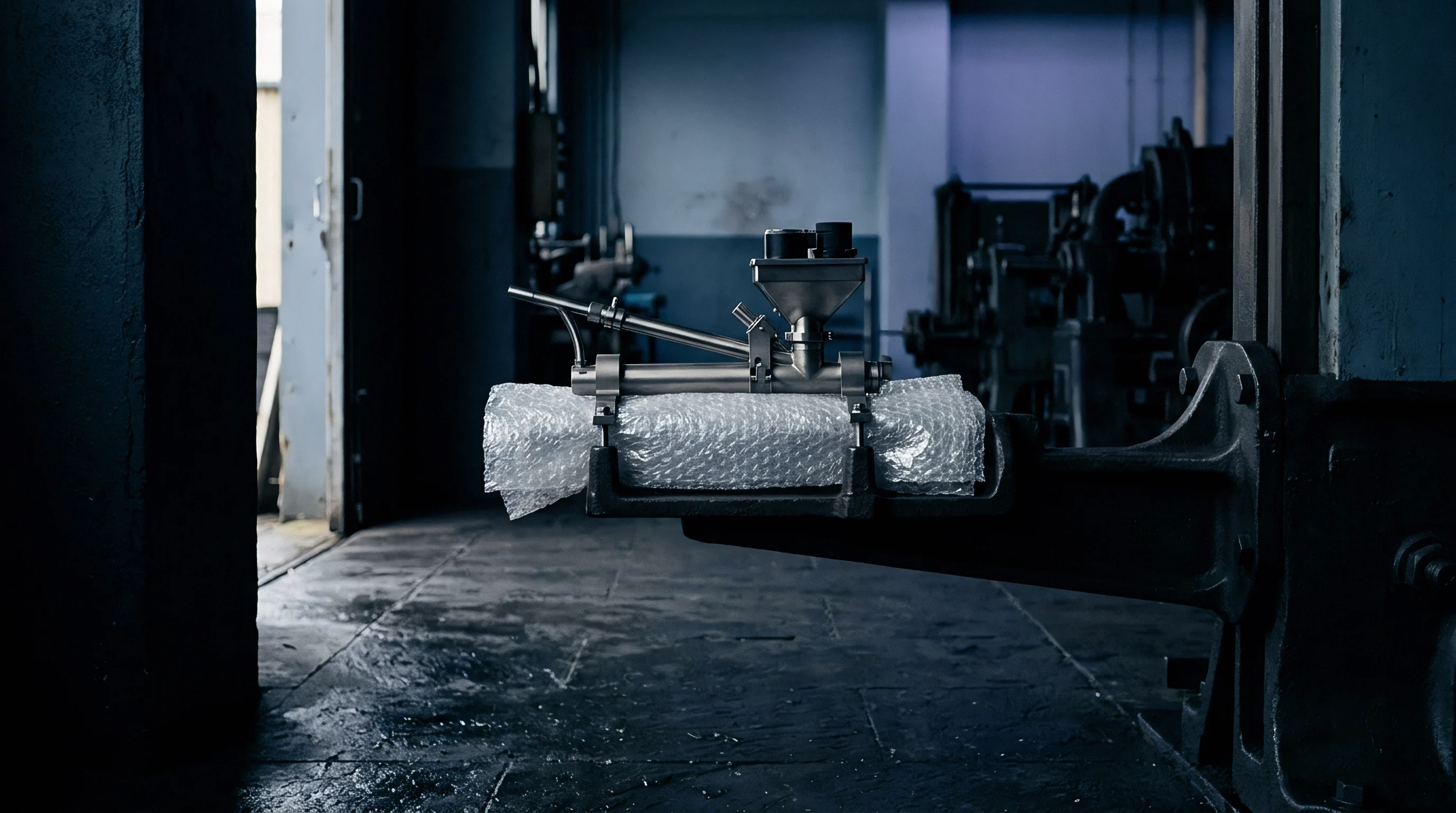
The physical connection between a prime mover and regional piping reveals the exact line of commercial demarcation. In high-pressure pumping systems, a fully configured skid features companion flanges machined from forged stainless steel, complete with pressure transducers, vibration isolators, and flexible expansion bellows. The stripped baseline configuration terminates at bare cast-steel nozzle necks with standard ASME class flanges, transferring all isolation hardware, instrumentation, and pipe alignment responsibilities to the regional installer.
Mechanical contractors purchasing bare units supply their own pipe spools, strainers, and isolation valves. This technical separation mirrors the commercial division within multi-tier distribution. The master distributor sells raw pump blocks in pallet quantities, while mechanical jobbers assemble regional packages tailored to local building specifications.
| System Component | Turnkey Industrial Package | Stripped Baseline Configuration | Channel Allocation Responsibility |
|---|---|---|---|
| Hydraulic Casing | Ductile iron with internal epoxy coating | Bare grey cast iron class 30 | Factory assembled |
| Drive Mechanism | Variable frequency drive with closed-loop logic | Standard NEMA frame fixed-speed motor | Distributor integration |
| Seal Arrangement | Cartridge double mechanical seal with barrier fluid | Component single spring packing gland | Field installer |
| Instrumentation | 4-20 milliamp pressure transmitters and RTDs | Tapped 0.25-inch NPT gauge ports with plugs | Regional jobber |
| Control Enclosure | NEMA 4X stainless steel with touch screen | Bare terminal box on motor frame | Electrical contractor |
| Acceptance Testing | Factory certified five-point witness curve | Standard uncalibrated hydrostatic batch proof | Factory bench |

Which Channel Tier Absorbs Unbundled Inventory?
National wholesalers maintain central stocking yards for basic mechanical configurations. Their operating model relies on rapid inventory turnover, bulk freight movements, and minimal pre-sale engineering support. They purchase bare machines by the container load, financing floor plans and distributing individual skids to secondary regional jobbers on thirty-day terms.
Regional jobbers maintain localized shops capable of altering baseline hardware. They add local disconnect switches, weld companion flanges, and apply specified protective paint systems. By converting bare skids into job-ready equipment packages, regional jobbers capture margin that original equipment manufacturers surrender when unbundling their lines.
- Master stocking distributors finance large inventory pools and move raw crates without mechanical modification or field application support.
- Regional industrial jobbers combine bare skids with local electrical hardware and pipe assemblies to meet municipal job specifications.
- Authorized service dealers handle warranty repairs, hold localized spare parts inventories, and supply replacement wear components directly to plant operators.
- Independent mechanical contractors purchase basic machines at wholesale counter prices and install them directly into competitive commercial bidding jobs.
Jobbers demand localized inventory. Without immediate yard availability of unbundled skids, mechanical contractors substitute competing imports available from commercial supply branches.
Commercial contracts governing bare equipment sales shift mechanical alignment liability to the licensed installer at the delivery dock.
The unbundled configuration reduces working capital commitments for stocking distributors. Carrying fully configured machinery ties cash up in specialized electronics that risk obsolescence while sitting in warehouse racks. Raw mechanical iron retains value over longer inventory holding cycles.
A regional distributor representative explained that holding complex drives on warehouse floors invites obsolescence, whereas stocking basic iron lets the branch dress each machine to order within twenty-four hours of an inquiry.


Rebate
Discount schedules in heavy machinery distribution separate invoice deductions from retrospective settlements. List price serves as an accounting benchmark rather than a transaction price. Across industrial equipment channels, manufacturer wholesale terms rely on tiered margin stacks that combine base functional discounts, volume rebate thresholds, and cooperative advertising allowances.
Master distributors capture fifty-two points off published book prices. A fully featured sixty-kilowatt pumping unit listing at 24,000 dollars yields an initial invoice price of 11,520 dollars to a tier-one wholesaler. In contrast, a stripped baseline unit carrying a book price of 15,000 dollars enters the same channel tier at an invoice price of 7,800 dollars, reflecting a narrower base functional discount of forty-eight points.
The gross-to-net waterfall changes fundamentally between complete systems and bare equipment. Fully dressed units carry rich back-end rebate pools funded by high factory margins on digital accessories and proprietary service contracts. Stripped baseline machines operate on lean unit economics that limit supplier rebate funding.
| Price Stack Component | Turnkey System Master Tier | Stripped Baseline Master Tier | Turnkey System Regional Jobber | Stripped Baseline Regional Jobber |
|---|---|---|---|---|
| Published List Price | 28,500.00 | 17,200.00 | 28,500.00 | 17,200.00 |
| Base Wholesale Discount | -14,820.00 (52%) | -8,256.00 (48%) | -11,970.00 (42%) | -6,536.00 (38%) |
| Invoice Price | 13,680.00 | 8,944.00 | 16,530.00 | 10,664.00 |
| Annual Volume Rebate | -855.00 (3%) | -172.00 (1%) | -427.50 (1.5%) | 0.00 (0%) |
| Prompt Payment Cash Term | -273.60 (2%) | -178.88 (2%) | -330.60 (2%) | -213.28 (2%) |
| Marketing Development Fund | -570.00 (2%) | 0.00 (0%) | -285.00 (1%) | 0.00 (0%) |
| Net Realized Factory Revenue | 11,981.40 | 8,593.12 | 15,486.90 | 10,450.72 |

Wholesale Discount Structures across Volume Tiers
Master distributors capture five to seven percentage points of back-end settlement on premium machinery lines by meeting annual purchase targets. These retrospective rebates encourage distributor exclusivity and discourage multi-line representation. Bare baseline machinery lines cannot support these structures.
Their factory margins hover around eighteen percent, leaving minimal room for retrospective payments.
Suppliers restrict volume rebates on stripped lines to one percent of net purchases, payable only upon achievement of strict pallet-quantity minimums. Cash discounts remain constant across tiers at two percent for settlement within ten days, because capital velocity holds equal value regardless of equipment specification.
The discount ladder remains intact. Regional jobbers purchasing from master distributors receive smaller invoice discounts, capturing thirty-eight points off list for stripped equipment compared to forty-eight points obtained by master accounts. This ten-point spread covers master distributor warehousing expenses, intra-regional freight, and inventory financing costs.
Direct shipments bypass intermediate depots. When a large mechanical contractor orders thirty stripped compressors for a commercial installation, the master distributor places a drop-ship order directly with the manufacturing facility. The factory ships the equipment directly to the job site.
The master distributor collects an invoicing fee of four percent without touching the wooden crates.
Consider an annual transaction volume of one hundred baseline pumping skids moving through a master wholesale account. The published list price sits at 17,200 euros per unit. The master distributor purchases at forty-eight percent off list, generating an initial invoice cost of 8,944 euros per skid, or 894,400 euros in gross billings.
Freight allowances erode margin. The manufacturer absorbs standard domestic flatbed freight on full truckload shipments of twenty skids or more, representing an expense of 320 euros per machine. When the distributor breaks truckloads and requests single-unit shipments to regional jobbers, the manufacturer assesses an unbundled logistics surcharge of 185 euros per crate.
Payment terms dictate banking returns. The distributor utilizes standard two percent prompt payment discounts, remitting funds within ten calendar days. This deduction removes 178.88 euros per unit from cash receipts.
An annual volume rebate of one percent returns 89.44 euros per unit at year-end audit reconciliation, provided zero warranty claims remain outstanding.
Factory realized revenue drops to 8,593.12 euros per unit on volume orders, against direct manufacturing costs of 7,050 euros for raw iron, machining, motor procurement, and skid fabrication. The supplier banks a contribution margin of 1,543.12 euros per baseline machine, representing an eighteen percent operating margin. On a fully featured system selling at a net realized price of 11,981.40 euros, the manufacturer banks a contribution margin of 4,380 euros, or thirty-six point five percent.
The volume trade-off demands precision. A manufacturer must ship nearly three stripped baseline units to capture the absolute euro contribution generated by a single fully configured industrial system.
Section 8.2 of the International Distribution Agreement excludes stripped mechanical assemblies from cooperative advertising credits and eliminates manufacturer freight absorption on split-lot purchase orders.
Distributors accept the thinner unit margins of stripped equipment because it broadens their customer base. Contractors who would never purchase a premium package buy stripped iron, then purchase high-margin fittings, flexible hoses, motor starters, and pipe insulation from distributor counter stock. The stripped machine functions as a transaction vehicle for ancillary wholesale goods.
Wholesale distribution terms enforce these boundaries by conditioning annual volume rebates across all product lines on the distributor maintaining agreed minimum sales ratios between complete and baseline equipment. An account purchasing exclusively unbundled hardware loses tier qualification on the supplier’s broader catalog.


Parity
Price equilibrium collapses when down-market buyers purchase stripped hardware through primary contractor channels. Industrial markets segment buyers naturally by application criticality. Continuous-process chemical plants pay premium prices for factory-certified machines with redundant sensors, because thirty minutes of unpredicted downtime exceeds the total acquisition cost of the equipment.
In contrast, utility workshops and commercial drainage operations buy on initial capital outlay.
When stripped baseline products enter distribution tiers without strict resale fences, channel cannibalization begins. Regional distributors quote stripped units fitted with cheap third-party accessories directly to tier-one industrial plants, bypassing the manufacturer’s premium catalog. The plant gets an acceptable machine at a forty percent discount, the distributor captures a larger margin on third-party accessories, and the equipment manufacturer surrenders its high-margin systems business.

Where Do Margin Concessions Destroy Channel Parity?
Regional distributors frequently repackage stripped stock with local third-party drives. A distributor buys a bare pump skid for 8,944 euros, procures an unbranded variable-speed drive for 1,200 euros, mounts the hardware on a regional steel frame, and quotes the package at 14,500 euros against a factory-configured list of 28,500 euros. The customer perceives an authentic brand name on the casting while paying half the original turnkey price.
Brokers arbitrage regional price spreads. In cross-border distribution, unbundled machinery lines slip through authorized territorial boundaries because stripped skids lack regional compliance markings that restrict localized equipment sales. A baseline pump lacking CE electrical enclosures can be purchased under export wholesale licenses and redirected into secondary domestic markets.
- Specification creep occurs when commercial sales reps quote stripped machines for continuous-process plants, leading to premature field failures that harm corporate brand standing.
- Margin compression spreads through dealer networks as jobbers competing on the same municipal tenders discount factory bare units against one another until gross margins touch zero.
- Grey assembly operations emerge when third-party packagers fit bare factory castings with substandard motors, creating hybrid machines that field operators mistake for factory-built equipment.
Field service calls cost money. When hybrid machines fail in the field, plant technicians contact the casting manufacturer rather than the regional integration shop. Factory service coordinators spend hours analyzing installation photographs before establishing that the motor and drive failed due to improper regional sizing rather than casting defects.
Cross-border pipeline hardware exhibits similar channel pressures. In American petroleum piping procurement under API specification 6D, bare pipeline ball valves often move through Texas supply yards without factory-installed gear actuators. Supply houses fit local pneumatic actuators to bare valve stems, capturing lucrative accessory margins while leaving the valve manufacturer exposed to leakage disputes caused by incorrect stem torque settings.
Distributor agreements that fail to police this behavior generate permanent price degradation across all tiers. Once regional contractors realize they can assemble a functional machine from a bare skid and catalog components, they refuse published prices on turnkey industrial systems.
This dynamic leaves an unresolved operational tension between volume generation in price-sensitive applications and brand defense in mission-critical facilities, leaving manufacturers to balance baseline volume against wholesale system sales.


Remedy
Legal covenants in heavy equipment distributorship agreements bind regional sellers to strict territorial and specification limits. Manufacturers defending their premium lines install contractual fences that separate stripped baseline hardware from integrated systems. These instruments penalize channel partners who position bare mechanical equipment in direct competition with factory turnkey offerings.
Channel integrity relies on clean product identification. Stripped baseline machinery carries distinct model prefixes, secondary brand nomenclature, and alternative paint schemes. A cast-iron pump distributed as a stripped unit leaves the plant coated in industrial black primer rather than corporate blue enamel.
This visual distinction alerts field inspectors and end users that the hardware operates under limited baseline warranty terms.

Contractual Fencing and Warranty Allocation
Stripped units carry restricted serial designations preventing digital warranty registration on premium portals. When an end user inputs a baseline serial code into the manufacturer’s service system, the software rejects requests for factory field engineering, directing the user to the local installing distributor. This administrative firewall halts unauthorized field claims at the point of digital intake.
Commercial contracts allocate warranty obligations through strict labor disclaimers. If a mechanical casting exhibits porosity within twelve months of delivery, the factory provides a bare replacement casting at no charge. The agreement explicitly assigns all tear-down labor, fluid evacuation, rigging, piping realignment, and electrical disconnection expenses to the purchasing distributor.
| Contract Mechanism | Turnkey Industrial System | Stripped Baseline Line | Remedial Action for Breach |
|---|---|---|---|
| Branding Covenant | Primary corporate trademark with full badge set | Sub-brand nameplate or unbranded raw casting | Revocation of distributor wholesale discount |
| Resale Channel Limit | Direct plant sales and authorized engineered dealers | Commercial contractors and stocking wholesalers | Clawback of annual retrospective volume rebates |
| Field Service Liability | Factory authorized mobile tech dispatch included | Distributor assumes 100% of field labor and travel | Immediate invoice billing for factory technician hours |
| Serial Registration | Mandatory digital portal setup for warranty activation | Physical postcard or counter invoice receipt only | Denial of parts replacement for unregistered serials |
| Third-Party Dressing | Prohibited; requires factory certified parts | Permitted subject to strict factory de-badging | Termination of territorial wholesale exclusivity |
Channel monitoring prevents wholesale margin erosion. Manufacturers audit dealer bid submissions on major regional projects to verify that distributors quote appropriate equipment configurations. A distributor caught offering stripped baseline hardware on specifications mandating complete industrial systems receives written notice and loses tier rebate eligibility for that fiscal quarter.
The mechanical warranty remains valid. However, the legal burden of proof regarding operating conditions shifts entirely to the buyer. If a baseline pump runs without adequate external filtration or suffers electrical phase imbalance, the factory rejects warranty returns unless the distributor provides certified operating logs proving continuous compliance with base mechanical limits.
Selective unbundling succeeds when the factory separates physical iron from system integration without allowing channel partners to arbitrage the margin gap between them.