Reconciling Advanced Shipping Notices against Automated Receiving Logs in Retail Supply Chains
Automated receiving reconciliation matches EDI 856 advance notifications against physical scan logs to isolate inventory variances before chargebacks clear.


Dock
Inbound scanning operations start right at the perimeter bay. Before a driver can break the trailer seal, automated receiving platforms require an advance shipping notice sent via EDI 856. As yard hostlers pull pallets onto the induction line, overhead camera tunnels and radio frequency identification portals scan the pallet license plates, allowing the warehouse management system to match incoming serial shipping container codes against the pre-cleared electronic manifest in milliseconds.
If a carrier pulls up ahead of schedule, transmission latency can throw the logs out of sync. When an advance notice arrives after unloading is already underway, sorters fail to match container barcodes to open purchase orders and divert the unlinked pallets onto quarantine spurs, stalling inbound throughput and forcing manual audits.
Inbound freight arriving without a corresponding EDI 856 document within four hours of gate check-in forces automated sorters to divert pallets to manual hold bays.
Gantry-mounted industrial scanners read multi-surface labels across the pallet faces, capturing global trade item numbers alongside lot codes and expiration dates. Transit wear often crushes or scuffs the corrugated packaging, warping barcode geometry until read rates drop below operational thresholds. When an optical array misses a damaged label, the receiving log flags a missing carton even though the EDI record lists a complete delivery.


Variance
Mismatches between advance shipping notices and physical barcode scans show up across three packaging tiers. Outer shipping units, intermediate master cartons, and consumer packaging each rely on distinct barcode schemes that easily fall out of step on high-speed induction lines.

Discrepancy Sources across Multi-Tier Packaging
Discrepancies often build up between the vendor’s palletizing line and the receiving dock. Stretch-wrap film applied by automated wrappers can cause glare under intense tunnel lighting, blinding the scanner even on a clean, intact pallet. Inside the cases, automated case-packers occasionally miscount consumer units, so while overhead scanners confirm the outer master carton label, downstream checkweighers catch a mass discrepancy that disproves the electronic manifest count.
- Serial Shipping Container Code Transposition occurs when automated vision systems parse the 18-digit payload incorrectly, matching the shipment to an adjacent pallet record in the warehouse management system.
- Inner-Pack Quantity Substitution takes place when master cases carry identical external barcodes despite containing lower unit counts than indicated on the electronic shipping advice.
- Unmanifested Stock Insertion arises during promotional packing runs where distribution centers insert secondary point-of-sale display items without updating the hierarchical line items on the electronic transaction.
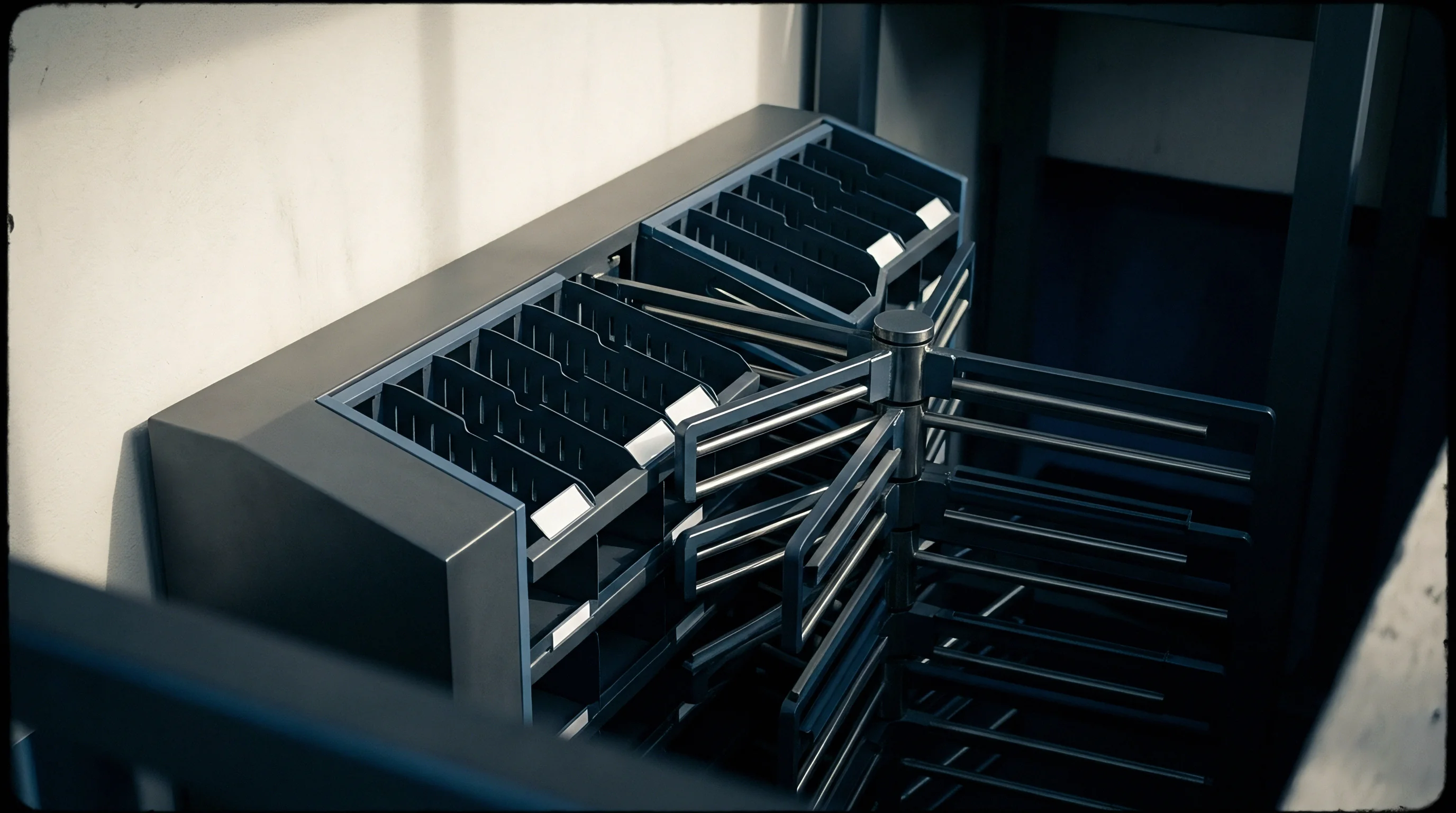
Barcode Legibility and Serial Container Code Corruption
Camera tunnels require strong edge contrast to decode eighteen-digit payloads at speeds above two meters per second. Low-grade thermal label stock tends to smudge under transit vibration against the trailer walls.
Master case barcode scan failures exceed four percent when outer corrugated fluting absorbs ambient humidity above eighty percent during long-haul transit.
| Discrepancy Type | Physical Receiving Trigger | EDI 856 Manifest Error | System Resolution Action |
|---|---|---|---|
| Phantom Freight | Physical scan registered without manifest record | Missing EDI 856 record or transmission drop | Reroute to vendor quarantine bay for manual entry |
| Shortage Claim | EDI 856 record unfulfilled by physical scan | Over-stated line item quantity on advance notice | Auto-generate electronic exception bill line item |
| Hierarchical Mismatch | Master carton barcode mapped to wrong pallet ID | Corrupted parent-child packaging linkage | Break pallet build and re-scan individual cartons |
When dock-door discrepancies go uncorrected, they corrupt perpetual inventory balances throughout the facility, prompting automated replenishment routines to place premature reorders.


Logic
Reconciliation software runs a three-way match across purchase orders, advance shipping notices, and physical license plate scans. The engine checks case counts, catch weights, and stock keeping unit identities before booking goods into available inventory.

How Do Automated Systems Handle Partial Pallet Mismatches?
When a broken pallet comes through, the system compares scanned container data against the expected SKU structure. If a scanner tallies forty-eight cartons on a fifty-case pallet, the matching logic checks whether that two-case variance sits within agreed tolerance limits. If it does, the system logs the forty-eight units into inventory, files a shortage variance, and flags the purchase order line as partially received.
Sequential Automated Matching Architecture
The warehouse control engine processes inbound inventory logs through four deterministic processing layers.
- The inbound receiving engine pulls the EDI 850 purchase order baseline and compares line-item stock keeping units against the EDI 856 advance notice.
- High-speed vision portals register the SSCC-18 barcode on incoming pallets and create an automated receiving log entry tied to the physical door timestamp.
- Algorithmic validation rules calculate variance tolerances for catch-weight items and bulk case counts before committing stock into available inventory.
- Discrepancy flags trigger automated routing commands that direct non-compliant pallets to inspection spurs while directing matched stock to active storage slots.
Consider an order of 500 master cases split across 10 pallets at an ex-works price of $40.00 per case. The EDI 856 notice lists 50 cases on each pallet under 10 separate SSCC-18 numbers, representing $20,000.00 in goods. During receiving, the vision portal validates the first 9 pallets at full 50-case counts, but the 10th pallet scans at only 30 cases after an internal layer collapsed in transit.
Faced with 480 physical cases against the 500-case manifest, the system logs the 480 received cartons ($19,200.00), issues a shortage record for the missing 20 cases ($800.00), and flags the partial pallet’s SSCC-18 barcode. It then places an escrow hold on the $800.00 discrepancy while releasing the cleared $19,200.00 balance to accounts payable.
Accepting unverified carton substitutions without updating the master catalog simply transfers warehouse labor from receiving over to order picking.


Deduction
Retailers collect compliance penalties through automated accounts payable workflows that debit supplier invoices directly. If physical scan records contradict the electronic manifest, the accounting platform issues deductions against pending settlements.

Compliance Fee Structures and Notification Timelines
Non-compliance fees range from fixed administrative assessments to percentage deductions against total invoice value. Systems trigger these penalties automatically whenever transmission windows close before arrival or unreadable labels require manual handling.
Retail vendor trading agreements standardly grant suppliers a thirty-day window from remittance issuance to submit digital audit logs proving electronic shipping data matched trailer physical contents.
| Compliance Violation | Technical Cause | Fee Basis | Recovery Evidence Requirement |
|---|---|---|---|
| Late ASN Transmission | EDI envelope delivered post-dock arrival | $250 flat fee plus $5 per late carton | Time-stamped EDI 997 functional acknowledgment |
| Unscannable SSCC-18 | Label smudging or poor contrast ratio | $100 per pallet manual processing fee | High-resolution portal camera capture logs |
| Physical Shortage | Physical scan lower than EDI 856 manifest | 100% item value plus 15% handling surcharge | Certified bill of lading signed by carrier driver |

Contractual Dispute Protocols and Evidence Packaging
Vendors contesting administrative fees submit detailed digital audit dossiers through automated supplier portals. Reversal of an applied deduction requires matching raw system logs across multiple communication protocols.
- Inbound Timestamp Validation confirms that the electronic data interchange envelope completed transmission before the carrier arrived at the distribution center gate.
- Raw Automated Scan Verification cross-checks the physical license plate log against secondary barcode reads taken along internal conveyor sorting spurs.
- Bill of Lading Cross-Referencing establishes whether carrier damage or driver non-count contributed to shortage claims filed by automated receiving systems.
Standard retail master purchase agreements stipulate that unpaid compliance claims automatically convert to offset line items against future inventory payments after sixty days.


Balance
Connecting dock scans directly to accounts payable means physical receiving errors translate into working capital drag. When barcode logs register fewer cartons than the electronic shipping notice listed, remittance systems automatically deduct the difference from settlement checks.

Working Capital Drift and Remittance Recovery
Uncontested dock discrepancies eat into net margins on finished shipments. Unreconciled inventory holds trap receivables in prolonged review, so vendor finance teams track scan variance rates to budget for unavoidable deductions on large retail accounts.