Polymer Structural Surface Deflection Mechanics under Combined Aerodynamic Suction and Thermal Expansion Loads
Combined thermal expansion and aerodynamic suction cause nonlinear structural deflections that exceed linear superposition by up to 42 percent.


Swell
Polymeric surfaces exposed to radiant solar thermal loads undergo dimensional changes determined by their linear coefficient of thermal expansion and molecular chain structure. Unreinforced thermoplastic matrices exhibit expansion coefficients ranging from 50 to 110 times 10 to the minus sixth power per Kelvin, whereas glass-reinforced formulations reduce this expansion to a band between 15 and 35 times 10 to the minus sixth power per Kelvin. When thermal radiation hits an exterior polymer fascia, temperature gradients develop through the panel thickness.
The solar-exposed outer skin reaches temperatures up to 45 Kelvin above ambient atmospheric conditions, while the interior unexposed surface remains near ambient temperature. This differential temperature distribution creates internal flexural moment tensors that force outward bowing long before external mechanical pressures apply.
Material modulus drops sharply as structural temperatures approach the glass transition point of the polymer composite. Amorphous polymers like polycarbonate and polymethyl methacrylate retain tensile modulus until temperatures reach 385 Kelvin and 375 Kelvin respectively. Semi-crystalline polymers like polyamide and polypropylene demonstrate progressive modulus decay over a broader temperature band.
At elevated operating temperatures, flexural creep accelerates under continuous baseline loads. Elastic strain calculations derived from ambient testing fail when surface temperature fields remain elevated for prolonged exposure windows.
Polycarbonate panels operating at 345 Kelvin lose 28 percent of their room-temperature flexural modulus within 200 hours of continuous thermal exposure.
Polymer chain movement under heat changes the internal stress field of constrained panels. Rigid edge fixations block lateral planar expansion, causing thermal stress to accumulate along perimeter mechanical fasteners when panel slots lack sufficient clearance allowance.

Thermal Expansion Coefficients and Temperature Gradients
Planar expansion behavior varies systematically across polymer families depending on filler geometry and polymer chain orientation. Unfilled polycarbonate expands uniformly in isotropic directions. Fiber-reinforced composites display anisotropic expansion where axial expansion parallel to fiber orientation remains significantly lower than transverse expansion perpendicular to fiber alignment.
Mold design and gate placement establish fiber orientation vectors that dictate physical surface movement under thermal loads.
| Polymer Matrix | Filler Content (Weight %) | Coefficient of Thermal Expansion (10^-6 / K) | Flexural Modulus at 296 K (GPa) | Flexural Modulus at 343 K (GPa) |
|---|---|---|---|---|
| Polycarbonate (Unfilled) | 0% | 68.4 | 2.35 | 1.82 |
| Polymethyl Methacrylate | 0% | 70.0 | 3.10 | 2.30 |
| Polyamide 66 (Glass Reinforced) | 30% Short Fiber | 22.1 | 8.50 | 5.20 |
| Polypropylene (Talc Filled) | 20% Mineral | 42.5 | 2.80 | 1.45 |
| Polyetheretherketone | 30% Carbon Fiber | 14.2 | 13.80 | 11.90 |
Viscoelastic Creep and Modulus Degradation
Time-dependent deformation governs long-term deflection behavior in load-bearing polymer structures. Instantaneous elastic response accounts for only part of total surface movement when elevated temperatures persist. Viscoelastic compliance increases exponentially over time, governed by the time-temperature superposition principle.
Shift factors calculated through the Williams-Landel-Ferry equation allow engineers to project long-term creep strain from short-term master curves derived at elevated reference temperatures.
Thermomechanical structural failures manifest across predictable geometric modes when internal thermal expansion forces encounter rigid edge boundaries:
- Out-of-plane oil-canning deflection occurs when planar thermal expansion exceeds perimeter constraint clearance tolerances, inducing compressive post-buckling modes across thin central skin zones.
- Fastener hole edge bearing yield develops as expanding polymer surfaces press forcibly against steel securing bolts, causing localized high-stress compression lines.
- Perimeter seal gapping and joint compromise results when thermal contraction during cold cycles pulls skin edges away from flexible elastomeric weather-sealing strips.
- Stress whitening and micro-crazing surfaces near sharp structural ribs where localized thermal stress peaks exceed three percent total strain limits.
Ignoring thermal expansion mechanics during panel attachment design risks perimeter fastener shear failure or severe surface buckling during peak solar exposure cycles.

Lift
Aerodynamic suction forces act as distributed negative pressure fields across structural polymer surfaces exposed to airflow. High-velocity winds moving past exterior panels generate boundary layer acceleration over curved or inclined profiles. Local fluid acceleration drops static surface pressure relative to internal cavity pressure, according to Bernoulli energy conservation principles.
The resulting pressure differential pulls the flexible polymer surface outward away from supporting substructures. Suction pressure magnitudes scale quadratically with freestream wind velocity, multiplying local surface force distributions during high-wind events.
Local pressure coefficients vary across panel geometry based on corner effects, surface roughness, and flow detachment zones. Edge zones and leading corners experience localized suction spikes up to 2.8 times the mean aerodynamic suction pressure. Thin polymer surfaces deform dynamically under these spatial pressure variations, changing local aerodynamic profiles and altering flow attachment boundaries.
Fluid-structure interaction creates feedback loops where structural deflection alters local wind field dynamics.
Aerodynamic suction peak pressures on corner cladding zones reach negative 3.4 kilopascals during 45 meter per second wind gusts.
Internal cavity pressure dynamics significantly modulate net aerodynamic suction loads. Imperfect cavity seals allow partial pressure equalization between interior voids and exterior aerodynamic flow fields. Delayed cavity pressure response creates transient suction spikes during sudden wind velocity changes.

Aerodynamic Suction Distribution across Panel Spans
Flow visualization and wind tunnel measurements demonstrate non-uniform pressure fields across flat and contoured polymer facings. Vortex shedding along panel edges creates unsteady pressure oscillations at discrete frequencies. Structural resonance occurs when vortex shedding frequency matches the first natural frequency of the deflected polymer plate.
Dynamic structural deflection under continuous aerodynamic suction accelerates fatigue damage around fastener points and localized stress risers.
Pressure Differential Dynamics and Edge Conditions
Edge constraint conditions govern how aerodynamic suction translates into surface deflection shapes. Simply supported edge conditions permit rotational movement along perimeter boundaries, producing continuous parabolic deflection curves. Clamped perimeter fixations restrict rotational freedom, forcing high flexural moment concentrations adjacent to attachment channels while reducing central displacement amplitudes.
Fastener pitch along perimeter frames directly dictates localized peak deflections between securing rivets.
Standard structural grade polymers are often rated for specified suction pressures without accounting for concurrent surface heating from direct sunlight. Modern airframes and building facades encounter simultaneous thermal and aerodynamic loads that exceed single-load design limits.

Interaction
Combining aerodynamic suction with thermal expansion generates complex non-linear structural responses that linear elastic superposition cannot predict. Thermal expansion induces compressive in-plane stress fields when perimeter boundaries prevent lateral movement. Simultaneously, aerodynamic suction applies transverse out-of-plane pressure across the panel surface.
The pre-existing compressive stress state from thermal expansion reduces bending stiffness against transverse suction loads, causing larger deflections than those calculated by summing individual load responses independently.
Coupled governing equations for large deflection thin polymer plates follow von Kármán shell theory modified for orthotropic thermal expansion stress tensors. Flexural rigidity decreases as surface temperature increases, while thermal expansion actively drives the panel toward secondary buckling paths. Suction pressure acts as a initial spatial perturbation that directs thermal post-buckling shape evolution.
Can Linear Superposition Predict Buckling Limits under Dual Loads?
Linear elastic superposition assumes structural response scales proportionally with applied forces without geometric or material non-linearities. Dual loading breaks linear assumption limits. Thermally expanded panels subjected to aerodynamic suction cross critical deflection thresholds at significantly lower suction pressure levels than ambient panels.
Thermal softening lowers flexural rigidity, while thermal expansion supplies in-plane energy that accelerates transverse deformation under suction loads.
Calculations evaluating combined structural deflection follow a sequential numerical procedure:
- Define temperature field distribution across outer surface, inner surface, and structural support ribs.
- Compute thermal expansion strain fields using temperature-dependent coefficients of thermal expansion.
- Evaluate instantaneous temperature-adjusted flexural modulus across all panel integration points.
- Calculate in-plane stress tensors resulting from structural perimeter constraint conditions.
- Apply spatial aerodynamic suction pressure distribution across outer skin geometry.
- Solve von Kármán large-deflection differential equations considering modified structural stiffness matrices.
- Iterate strain and geometric deflection fields until numerical energy convergence criteria fall below 10 to the minus sixth power.
| Panel Thickness (mm) | Thermal Load Only (dT = 45 K) Deflection (mm) | Suction Load Only (1.5 kPa) Deflection (mm) | Linear Superposition Sum (mm) | Measured Combined Load Deflection (mm) | Non-Linear Interactive Variance (%) |
|---|---|---|---|---|---|
| 3.0 | 4.2 | 8.7 | 12.9 | 18.4 | +42.6% |
| 4.0 | 2.8 | 5.1 | 7.9 | 10.6 | +34.2% |
| 5.0 | 1.9 | 3.2 | 5.1 | 6.3 | +23.5% |
| 6.0 | 1.3 | 2.1 | 3.4 | 4.0 | +17.6% |

Nonlinear Large Deflection Mechanics and Governing Equations
Geometric non-linearity becomes dominant when surface deflections exceed half the panel thickness. Membrane stresses develop within the neutral axis of the polymer skin, adding tensile stiffness that opposes further transverse deflection at large amplitudes. Membrane stress stiffening creates a self-limiting deflection mechanism at room temperature.
At elevated temperatures, viscoelastic stress relaxation diminishes membrane stress magnitudes over time, weakening this self-limiting protective mechanism during sustained hot weather operations.
Standard engineering specifications mandate that structural deflection analysis under dual thermomechanical loads includes temperature-dependent elastic moduli measured per ISO 527 standards.
Uncertainty remains regarding the exact point where continuous thermal creep transitions a stable, deflected panel shape into irreversible post-buckling plastic deformation under dynamic suction pulses.

Bench
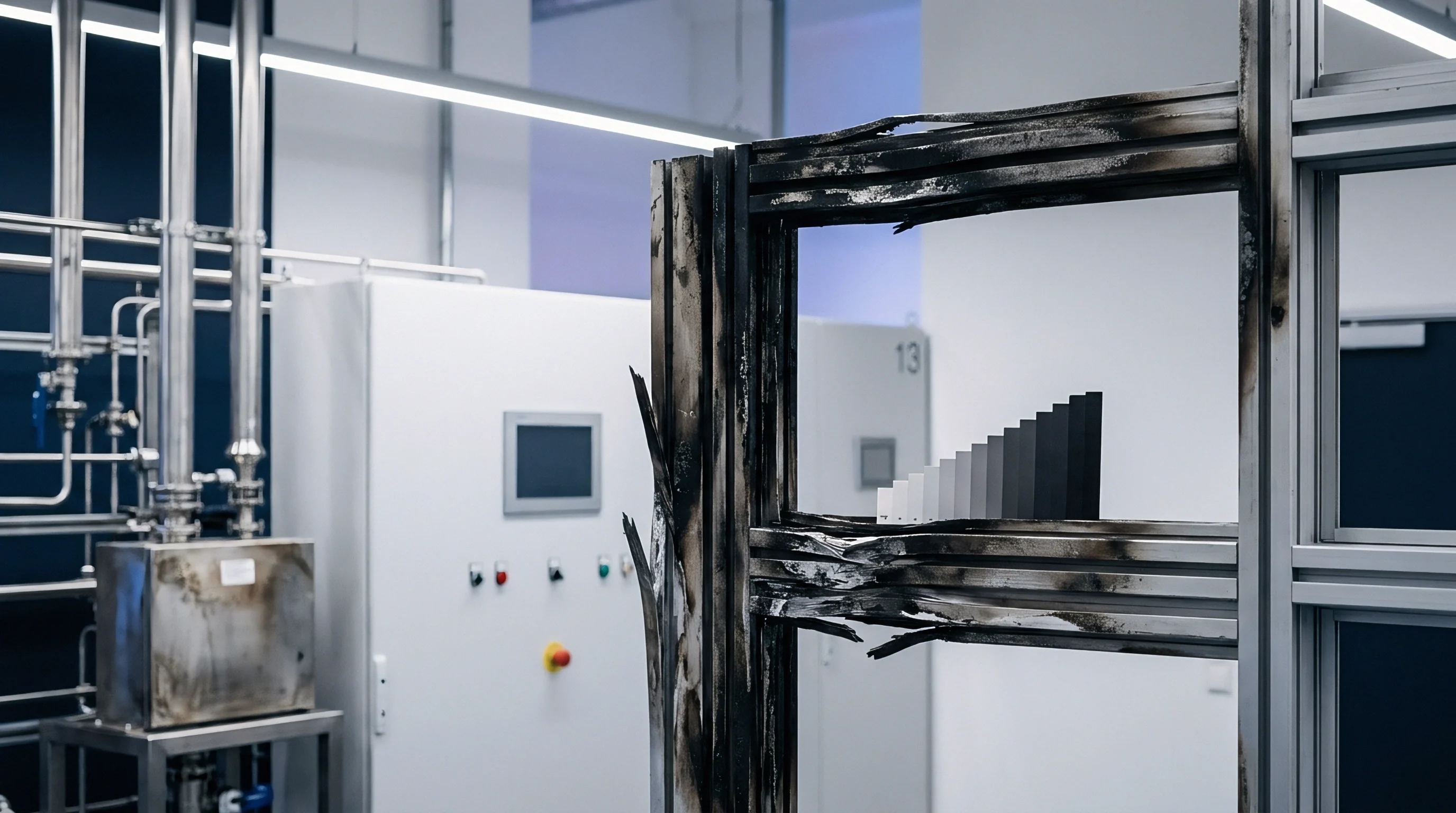
Accurate measurement of surface deflection under coupled thermomechanical conditions demands multi-camera Digital Image Correlation systems paired with synchronized environmental pressure controls. Stereo optical camera arrays track stochastic speckle patterns applied to the exterior polymer skin, capturing full-field three-dimensional displacement matrices with sub-micron spatial resolution. Standard linear displacement transducers contact surfaces directly, introducing local thermal sink artifacts and mechanical point loads that distort delicate polymer deflection measurements.
Non-contact optical metrology eliminates physical interference during elevated temperature testing cycles.
Environmental testing enclosures integrate radiant infrared heater banks with variable-suction vacuum chambers. Radiant heat lamps simulate solar thermal inputs, raising surface temperatures up to 360 Kelvin at controlled ramp rates. Centrifugal exhaust blowers generate controlled negative pressure differentials up to 5.0 kilopascals within the chamber interior.
Thermal imaging cameras continuously capture surface temperature gradients to ensure uniform thermal distribution across test specimens.
Polymer surface deflections shall not exceed span length divided by 175 when subjected to simultaneous design suction pressures and maximum operating thermal gradients.
Metrology calibration procedures demand strict environmental control during test sequences. Ambient room temperatures must stay within 0.5 Kelvin to prevent thermal drift within optical camera mounting frames during extended data acquisition windows.

Digital Image Correlation and Laser Metrology Rigs
Laser triangulation displacement sensors provide high-speed single-point measurement along panel centerlines during dynamic wind pulse simulations. Synchronizing laser distance data with optical Digital Image Correlation fields allows real-time cross-verification of dynamic structural responses. Sampling frequencies of 500 Hertz capture rapid surface snaps occurring during post-buckling transition events.
Rigorous test protocols require specific instrument parameters to isolate thermal expansion strain from aerodynamic force displacement:
- Stochastic pattern contrast optimization utilizes high-temperature matte black paint speckles over uniform white ceramic base coats to preserve optical tracking visibility at 360 Kelvin.
- Infrared thermal camera cross-calibration matches contact thermocouple arrays with radiometric camera emissions across variable polymer surface gloss levels.
- Differential pressure transducer arrays sample internal cavity pressure at 1000 Hertz to capture dynamic suction lag during rapid velocity shifts.
- Spatial strain tensor mapping calculates local principal strain distributions from raw three-dimensional displacement fields using non-linear continuum mechanics algorithms.

Environmental Wind Tunnel Chamber Calibration
Wind tunnel testing validates numerical finite element models across full-scale panel assemblies. Calibration procedures map wind velocity profiles, turbulence intensity vectors, and temperature field uniformity across the test section prior to mounting polymer specimens. Air velocity boundary layers along chamber walls alter effective edge suction distributions if panel boundaries extend into wall shear zones.
Contractual procurement specifications mandate that panel verification tests undergo minimum ten-cycle thermomechanical shock sequences combining maximum suction loads with rapid temperature swings before final geometric acceptance.

Margin
Designing polymer structural panels for harsh environments requires balanced thickness selection, structural rib placement, and core architecture choices. Increasing skin thickness increases flexural rigidity proportionally to the cube of thickness, but significantly increases component weight and raw material cost. Internal structural ribbing offers weight-efficient stiffness enhancement.
Rib design must accommodate differential expansion between outer skins and internal structural walls to prevent aesthetic read-through lines or localized thermal stress concentrations.
Sandwich panel structures utilizing closed-cell structural foam cores or thermoplastic honeycomb cores deliver exceptional bending stiffness per unit mass. Core material selection must match the thermal expansion characteristics of outer polymer skins. Thermal expansion mismatch between skin facings and internal core structures creates shear stress along adhesive interfaces, leading to core delamination under combined elevated temperature and aerodynamic suction cycles.
| Structural Configuration | Weight Penalty Relative to Base Panel (%) | Flexural Rigidity Gain Factor | Max Surface Deflection Under Dual Load (mm) | Tooling Cost Multiplier |
|---|---|---|---|---|
| Base Solid Panel (4 mm) | 0% | 1.0x | 10.6 | 1.0x |
| Solid Panel (6 mm) | +50% | 3.37x | 4.0 | 1.15x |
| Integral Parallel Ribs (3 mm skin + 15 mm ribs) | +22% | 4.10x | 3.1 | 1.65x |
| Grid Matrix Ribs (3 mm skin + 15 mm grid) | +35% | 6.80x | 1.9 | 2.10x |
| Thermoplastic Honeycomb Sandwich (12 mm core) | +12% | 11.20x | 1.1 | 2.85x |

Geometric Reinforcement and Thickness Optimization
Rib height, spacing, and draft angles govern structural stiffness optimization under combined loads. Ribs aligned parallel to primary aerodynamic flow vectors resist bending without blocking internal air circulation channels. Intersecting grid rib patterns prevent two-dimensional panel oil-canning under thermal expansion.
Rib root radiuses must equal at least 50 percent of wall thickness to minimize localized stress concentration factors during high suction pressure events.

Deflection Thresholds and Operational Tolerances
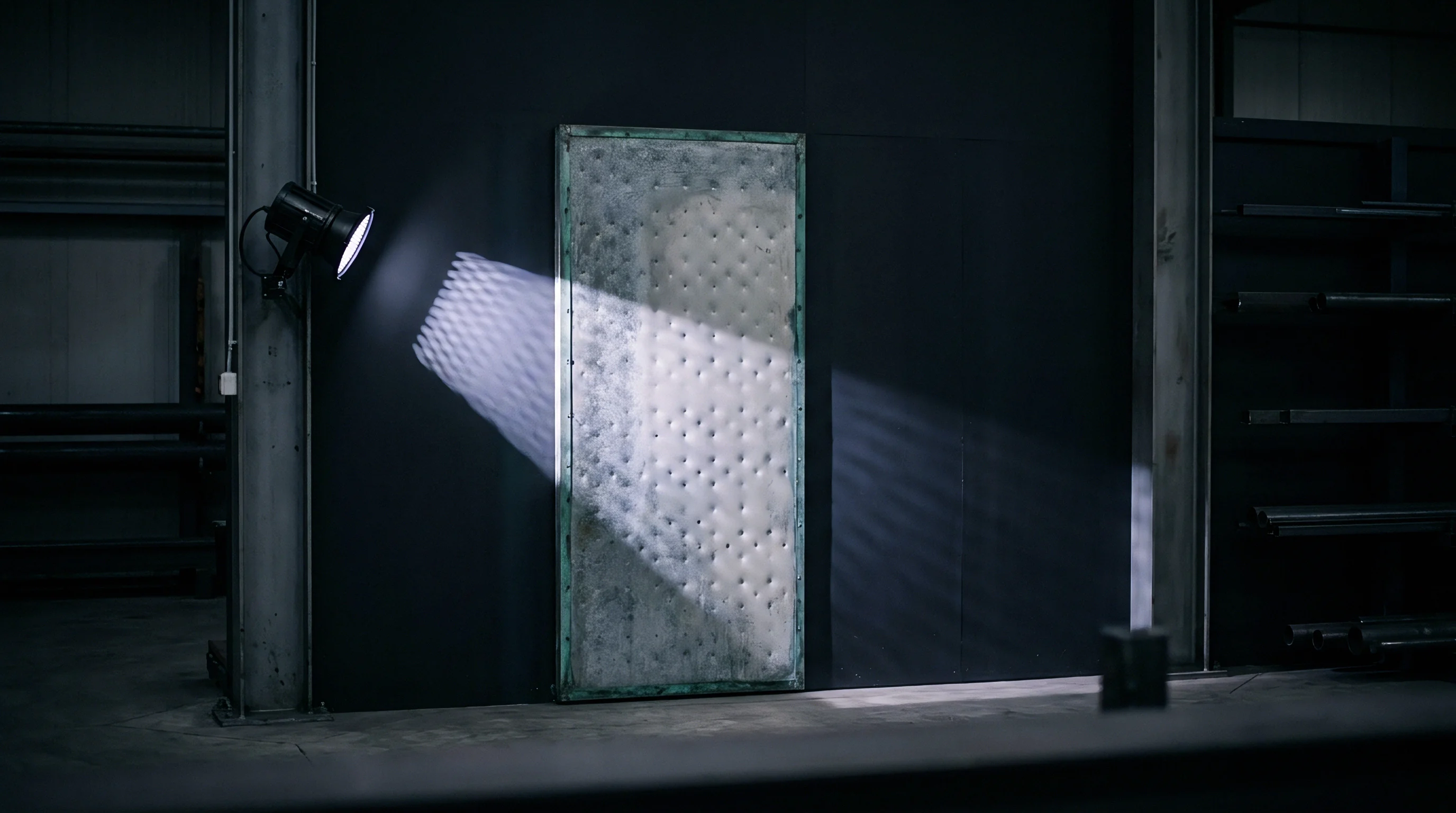
Serviceability limits define maximum allowable surface deflections based on visual appearance, aerodynamic efficiency, and seal integrity. Aesthetic degradation becomes visible to optical observers when surface deflection exceeds panel span length divided by 200. Aerodynamic flow separation occurs when local surface deflections alter outer profile contours by more than 5 degrees, causing drag penalties and acoustic noise generation.
Adequate design margin requires sizing structural panel stiffness for maximum combined load deflection rather than individual peak load conditions.
Ledger
Selecting polymer panel geometry involves balancing initial manufacturing capital against potential field failure liabilities over product lifespans. Tooling costs for complex injection-molded structural panels with integrated rib matrices require significant initial capital outlay. Extruded flat sheets fabricated with secondary thermoforming offer lower initial tooling costs but yield lower structural stiffness per unit mass, demanding thicker material gauges that increase recurring raw resin expense.
Quantifying long-term material performance through upfront thermomechanical testing mitigates warranty reserves against large-scale structural deflections in service.
Validation testing schedules represent a small fraction of overall program development costs but provide crucial risk mitigation against commercial failure. Full-scale environmental chamber testing identifies unexpected post-buckling behaviors, perimeter seal gaps, and creep deformation prior to mass production commitments. Detailed procurement contracts specify exact testing standards, elevated temperature exposure durations, and suction pressure limits that component suppliers must certify prior to tooling release.
Validation Test Costs and Tooling Amortization
Amortizing specialized tooling costs across production volumes determines optimal panel manufacturing processes. High-volume automotive and architectural applications justify complex multi-cavity tooling with internal gas-assist channels that produce rib-reinforced structural components. Low-volume applications rely on thermoformed sheet assemblies stiffened by secondary bonded composite ribs.
Structural performance validation must account for manufacturing variations introduced by distinct processing methods.
Warranty Liability and Procurement Specifications
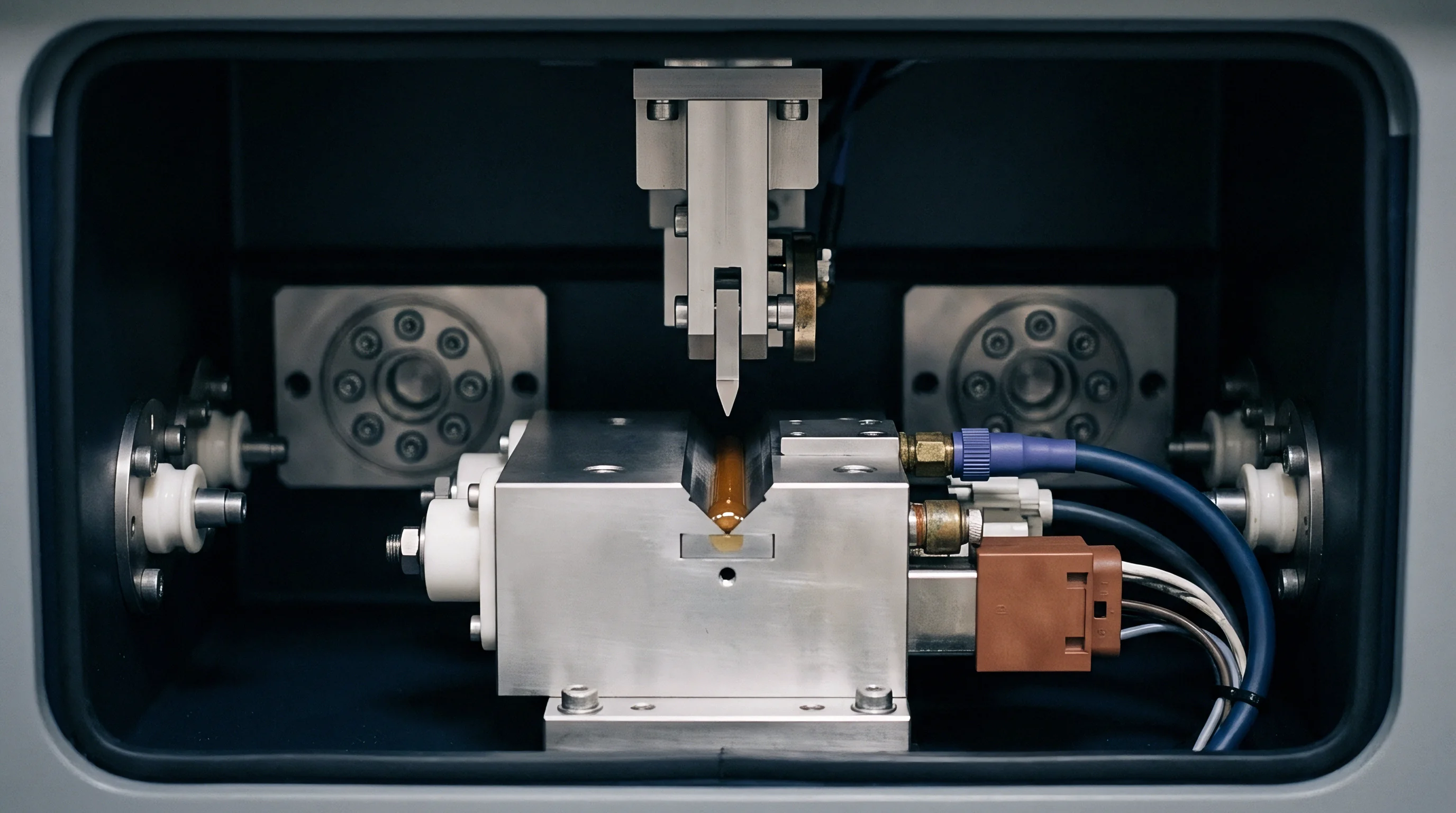
Procurement specifications for structural polymer components define precise physical verification protocols and clear acceptance thresholds. Purchase agreements incorporate explicit failure criteria covering permanent deformation, surface crazing, and seal disengagement under combined load conditions. Detailed warranty clauses assign financial liability for field replacement costs when surface deflections exceed specified serviceability bounds during warrantied operating windows.
Rigorous pre-production testing protects program budgets against costly engineering changes, field recalls, and structural warranty payouts.