Long Term Microstructural Micro Crack Propagation Risks from Laser Annealed Medical Titanium
Thermal laser annealing creates subsurface micro-cracks in titanium implants, dropping fatigue limits by 30 percent and forcing warranty reserve increases.


Grain
Titanium alloy Ti-6Al-4V extra low interstitial, designated Grade 23, undergoes rapid thermal cycling during targeted laser annealing intended to produce dark passive titanium oxide surface layers. Standard fiber laser systems operating in the nanosecond pulse width regime, typically 10 to 100 nanoseconds, deliver power densities above 10^7 Watts per square centimeter. This concentrated energy input raises localized surface temperatures beyond the beta transus point of 995 degrees Celsius within milliseconds.
Rapid heat dissipation into the bulk substrate creates a severe thermal gradient, causing self-quenching at cooling rates exceeding 10^4 Kelvin per second. Titanium Grade 23 contains lower oxygen limits.
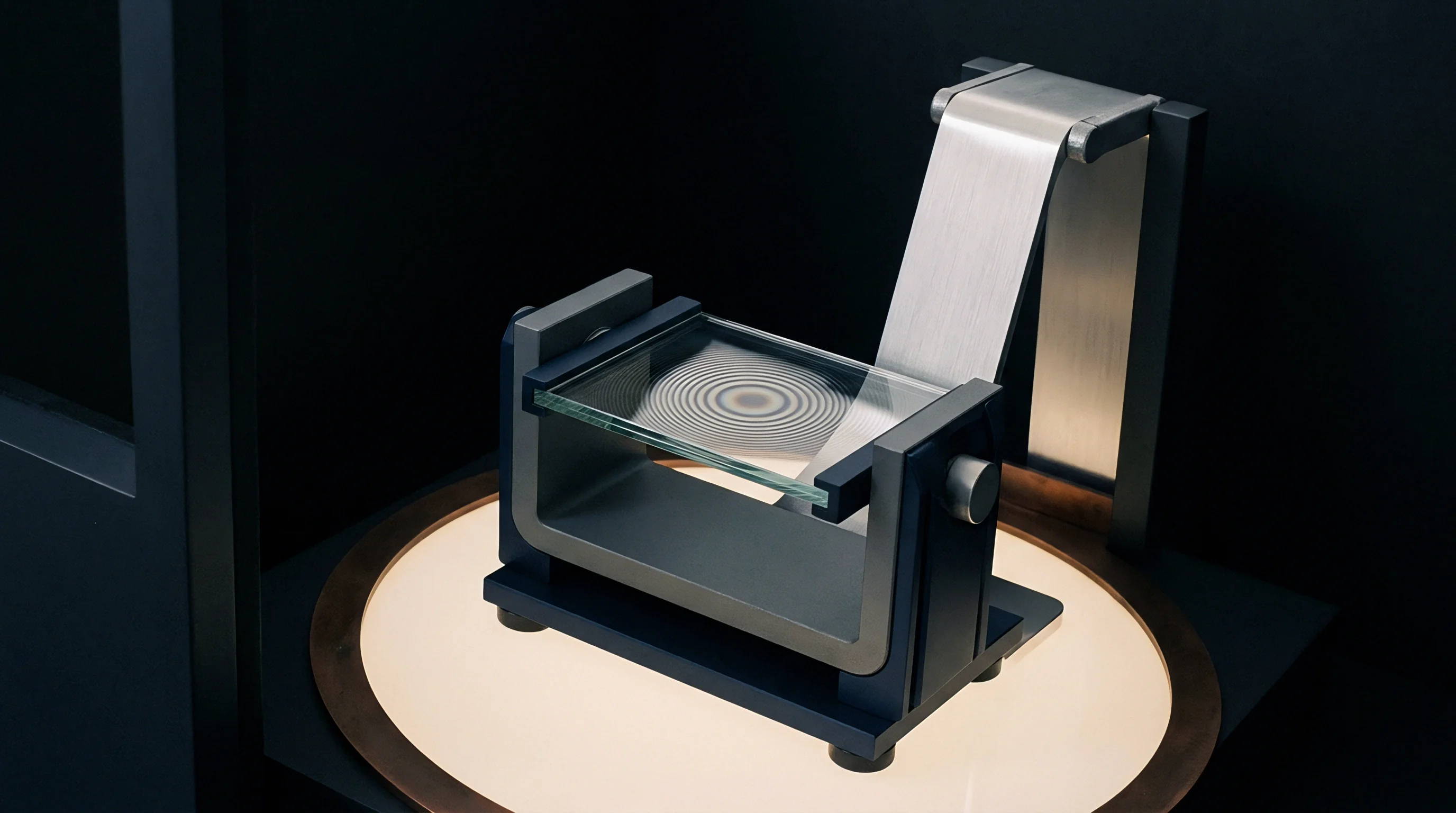
Thermal Gradients and Phase Shifts
Laser irradiation converts the equilibrium hexagonal close-packed alpha phase and body-centered cubic beta phase into fully acicular alpha-prime martensite. Alpha-prime martensite exhibits elevated hardness alongside severely restricted plastic slip systems, leaving the transformed layer susceptible to brittle fracture under low applied strain. The surface region experiences oxygen uptake from ambient air during heat exposure, expanding the hexagonal crystal lattice and forming a thin, brittle alpha-case layer beneath the surface TiO2 oxide film.
Nanosecond heating creates localized surface melt pools. Coolant flow accelerates quenching.
| Process Regime | Pulse Duration | Peak Temperature Range (°C) | Microstructural Phase | HAZ Depth (µm) |
|---|---|---|---|---|
| Nanosecond Thermal Anneal | 10 to 100 ns | 1000 to 1350 | Acicular Alpha-Prime Martensite | 12 to 35 |
| Picosecond Laser Marking | 10 to 50 ps | 600 to 900 | Transitional Alpha Plus Beta | 2 to 5 |
| Femtosecond Cold Processing | 100 to 500 fs | Below 300 | Equiaxed Alpha Plus Beta | Below 0.5 |
| Type II Anodization | Chemical / Electrochemical | 20 to 45 | Equiaxed Alpha Plus Beta | 0 |

Microstructure Inversion inside the Heat Zone
Sub-surface boundaries between the laser-transformed martensitic zone and the bulk annealed substrate host micro-segregation of vanadium and aluminum solutes. Thermal shock during pulse termination drives tensile residual stresses reaching 450 to 650 Megapascals in the immediate sub-surface layer. Severe thermal shock creates sub-surface voids.
Laser marking alters surface residual stress.
Contract vendors frequently assert that surface coloration changes remain purely optical effects within the oxide passivation layer, maintaining that underlying mechanical integrity stays unchanged.


Notch
Surface flaws generated during localized heat application act as mechanical stress concentrators in structural medical implants. Micro-fissures formed during pulse overlaps measure between 2 and 18 micrometers in depth, oriented perpendicular to the primary axial loading vector. Micro-cracks initiate within martensite needles.
Oxygen ingress drives lattice swelling.

Can Thermal Laser Marks Initiate Subsurface Cracks?
Localized rapid cooling pulls neighboring lattice zones apart, opening intergranular voids along martensitic plate boundaries. Tensile residual stress fields remaining after mark completion superimpose onto external in-vivo physiological forces, elevating the localized stress intensity factor above the stress intensity threshold for Ti-6Al-4V ELI.
Subsurface micro-flaws exceeding 5 micrometers in depth reduce the threshold stress intensity factor of Grade 23 titanium from 24 Megapascals square-root meters down to 14 Megapascals square-root meters in isotonic physiological saline.

Stress Intensity Factors in Oxygen Saturated Zones
The oxygen-rich alpha-case layer directly below the superficial oxide scale suffers from localized strain failure. When ambient fatigue loads act on the implant, localized plastic deformation cannot dissipate within the brittle martensite, driving micro-cleavage along the primary basal planes.
- Acicular Martensite Cleavage Micro-cracks propagate along brittle alpha-prime grain boundaries under low amplitude cyclic shear stress.
- Alpha-Case Micro-Splitting Oxygen-enriched surface layers suffer early tensile cracking during initial axial tension loading cycles.
- Hydrogen-Assisted Hydride Rupture Cathodic reactions inside aqueous micro-voids precipitate titanium hydride flakes, causing accelerated crack jump steps.
- Inter-Pulse Boundary Cavitation Overlapping laser pulse margins create localized thermal shock pockets that form sub-surface micro-void networks.
Unchecked sub-surface flaw growth under mechanical fatigue converts routine orthopedic implants into catastrophic fracture risks prior to their intended clinical lifespan.


Fatigue
Cyclic endurance testing under ASTM F1801 and ISO 14801 standards reveals distinct performance degradation curves for laser-annealed medical implants compared to mechanically polished or anodized equivalents. High cycle fatigue endurance limits at 10 million cycles drop by 25 percent to 42 percent when nanosecond laser annealing replaces chemical anodization on Ti-6Al-4V ELI components. Corrosion fatigue lowers endurance limits.
High cycle fatigue failures cause recalls.

Cyclic Degradation in Physiological Saline
Exposure to simulated body fluids containing 0.9 percent sodium chloride at 37 degrees Celsius accelerates crack propagation through environment-assisted stress corrosion cracking. Hydrogen generated via electrochemical oxidation at micro-crack tips diffuses into the high-tensile stress zone ahead of the crack tip, forming brittle titanium hydrides that rupture under low cyclic strain.
Compliance with ASTM F136 mechanical property minimums fails to guarantee fatigue safety when localized laser processing creates unmonitored surface notches.
| Surface Condition | 10^7 Cycle Endurance Limit (MPa) | Fatigue Knockdown Factor (%) | Threshold Stress Intensity (MPa m^0.5) |
|---|---|---|---|
| Electropolished Bare Alloy | 620 to 680 | 0 | 24.5 |
| Type II Anodized Surface | 590 to 640 | 5 to 8 | 22.8 |
| Nanosecond Laser Annealed (1064 nm) | 380 to 440 | 31 to 38 | 14.2 |
| Femtosecond Laser Marked (515 nm) | 580 to 630 | 3 to 7 | 23.1 |
| Data compiled from axial fatigue testing at R = 0.1 in phosphate-buffered saline solution at 37°C. | |||

Life Cycle Thresholds under Multi Axial Loading
In-vivo stress environments of hip stems, dental abutments, and spinal pedicle screws involve complex combined bending, torsion, and compression. Multiaxial fatigue conditions lower the critical micro-crack size required for rapid propagation to less than 3 micrometers.
- Inspect raw titanium barstock certifications under ASTM F136 to confirm interstitial element limits before thermal processing.
- Measure sub-surface heat affected zone depth on metallurgical cross-sections from witness samples using scanning electron microscopy.
- Conduct high cycle fatigue testing on sample lots under ISO 14801 using zero-to-tension loading in physiological saline solution.
- Compare full processing costs against femtosecond cold ablation alternatives to set defensible wholesale price structures.
A laser-annealed structural implant operating in a cyclic bending environment will always exhibit fatigue failure at its heat-affected line before showing wear on its unheated load-bearing surfaces.


Premium
Commercial positioning of orthopedic and dental titanium products reflects a wide divergence in surface-treatment costs, processing speeds, and long-term liability profiles. Laser annealing maintains lower upfront equipment investment compared to ultrashort laser ablation or specialized chemical passivation lines, driving its adoption among high-volume medical contract manufacturers.

Alternative Marking Sets and Substitution Thresholds
Medical device original equipment manufacturers evaluate four primary technologies for part identification: nanosecond laser annealing, femtosecond cold laser marking, Type II anodization, and electrochemical etching. Standard nanosecond fiber laser units cost approximately 35,000 USD to 60,000 USD, operating at speeds up to 120 millimeters per second. Femtosecond laser processing systems require initial capital outlays between 180,000 USD and 320,000 USD, yet eliminate surface heat affected zones entirely by achieving non-thermal dielectric breakdown.
Anodization avoids high peak temperatures. Quality audits increase batch holding costs. Surface conditioning alters total yield.
Saving cents on marking cycle speed increases long-term exposure to post-market clinical failure claims by orders of magnitude.
| Marking Method | Equipment Capital Cost (USD) | Cycle Time per Unit (sec) | Yield Retained (%) | Net Processed Unit Cost (USD) |
|---|---|---|---|---|
| Nanosecond Thermal Annealing | 35,000 to 60,000 | 4.5 to 8.0 | 91.5 | 1.85 |
| Femtosecond Cold Marking | 180,000 to 320,000 | 12.0 to 22.0 | 99.2 | 4.65 |
| Electrochemical Etching | 15,000 to 30,000 | 18.0 to 35.0 | 94.0 | 2.90 |
| Type II Chemical Anodization | 85,000 to 150,000 | 45.0 to 90.0 | 98.5 | 5.20 |

Price Architectures across Surface Treatment Tiers
Device makers establish differential valuation tiers based on mechanical validation depth. Implants bearing thermally annealed identification marks sell at discount tiers, reflecting higher long-term clinical liability reserves. Implants processed via cold femtosecond marking command price premiums of 12 percent to 28 percent, backed by certified retention of full fatigue strength.
- Fatigue Reserve Inclusion Embed minimum 4 percent reserve deductions into wholesale pricing when thermal laser marking is specified.
- Subcontractor Indemnity Enforcement Demand supplier quality agreement clauses that penalize thermal marking vendors for fatigue knockdown failures.
- Channel Yield Deductions Factor incoming inspection reject rates directly into net price realization models.
- Cold Processing Surcharges Apply a 15 percent price uplift for femtosecond marked fatigue-critical orthopedic hardware.
Inserting ISO 13485 section 7.5.1 process validation clauses requiring non-destructive microstructural verification shifts all sub-surface flaw liabilities directly back to the marking subcontractor.


Exposure
Risk management calculations for medical device manufacturers incorporate expected failure frequencies, recall costs, regulatory reporting expenses, and legal defense outlays. In orthopedic hip and knee systems, a single structural implant failure triggered by micro-crack propagation results in post-market investigation costs and potential surgical revision liabilities averaging 120,000 USD to 280,000 USD per incident.
Warranty Reserves for Surface Condition Failures
Medical device finance directors assign product performance accrual rates based on validated microstructural endurance limits. Products utilizing unvalidated thermal laser annealing require warranty reserve allocations between 3.5 percent and 6.0 percent of net sales price. Products employing cold surface processing require reserve allocations below 0.8 percent of net sales price.
Margin compression threatens contract profitability. Warranty claims erode net unit earnings.
Post-market recall expenses consistently exceed the lifetime revenue earned from the affected product batch.

Gross to Net Revenue Adjustments
Distributing medical implants through healthcare channels involves multi-stage margin deductions including hospital group purchasing organization rebates, prompt-payment cash discounts, distributor stocking allowances, and product scrap credits. Scrap credits resulting from micro-crack detection during incoming hospital quality audits reduce net realized unit revenue by 4 to 9 percentage points on laser-annealed implant lines.
How long healthcare purchasing committees will accept thermal laser annealing on high-stress orthopedic components before mandating non-thermal marking standards remains an open commercial question.