ANSI Barcode Grade Degradation under High Lux Retail Store Lighting
Continuous high-lux retail lighting photolytically degrades barcode symbol contrast, requiring UV-stabilized media to prevent point-of-sale scan chargebacks.

Lamp
Retail stores rely heavily on high-intensity lighting to make products stand out on shelves. Overhead track fixtures, glass display spotlights, and dense linear arrays hit package surfaces with flux levels anywhere from 10,000 to 100,000 lux. Over time, that intensity degrades the linear and two-dimensional barcodes printed on consumer goods.
Combined with heat from high-luminescence drivers, intense light triggers photolytic and photothermal changes in packaging materials. Barcode optics depend on a clear contrast between light spaces and dark bars; continuous exposure to high-output lighting shifts those values and steadily degrades the ANSI X3.182 optical profile.

Spectral Energy Distribution in Retail Display Formats
Commercial lighting balances Color Rendering Index metrics with specific Correlated Color Temperatures, ranging from warm 3000 Kelvin accents to bright 6500 Kelvin wash lighting. Modern ceiling grids rely on high-output light-emitting diode arrays that produce distinct spectral peaks in the blue wavelength band between 440 nanometers and 460 nanometers. Storefront windows and perimeter display cases often add direct halogen or metal halide lamps to cut through daylight reflections, subjecting package faces to continuous irradiance as high as 80,000 lux.
High-lux illumination transfers continuous photon energy into printed packaging substrates. Shorter wavelengths in the blue and near-ultraviolet bands break down organic chemical bonds across inks, coatings, and paper fibers. At the same time, solid-state fixtures generate localized heat, raising package surface temperatures up to 25 degrees Celsius above room air.
High photon flux and elevated surface heat together accelerate oxidation across organic print media.
Optical verifiers grade barcodes using a standard 660 nanometer red light source, which mirrors the optical sensor range of traditional point-of-sale laser scanners. Broad-spectrum retail lighting, however, saturates print media across a much wider band. A package face may look clean and bright to the eye while its 660 nanometer reflectance profile degrades under constant broadband exposure.
Photolytic degradation under 50,000 lux window illumination depresses ANSI symbol contrast by two full letter grades within 14 days of shelf placement.
Retail displays create tight micro-environments where heat and light act directly on standard packaging. Standard direct thermal labels show a 14 percent drop in symbol contrast when exposed to 50,000 lux window illumination over a 30-day monitoring period. High-power track spotlights positioned within 50 centimeters of endcap shelves create photon densities that can destabilize printed contrast within weeks.
Photothermal Energy Transfer at the Print Interface
Inks and substrates absorb incoming photons and convert that energy into heat. Dark bars absorb up to 90 percent of visible light, raising temperatures inside the printed lines. Light background spaces reflect visible light but absorb invisible ultraviolet radiation, breaking down optical brightening agents.
This uneven energy absorption creates thermal expansion differences between the ink layer and the paper backing, forming micro-fractures along bar edges.
Heat buildup within the packaging boundary layer alters the physical ink film. In pigment-based thermal transfer inks, warmth lowers binder viscosity, letting dark pigments drift into microscopic valleys in the paper fiber matrix. That lateral movement softens line edges and lowers the ANSI Edge Contrast score.
On direct thermal papers, absorbed energy bypasses the intended heat-head trigger, turning unheated background areas grey through premature dye reactions.
| Light Source Type | Correlated Color Temp (K) | Peak Wavelength (nm) | Typical Lux Range (lx) | UV Exitance (mW/m²) | Contrast Loss per 100 Hours (%) |
|---|---|---|---|---|---|
| High-Output Retail LED Track | 4000 | 450 | 15,000 ~ 35,000 | 12 ~ 28 | 2.8 |
| Storefront Window Spotlight | 5700 | 435 | 50,000 ~ 85,000 | 110 ~ 240 | 8.4 |
| Standard Store Ceiling Grid | 3500 | 580 | 1,000 ~ 2,500 | 2 ~ 5 | 0.3 |
| Halogen Endcap Feature Light | 3000 | 630 | 20,000 ~ 40,000 | 45 ~ 95 | 5.1 |
Lighting datasheets typically highlight high luminous efficacy and low total heat output, rating fixtures as safe for ambient retail use. What they omit are narrow-band blue photon spikes and long-term thermal conversion effects right at the package surface.


Substrate
Substrate chemistry determines how a package face handles high-lux radiation over time. Materials vary widely, from bleached paperboard and direct thermal synthetics to clear films and white clay-coated corrugated board. Each relies on specific chemical formulations to maintain a bright white background against sharp dark lines.
Continuous retail lighting triggers chemical breakdown across these compounds, eventually dulling the background and destabilizing the ink film.

Direct Thermal Dye Oxidation and Leuco Reversion
Direct thermal media uses a reactive top layer containing colorless leuco dye, organic acid developers, and sensitizers in a solid matrix. During printing, thermal printhead pins melt the sensitizers, forcing the leuco dye into contact with the developer acids to form a visible dark complex. Photons from high-lux store lights carry enough energy to break the non-covalent bond holding that dark complex together.
Continuous light exposure triggers a reverse reaction, turning dark dye molecules back into their transparent leuco state. At the same time, residual developers in unprinted white areas oxidize, turning the background yellow or pale brown. The two mechanisms work against each other: dark bars fade toward grey while white spaces darken toward beige.
Symbol contrast degrades quickly, pulling verifier scores below point-of-sale scanning thresholds.
Thermal transfer ribbons vary in structural resistance under light exposure. Standard wax formulations use low-melting-point paraffin that softens under the combined heat and light of focused spotlights. As the wax matrix loses structure, pigment particles migrate and cause edges to smear during routine handling.
Resin-modified wax and pure resin ribbons hold up much better because their cross-linked polymer backbones resist photothermal softening.

Fluorescent Whitener Quenching in Cellulosic Fibers
Cellulosic paperboards and face papers undergo steady photolytic degradation on display shelves. Conventional white paper relies on fluorescent whitening agents ~ optical brighteners ~ to boost broad-spectrum background reflection. These organic compounds absorb invisible ultraviolet photons and re-emit them as visible blue light, making the surface look brighter.
High-intensity lighting rapidly exhausts those brighteners through irreversible photobleaching.
Photobleaching drops background reflectance right in the 660 nanometer verification range. As optical brighteners break down, natural lignin in the paper oxidizes into chromophore compounds that absorb blue and red light. The background shifts from crisp white to a dull yellow-brown, lowering the Maximum Reflectance (Rmax) reading required for ANSI compliance.
Cellulosic substrates lose optical brightness predictably when exposed to continuous indoor illumination containing blue and near-ultraviolet wavelengths.
Synthetic films such as biaxially oriented polypropylene and polyethylene offer good mechanical strength, but they present their own degradation issues under bright light. Ultraviolet stabilizers in polyolefin films photo-oxidize over time, leading to surface haze, yellowing, and micro-cracking. Micro-cracking scatters the scanner beam, creating background noise that verification software flags as symbol defects.
- Direct thermal leuco dye reversion converts printed dark bars back into colorless chemical forms, destroying line definition and lowering symbol contrast.
- Fluorescent whitening agent photobleaching depletes background reflectance, reducing the optical gap between light spaces and dark bars.
- Wax ribbon binder softening allows pigment migration under ambient light exposure, distorting fine bar width dimensions and degrading decodability.
- Lignin photo-oxidation turns uncoated paper fibers yellow, depressing maximum surface reflectivity across standard scanning light wavelengths.
- Synthetic film surface crazing creates micro-fractures in clear coatings, generating random reflectance spikes that algorithms classify as surface defects.
Using low-grade papers with high direct-thermal sensitivity or uninhibited optical brighteners leads directly to inventory chargebacks, delisted products, and wasted display space when barcodes fail at checkout.


Grading
Optical verification standards use objective mathematical criteria to measure barcode print quality. The ANSI X3.182 standard ~ integrated into ISO/IEC 15416 for linear barcodes ~ replaces simple pass/fail checks with an analytical scale running from 4.0 (Grade A) down to 0.0 (Grade F). High-lux retail lighting systematically pulls down individual optical parameters across this scale, taking compliant packaging out of scannable spec over time.

What Reflectance Threshold Triggers Grade Failure?
Symbol Contrast (SC) is the primary value assessed during verification. Calculated as the absolute difference between Maximum Reflectance (Rmax) and Minimum Reflectance (Rmin), it defines the overall optical dynamic range available to a scanner. Standard ANSI rules require a Symbol Contrast of at least 70 percent for a Grade A rating.
Light exposure lowers Rmax by yellowing the substrate while raising Rmin as the bars fade. If photon flux drops Rmax from 82 percent to 68 percent and pushes Rmin from 8 percent to 22 percent, Symbol Contrast drops from 74 percent to 46 percent. That shift drops the ANSI Symbol Contrast mark from Grade A to Grade C. If continuous exposure pushes SC below 20 percent, the symbol receives an automatic Grade F, causing read failures at retail registers.
Minimum Reflectance (Rmin) has a strict ceiling: Rmin cannot exceed half of Rmax. When dark bars fade under strong photon flux and fail to absorb enough light at 660 nanometers, Rmin rises past this limit. Failing the Rmin check triggers an immediate Grade F regardless of how well other parameters score.

Reflectance Profile Mathematical Breakdown
Verifiers evaluate scan reflectance profiles by sweeping a light beam across bars and spaces, turning an analog signal into digital reflectance values. Healthy profiles show clear high plateaus for spaces and sharp deep troughs for dark bars. Extended exposure flattens those peaks and lifts the trough bases.
Edge Contrast Minimum (ECmin) tracks the smallest difference between adjacent space reflectance and bar reflectance along the entire profile. Where Symbol Contrast evaluates global high and low points, Edge Contrast checks localized optical boundaries between individual elements. Photolytic fading that affects one area more than another drops localized ECmin values quickly.
Standard ANSI algorithms assign a Grade F if ECmin drops below 15 percent anywhere across the symbol.
Uneven light in retail window displays frequently produces localized photolytic degradation across a single barcode. Under directional halogen spotlights, the leading edge of a standard UPC-A barcode might maintain 70 percent local contrast while the trailing edge drops to 12 percent. Because ANSI verifiers grade a symbol by its lowest single parameter score, localized edge failure drops the entire barcode to Grade F.
Modulation Decay and Defect Multiplication
Modulation (MOD) measures narrow-space signal amplitude relative to overall Symbol Contrast, calculated as MOD = ECmin / SC. It reflects how clearly a sensor distinguishes narrow spaces compared to wide background areas. Because scanner optics view symbols through a fixed aperture, narrow elements naturally produce smaller signal amplitudes than wider ones.
Substrate yellowing narrows the visible signal difference on small elements faster than on large ones. As background brightness drops and heat causes ink edges to bleed, narrow spaces lose optical definition, driving Modulation down. ANSI rules grade Modulation on a tiered scale: values at or above 0.70 earn Grade A, while anything below 0.40 falls to Grade F. Narrow spaces fade quickly under strong light, making Modulation one of the first parameters to fail on display shelves.
| ANSI/ISO Parameter | Mathematical Formula | Grade A Threshold | Grade F Threshold | Primary Photolytic Driver |
|---|---|---|---|---|
| Symbol Contrast (SC) | SC = Rmax – Rmin | ge 0.70 | $ | Combined substrate darkening and bar fading |
| Minimum Reflectance (Rmin) | Rmin direct value | le 0.5 × Rmax | > 0.5 × Rmax | Direct thermal dye reversion in dark bars |
| Edge Contrast (ECmin) | ECmin = (Rs – Rb)min | ge 0.15 | $ | Localized pigment bleeding and edge softening |
| Modulation (MOD) | MOD = ECmin / SC | ge 0.70 | $ | Narrow space signal compression |
| Defects (DEF) | DEF = ERmax / SC | le 0.15 | > 0.30 | Substrate crazing and localized spots |
| Decodability (V) | V = Δ t / Z | ge 0.62 | $ | Thermal line distortion altering element width |
Defects (DEF) measure micro-irregularities in bars and spaces. Calculated as the ratio of maximum element reflectance noise (ERmax) to global Symbol Contrast (SC = Rmax – Rmin), the metric catches voids in ink and localized background spots. High-lux light creates micro-pitting in synthetic films and spot photobleaching on paper.
These minor variations drive up ERmax, pushing the Defects score toward the Grade F threshold of 0.30.
Decodability (V) measures physical dimensional accuracy against reference decode algorithms. Photothermal energy transfer causes ink to spread unevenly along print lines, altering the measured width ratio between wide and narrow elements. Once dimensional errors consume the algorithm’s built-in tolerance, Decodability scores collapse and registers reject the scan.
A barcode symbol inherits the optical grade of its lowest scoring parameter, meaning a single photolytic defect turns an otherwise perfect print file into an unscan-failed failure.
Linear barcodes placed in high-irradiance zones show steady parameter loss over time. Perfect print quality at the factory door is no guarantee of scannability after weeks on display.


Audit
Field verification requires matching physical inspection routines to actual store lighting. Quality checks done in dimly lit warehouse receiving areas do not recreate the optical stress caused by bright retail fixtures. Accurate monitoring requires specific verifier settings, controlled stress testing, and a clear understanding of how ANSI parameters align with point-of-sale scanner optics.

Wavelength Discrepancies between Verifiers and Point-of-Sale Scanners
ANSI X3.182 verification uses dedicated light sources emitting a precise 660 nanometer narrow-band red beam. Store spotlights, by contrast, rely on high-output white light arrays spanning 400 to 700 nanometers, while point-of-sale scanners use linear CCD sensors or camera-based 2D imagers sensitive across broad spectral bands. Because of this spectral difference, optical contrast measured by a verifier under 660 nanometer red light can diverge significantly from what a camera sensor sees under ambient store lighting.
Point-of-sale imagers use dynamic thresholding algorithms, like Otsu binarization, to separate light spaces from dark bars in difficult light. High ambient light creates specular reflection on glossy package films, washing out bar profiles. A verifier inside a hooded chamber may read acceptable contrast, but an unhooded retail scanner picks up stray photons that flood sensor pixels and lift dark-bar brightness values toward background levels.
Linear laser scanners using moving-mirror optics suffer phase-shift errors when reading packages exposed to bright store lights. Strong ambient light raises noise floor levels in the sensor, obscuring peak-and-trough signal boundaries. When threshold circuits fail to detect bar edges reliably, registers register multi-scan attempts or fail to read entirely.
Barcode quality must be evaluated under simulated ambient lighting, not just inside enclosed dark-chamber verifiers.

Accelerated Photolytic Bench Testing Standards
Predicting barcode performance on retail shelves calls for accelerated exposure testing before mass production. Standard protocols use test chambers equipped with xenon arc lamps or blue-LED arrays calibrated to match retail lighting intensity, exposing substrates to controlled cycles equivalent to target shelf-life durations.
A structured testing sequence establishes clear decay curves for specific substrate and ink combinations:
- Mount printed barcode samples inside a temperature-controlled environmental chamber maintained at 23 degrees Celsius and 50 percent relative humidity.
- Position high-output full-spectrum LED fixtures above sample surfaces to deliver a uniform photon flux of 50,000 lux across the test plane.
- Measure baseline ISO/IEC 15416 optical parameters using a calibrated 660 nanometer verifier prior to light initiation, recording initial values for Symbol Contrast, Modulation, Defects, and Decodability.
- Expose samples to continuous light irradiation for 72 consecutive hours, logging ambient substrate surface temperature variations at 60-minute intervals.
- Remove samples at 24-hour exposure intervals to perform optical verification sweeps, plotting parameter degradation paths against exposure time.
- Calculate photolytic degradation coefficients for Symbol Contrast loss and Edge Contrast reduction per 1,000 lux-hours of exposure.
- Reject substrate-ink combinations that exhibit a drop below ANSI Grade C (2.0) prior to reaching 150,000 lux-hours of cumulative exposure.
Accelerated lab testing shows wide differences in stability across media. Direct thermal top-coated labels can lose two full ANSI contrast grades after 48 hours of 50,000 lux exposure, whereas UV-cured flexographic inks on clay-coated board maintain Grade A scores past 200 hours under identical conditions. Thorough pre-production testing prevents vulnerable materials from reaching store shelves.
Laboratory quality assurance verifiers operating inside dark hoods fail to predict barcode scan failures caused by unhooded optical glare in high-lux retail environments.
Disputes often arise during compliance audits when receiving inspections pass barcodes that store-level scanners later reject. Establishing shared baseline testing criteria helps resolve contradictions between controlled lab verifiers and real-world checkout lighting.

Remedy
Avoiding financial loss from barcode degradation requires clear contract risk terms, better material specifications, and proactive deduction management. Retailers enforce strict vendor compliance manuals with non-negotiable chargeback schedules for non-scanning inventory. When barcodes fail under bright store lighting, buyers issue automated deductions against vendor invoices.
Protecting margins means engineering durable print structures and establishing clear liability boundaries in supply agreements.

Retail Vendor Compliance Penalty Allocation
Major retail supply contracts include automated chargeback schedules for barcode failures. Penalties range from $250 per non-scannable pallet up to $5,000 per purchase order batch, on top of administrative fees and store labor for re-labeling. If scan failures on a given SKU cross set limits, retailers issue formal cure notices, stop inventory replenishment, or drop products from shelves altogether.
Compliance manuals typically measure barcode quality at the cash register, pushing the financial risk of environmental degradation onto the brand owner. Suppliers who assume factory-gate compliance protects them face unexpected margin losses when products sit under bright display lights for extended periods.
Deduction reports show barcode non-compliance chargebacks growing steadily as a share of vendor penalties. Managing that risk requires weighing the unit cost of protective print technologies against potential retail fines.
| Protection Technology | Incremental Cost per Case ($) | Lux-Hour Lifespan Extension | Contrast Loss Reduction (%) | Payback Threshold at $250 Chargeback |
|---|---|---|---|---|
| UV-Inhibited Topcoat Varnish | 0.018 | +120,000 lx·h | 68 | 13,888 cases shipped |
| Full Resin Thermal Ribbon Upgrade | 0.035 | +250,000 lx·h | 85 | 7,142 cases shipped |
| Pigmented Flexographic UV Ink | 0.008 | +300,000 lx·h | 92 | 31,250 cases shipped |
| BOPP Lamination Film Overlay | 0.052 | +180,000 lx·h | 74 | 4,807 cases shipped |
Upgrading packaging specifications adds measurable unit costs. Adding a clear UV-inhibited overprint varnish costs roughly $0.018 per case, while switching direct thermal labels to thermal transfer resin adds $0.035 per unit. Set against a single $250 pallet chargeback, those small upgrades deliver clear payback on high-volume lines.
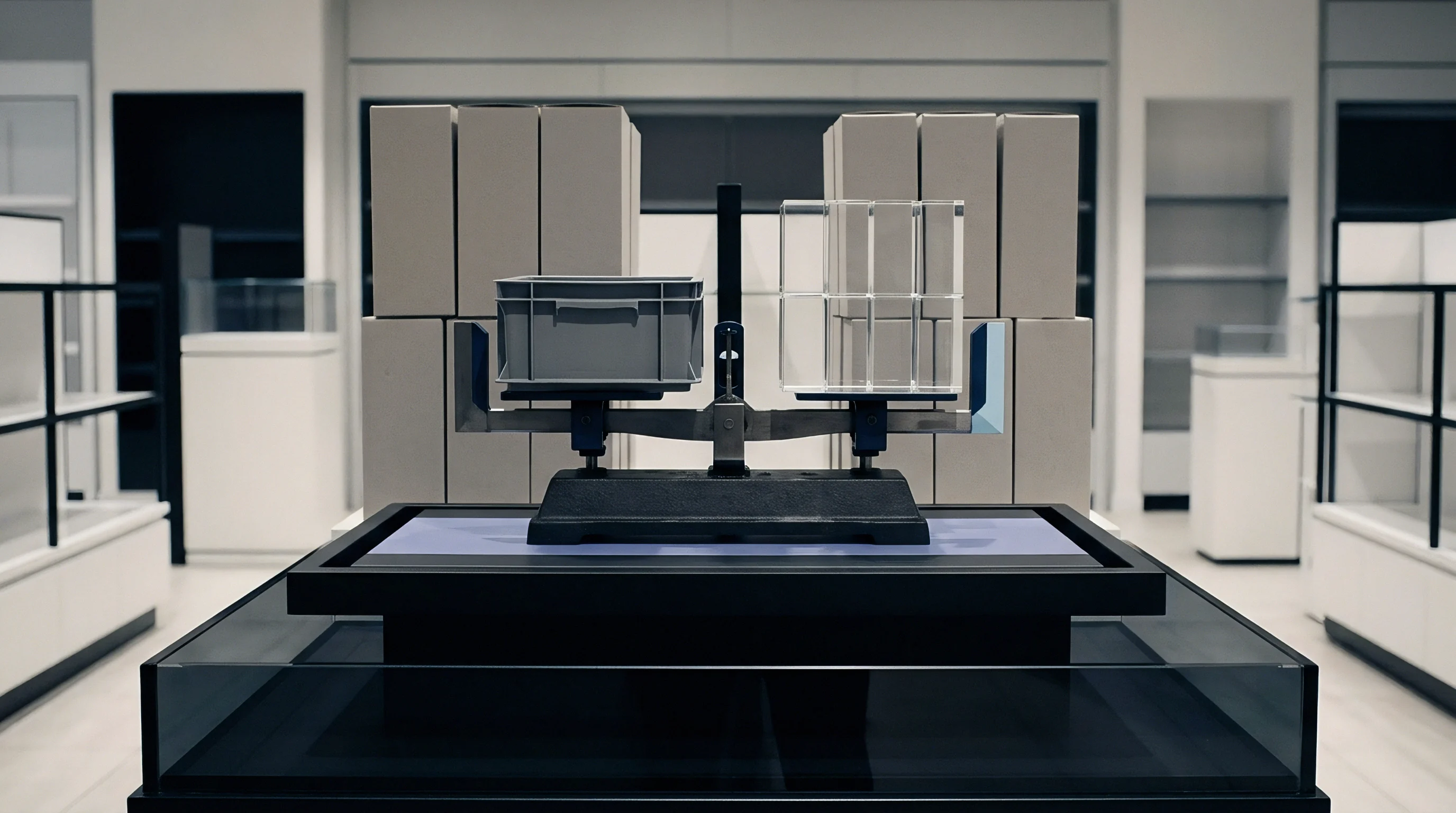
Material Specification Clauses in Distribution Contracts
Limiting financial exposure requires careful drafting in distribution agreements. General terms often rely on vague warranties about merchantable quality or retail readiness. Suppliers can better protect themselves by adding explicit light limits and storage parameters directly into vendor master agreements.
Clear contract clauses assign responsibility for lighting stress by defining exact display conditions:
- Ambient irradiance threshold limits establishing maximum store display light levels, absolving suppliers of barcode failure claims when retail exposure exceeds 15,000 lux.
- Shelf-life exposure boundaries defining maximum duration windows for window display placement, requiring retailers to rotate stock exposed to direct sunlight or spotlight fixtures.
- Factory-gate verification acceptance terms stipulating that ANSI Grade B or higher verification certificates issued at time of dispatch constitute final legal proof of barcode compliance.
- Shared cost remediation schedules capping supplier liability for store re-labeling labor costs resulting from extended ambient store lighting exposure.
- Mandatory substrate chemistry specification obligating packaging converters to utilize photolytically stable UV-cured inks and resin ribbons for high-lux retail SKUs.
Distribution contracts should include specific protective provisions: “The supplier warrants that printed barcode symbologies meet ANSI X3.182 Grade B standards upon initial delivery to the buyer distribution center. The supplier accepts no financial liability for optical grade degradation, symbol contrast decay, or point-of-sale scan failure resulting from product placement in display locations where continuous ambient light exceeds 15,000 lux or where cumulative light exposure exceeds 100,000 lux-hours.” Including clear exposure limits shifts operational and financial risk back to the retailer when aggressive store lighting breaks down barcode performance.