
Bayesian Multi Site Attribution Adjustments for Variable Latency Signal Streams in High Density Environments
Bayesian latency priors adjust multi-touch credit for arrival delay jitter in high-density event streams to protect ad spend accuracy
Bayesian latency priors adjust multi-touch credit for arrival delay jitter in high-density event streams to protect ad spend accuracy

Discount mobile telemetry noise during network saturation by enforcing client-side idempotency keys and applying statistical Poisson attenuation models.

Validating physical venue intent demands optical dwell filtering, base-rate discounting, and paid micro-deposits before committing capital.

Architecting payment HSMs for congested high-latency networks requires decoupling host transport threads from cryptographic pipelines using asynchronous rate control.

Offline POS exposure demands hardware-enforced floor limits, dynamic EMV cryptograms, and sub-24-hour batch uploads to prevent unrecoverable chargebacks.

Trade show deposit workflows demand dedicated card-present hardware with offline transaction vaulting to prevent connectivity loss from dropping paid orders.

Post-clearance landed cost adjustments amortize into inventory reserves by capitalizing variance onto remaining units capped at net realizable value bounds.

Calculate retail clearance net realizable value by subtracting direct incremental selling expenses from projected markdown yields across primary and secondary channels.

Reconcile post-peak physical inventory by isolating receiving cutoffs, deploying double-blind recounts by velocity class, and auditing 72-hour timing lags.

Automated RFID audits require calibrated multi-antenna portal arrays to verify liquid and dense FMCG shipments at cross-border transit points.

Statistical cycle counting reduces high-discrepancy retail stock write-offs by targeting Bayesian variance thresholds rather than static value tiers.

Standard POS optical scanning compliance requires a 98 percent price accuracy rate and minimum ISO symbol grade 1.5 to prevent checkout line labor loss.

Accumulated viscoelastic creep and hysteretic heat dissipation in trailing cable insulation establish strict fatigue limits before core delamination triggers electrical failure.

Compressive strain shifts elastomeric insulation acoustic velocity and doubles attenuation per unit length, requiring force-controlled transducer clamping.

Field qualification of mining trailing cables verifies dielectric integrity via low-frequency proof testing, continuous ground continuity, and splice resilience.

In-transit acoustic wave attenuation limits for cryogenic resins require baseline calibration at target kelvin levels to isolate structural micro-cracks.

Phase-resolved partial discharge verification across sub-zero rail corridors requires temperature-calibrated sensors and noise filtering to prevent asset breakdown.

Polymeric rail insulation embrittles below minus forty Celsius, demanding acoustic and partial discharge screening to catch transit microcracks before flashover.

Matrix inversion over probabilistic linkage misclassification matrices corrects retention hazard inflation caused by privacy driven identity fragmentation.
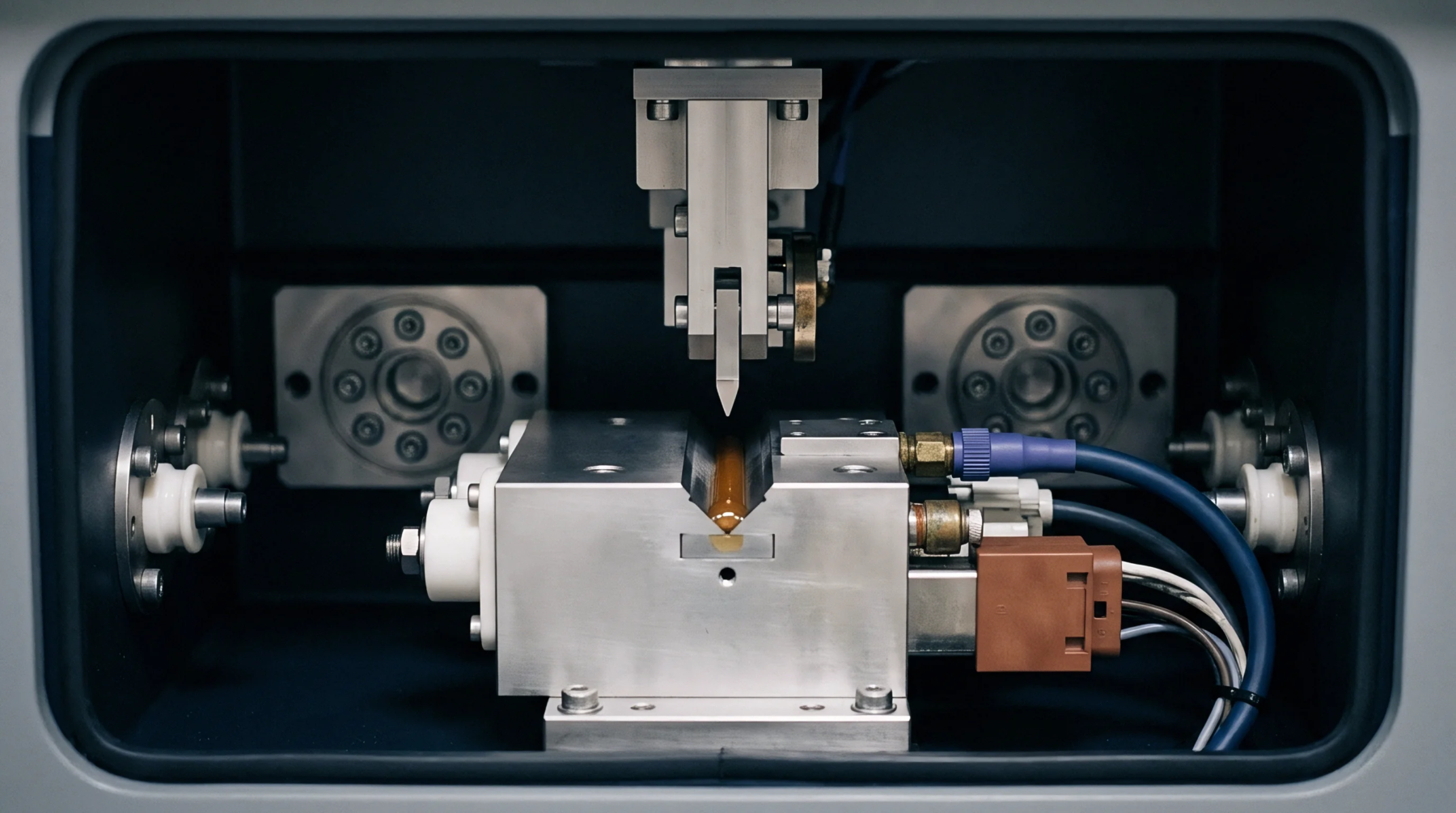
Synthetic control models calculate unconfounded retention baselines by weighting untreated cohorts to match pre-treatment trajectory curves.

Cohort retention decay in direct channels follows non-linear hazard curves where accurate forecasting requires modeling latent defection across order ledgers.

Metal-seated valve static breakout torque drifts up to 2.5 times baseline values during prolonged dwell, requiring empirical testing and expanded actuator sizing.

Acoustic emission testing detects high-frequency turbulence from choked gas bypass across extruded polymer seats, enabling non-intrusive leak isolation.

Differential pressure drives seat ring compression and trunnion bearing drag, demanding breakout torque calculations that combine hydraulic area thrust with static friction factors.

High-speed 100 Hz positioner sampling resolves undetected stiction by tracking breakaway pressure spikes and position dead time under full differential load.
Digital positioner telemetry increases safety valve proof test coverage to eighty-five percent, extending manual overhaul cycles to six years safely.

Partial stroke testing diagnoses mechanical stiction and breakaway force in emergency shutdown valves by analyzing transient pressure decay and position hysteresis loops.

Resolve relay tax audits by replacing egress IP logs with auditor-certified secondary telemetry dossiers combining device locale, latency, and panel baselines.

Discrepant ad location data exposes digital sellers to severe tax audit assessments when state tax authorities enforce statutory consumption rules over flawed logs.

Reconciling ad location data with foreign tax sourcing statutes requires filtering ad logs against point-in-time IP tables to prevent cross-border tax exposure.
Expertise is a utility, not a secret. sentiention™ publishes its working knowledge as open reference: intelligence layer covering the materials it sources, the markets it enters, and the reference that serves both.