Polycarbonate Housing Stress Cracking Limits in ESL Deployments
Polycarbonate ESL housing reliability requires keeping total combined assembly and molding strain below zero point two percent under retail sanitizer exposure.

Solvent
Retail cleaning routines spray liquid sanitizers directly onto display assemblies dozens of times each week. Bisphenol-A polycarbonate offers high impact strength under structural loading, but its polymer backbone undergoes localized chain scission when tensile stress coincides with surface absorption of active organic chemical species. In grocery operations, sanitation crews deploy quaternary ammonium sanitizers, isopropyl alcohol solutions, and ester-based glass cleaners straight onto shelf rails housing electronic tags.
These active compounds act as plasticizers, penetrating the amorphous intermolecular regions between polycarbonate polymer chains and lowering the energy required for microscopic void formation.

Surface Wetting Mechanics and Chain Scission
Amorphous polymers lack the crystalline domain structures that block fluid migration in semi-crystalline resins. Microscopic surface micro-cracks form when organic fluids lower the surface energy of the polymer matrix under mechanical tension. Liquid molecules collect in micro-voids at the outer boundary, swelling the localized polymer structure and lowering the local glass transition temperature.
Tensile forces concentrate at the roots of these micro-voids, propagating thin fissures across the wall thickness until mechanical failure occurs.
Active chemical ingredients vary significantly in their critical strain thresholds for polycarbonate degradation. Standard isopropyl alcohol solutions at seventy percent concentration drop the critical cracking strain of unmodified bisphenol-A polycarbonate from over two percent down to zero point three five percent. Quaternary ammonium formulations lower the threshold to zero point two eight percent when residual mechanical strain is present.
Lipid transport from deli counters introduces fatty acid esters that act as aggressive stress-cracking agents over extended multi-year deployments.
Commercial alcohol sanitizers reduce the critical cracking strain of bisphenol-A polycarbonate from two percent to zero point three five percent under static mechanical loading.
The rate of chemical attack depends on fluid exposure frequency, ambient store temperature, and localized fluid pooling. Shelf rails mounted above refrigerated display cases experience thermal cycling between two degrees Celsius and twenty-two degrees Celsius, accelerating fluid retention inside micro-cracks. Cleaning liquids trapped between the mounting bracket and the tag enclosure stay in direct contact with stressed plastic regions for days, maintaining an active degradation vector long after surface moisture evaporates.
| Chemical Exposure Medium | Concentration Range | Critical Strain Threshold (%) | Time to Micro-Crack Initiation |
|---|---|---|---|
| Isopropyl Alcohol Solution | 70% aqueous | 0.35 | 14 minutes |
| Quaternary Ammonium Compound | 200-400 ppm active | 0.28 | 8 minutes |
| Ethyl Lactate Glass Cleaner | 100% industrial solution | 0.19 | 3 minutes |
| Oleic Acid (Lard / Milk Fat) | Traces on surface | 0.42 | 120 hours |
Plasticizers leaching from flexible polyvinyl chloride track liners present an overlooked chemical hazard. Formulated PVC tracks contain phthalate or adipate plasticizers to maintain flexibility on metal display shelves. Over months of static mechanical contact, these plasticizers migrate directly into the polycarbonate base shell.
The localized plasticizer accumulation reduces internal shear yield stress, triggering sub-surface crazing directly adjacent to the snap-latch mounting points.
Specific chemical active ingredients introduce disproportionate structural risk during store sanitation.
Laboratory data proves that secondary surfactant additives frequently exceed the aggressiveness of primary alcohol bases. Standard commercial cleaning formulations combine primary alcohols with ethoxylated non-ionic surfactants to prevent water spotting on glass surfaces. These surfactants lower interfacial surface tension below twenty-eight millinotas per meter, driving liquid penetration deep into microscopic molding defects.
Housing designs with tight corner radii attract localized surfactant pooling, accelerating crack growth through structural ribs.
Mixing non-standard sanitation concentrates on store floors introduces additional fluid interaction parameters governing long-term structural integrity.

Strain
Internal mechanical stress inside injection-molded plastic enclosures combines with external installation forces to drive structural degradation. Molten resin cooling inside cold steel tool cavities freezes molecular orientation along flow lines, leaving residual stress profiles throughout the component. When technicians snap electronic shelf labels onto rigid mounting rails, assembly displacement forces add external mechanical tension to these pre-existing internal stress fields.

Residual Injection Stress and Assembly Loads
Injection processing conditions fix the base residual stress distribution across the housing body. Rapid thermal quenching near gate locations traps internal stresses exceeding twelve megapascals within thin-wall sections. Molders using low melt temperatures or excessive packing pressures generate high directional strain gradients near internal structural ribs.
Mold cooling variations across non-uniform wall sections create differential shrinkage, creating localized tensile zones along the outer perimeter seal lines.
External bending loads during shelf installation add significant mechanical strain. Mounting clips designed with tight snap-fit undercuts displace enclosure retention legs beyond their elastic deformation limits. Display installers pushing tags onto steel rails exert manual forces that generate localized strain values above zero point six percent along the latch root radius.
Battery compartment access covers held by rigid plastic tabs maintain continuous static flexure across the device’s operational lifespan.
Standard ISO 22088 testing mandates constant strain exposure for two hundred hours to verify material immunity against active environmental solvents.
Ultrasonic welding of front lens covers onto main housing shells introduces intense localized strain profiles. High-frequency acoustic energy melts joint energy directors to form a hermetic moisture barrier around display screens. Excess melt flash and rapid thermal dissipation generate localized residual tensile forces reaching fifteen megapascals directly along the perimeter weld bead.
When sanitation spray pools in the narrow groove above the weld line, stress cracking initiates along the perimeter within days of installation.
- Melt Temperature Tuning ~ Elevate barrel temperatures by twelve degrees Celsius to reduce resin viscosity and lower shear-induced stress during cavity filling.
- Packing Pressure Reduction ~ Step down secondary hold pressure by fifteen percent immediately after gate freeze to prevent over-packing near the sprue.
- Mold Tool Heating ~ Maintain mold coolant circulation at eighty-five degrees Celsius to slow core cooling rates and relax frozen-in orientation.
- Gate Thickness Expansion ~ Enlarge gate cross-sectional area by twenty percent to allow uniform pressure dissipation during the packing phase.
Design teams setting snap-latch geometry must keep total combined strain below zero percent point two zero under all tolerance conditions.

Blend
Polymer alloy selection balances chemical immunity against unit component costs. General-purpose bisphenol-A polycarbonate offers optical clarity and high heat resistance at a base resin price of two dollars and sixty cents per kilogram. Upgrading to chemical-resistant polymer alloys increases initial bill-of-materials costs while eliminating field failure claims driven by environmental degradation.

Comparative Polymer Alloy Performance
Polycarbonate and acrylonitrile-butadiene-styrene alloys improve resin melt flow while preserving impact toughness. The polybutadiene rubber phase absorbs mechanical shock during drop events, while the styrene-acrylonitrile phase improves processing characteristics. The butadiene component remains susceptible to chemical attack by store sanitizers, limiting the critical strain improvement of standard alloys under aggressive cleaning regimes.
Semi-crystalline polyester blends deliver superior resistance against organic solvents. Blending polycarbonate with polybutylene terephthalate creates a two-phase morphology where crystalline polyester domains block fluid ingress. The semi-crystalline structure resists surfactant penetration, elevating the critical cracking strain threshold to one point twelve percent under isopropyl alcohol immersion.
Component unit costs increase by forty-eight cents per enclosure when replacing base resin with medical-grade polyester alloys.
| Polymer Formulation Class | Raw Resin Cost (USD/kg) | Housing Unit BOM Impact (USD) | Chemical Resistance Index | Drop Impact Retained (%) |
|---|---|---|---|---|
| Unmodified BPA Polycarbonate | 2.60 | 0.45 | Baseline (Poor) | 100 |
| PC/ABS Standard Alloy | 3.10 | 0.54 | Moderate (+35%) | 85 |
| PC/PBT Semi-Crystalline Blend | 3.85 | 0.67 | Superior (+220%) | 70 |
| Branched High-MW Polycarbonate | 4.20 | 0.73 | Good (+110%) | 95 |
High molecular weight branched polycarbonate grades offer an alternative pathway to micro-crack resistance. Longer polymer chains increase entanglements between amorphous molecules, requiring significantly higher chemical potential to initiate void formation. Higher melt viscosity requires higher tooling pressures during molding, demanding larger press tonnage and increasing processing costs across production runs.
Minor cosmetic hazing near gate locations does not compromise structural field performance under warranty claims.

Bench
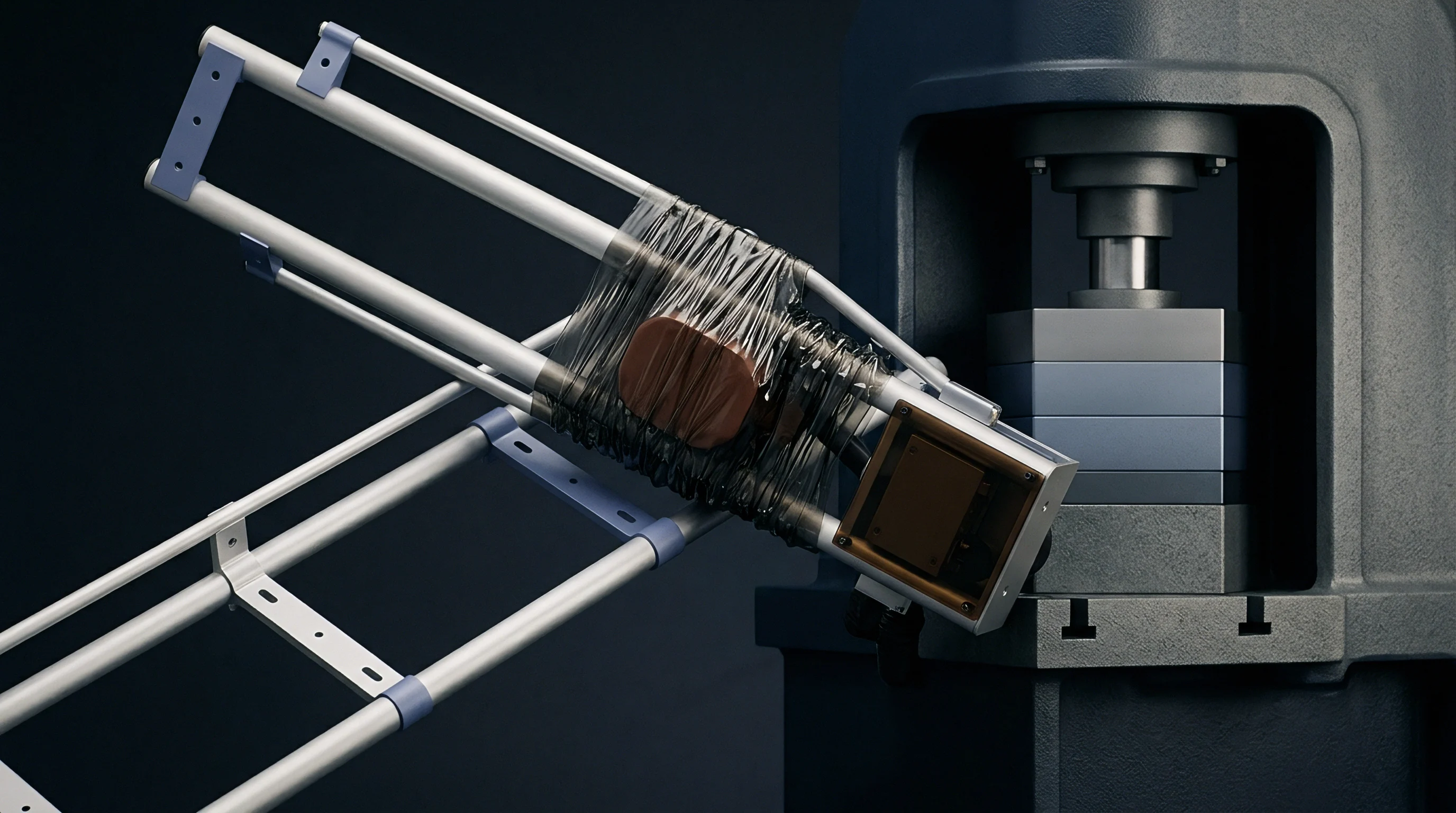
Material qualification requires standardized bench testing to measure stress cracking resistance before launching mass manufacturing. Testing lab technicians evaluate specimen performance using constant strain fixture immersion and creep rupture acceleration. Relying solely on dry tensile test data leads to catastrophic field errors, as dry tensile values ignore chemical degradation interactions.
Standardized Test Methods and Acceleration Protocols
The ISO 22088 standard framework governs environmental stress cracking evaluations across four distinct test configurations. Method three utilizes a parabolic stainless steel strain rig that subjects bent test strips to a continuous gradient of strain from zero point one percent to two point five percent. Submerging the loaded fixture into active store sanitation chemicals for twenty-four hours establishes the precise critical strain threshold where micro-fissures appear under optical magnification.
Constant stress creep testing provides long-term failure time predictions under static loads. Test bars held under fixed tensile weights inside chemical fluid baths register time-to-failure curves across varied stress levels. Accelerating tests by elevating fluid temperatures to forty-five degrees Celsius allows engineers to extrapolate ten-year operational lifetimes using Arrhenius shift factors, revealing structural limits that short-term dip tests fail to detect.
- Parabolic Strain Fixture Method ~ Measures exact critical strain thresholds across a continuous gradient during chemical immersion.
- Constant Tensile Creep Rupture ~ Tracks failure time under static loading to extrapolate multi-year enclosure service life.
- Bending Strip Exposure Procedure ~ Evaluates flexural surface crazing under localized solvent application over fixed time intervals.
- Complete Assembly Immersion Audit ~ Tests fully assembled tag enclosures under real installation clip loads in target cleaning fluids.
Verification data from single-pellet lot samples frequently fails to predict full production batch variation. Resin suppliers change internal lubricant packages and mold release additives between manufacturing runs without altering base product numbers. These trace additives migrate to enclosure surfaces during molding, shifting critical strain thresholds by up to thirty percent between sequential production lots.
Section 4.2 of the master supply agreement specifies that any resin batch exhibiting a critical strain threshold below zero point five zero percent under ISO 22088-3 testing triggers immediate lot rejection at the supplier’s expense.

Clip
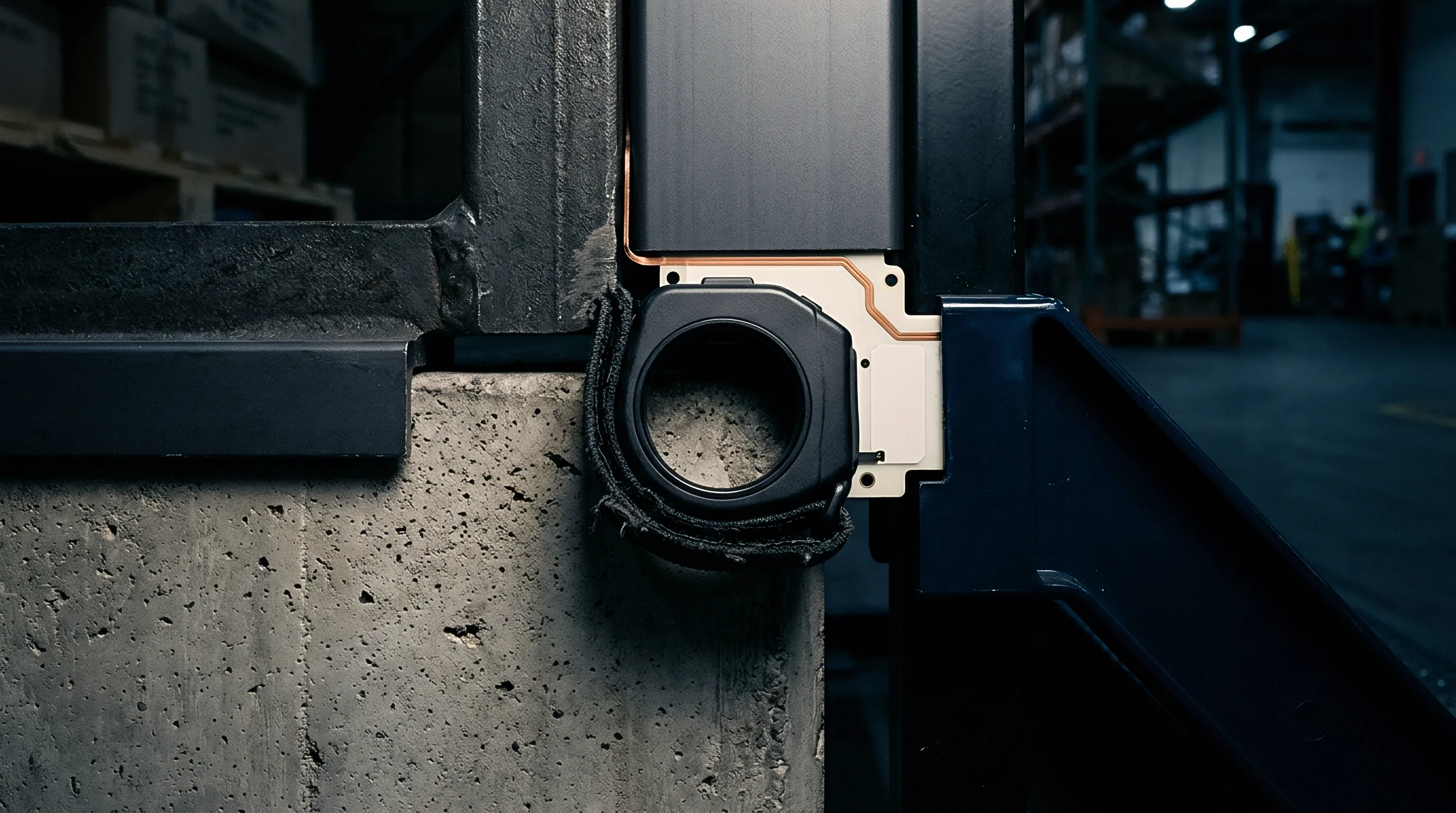
Structural housing geometries dictate internal stress concentration factors throughout the plastic part. Sharp interior corners, thin wall transitions, and tight latch undercuts act as mechanical stress multipliers. Under external loading, these geometric features elevate localized stress beyond the critical threshold of the selected resin grade.
Geometric Stress Reduction Techniques
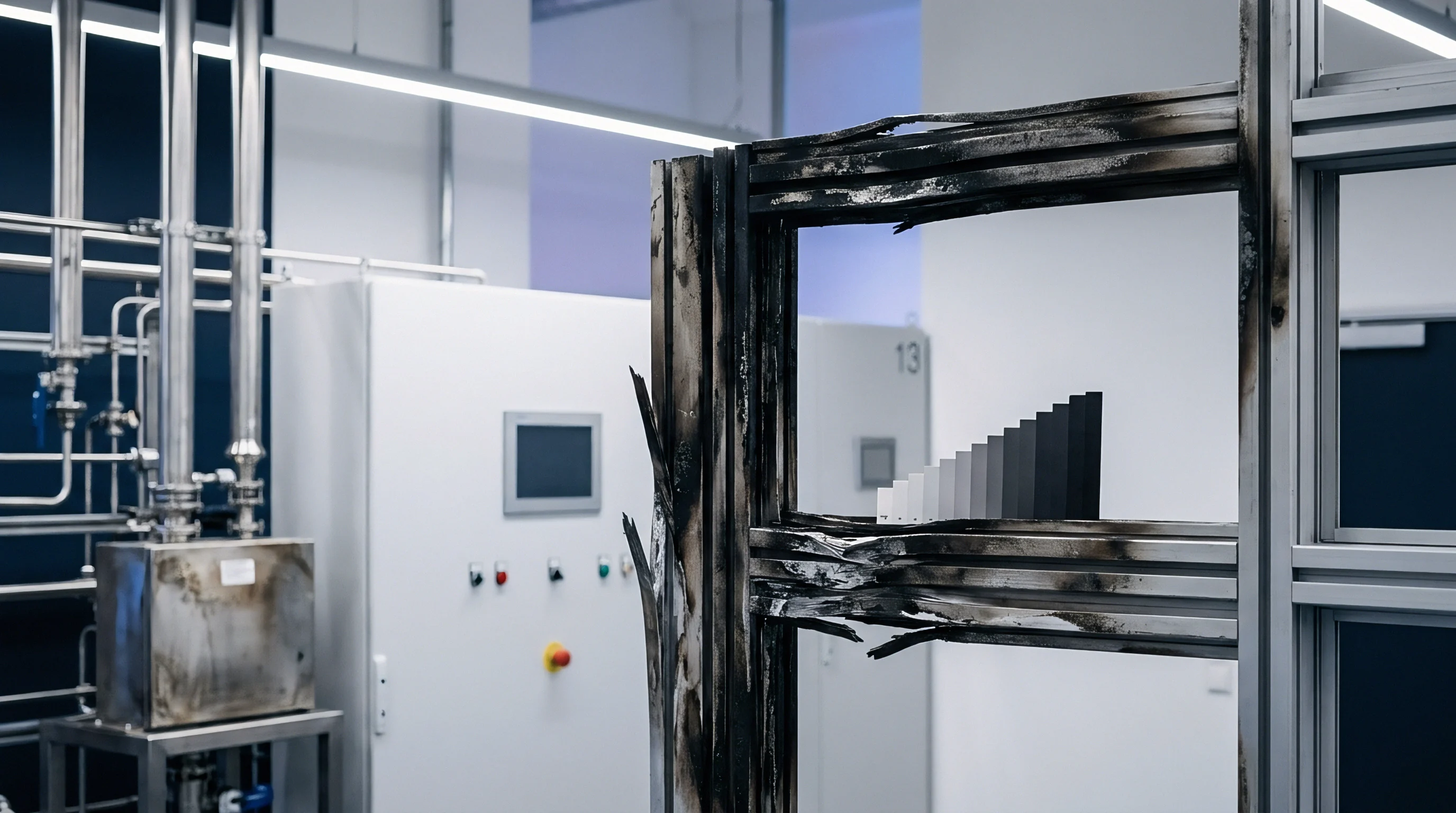
Internal fillet radii govern localized stress levels at structural junctions. A corner radius smaller than zero point five times the nominal wall thickness creates a stress concentration factor exceeding two point five. Increasing the internal fillet radius to zero point eight times nominal wall thickness distributes mechanical loads across a larger volume, reducing stress peaks below ten megapascals under standard rail attachment forces.
Wall thickness uniformity prevents differential thermal shrinkage during mold cooling. Transitions between thick structural ribs and thin cover walls cause localized sink marks and high internal tensile stresses. Incorporating core-out pockets inside thick mounting bosses maintains uniform wall sections, eliminating differential cooling stress along critical seal boundaries.
Consider a 2.7-inch electronic shelf label housing deployed across a 50,000-unit retail supermarket installation. The base housing uses standard polycarbonate resin costing $0.45 per unit, featuring an internal clip radius of 0.3 mm that yields a stress concentration factor of 2.8. Under a 12 N clip insertion force, localized peak strain reaches 0.48%, exceeding the 0.35% threshold of isopropyl alcohol sanitizer.
Field failure data models indicate a 14% housing cracking rate over 36 months, requiring 7,000 tag replacements.
Replacing broken units costs $12.50 per tag in hardware and technician labor, creating a total warranty exposure of $87,500. Redesigning the mold insert to increase the internal fillet radius to 0.8 mm costs $6,500 in tooling modifications and reduces peak localized strain to 0.21%. Alternatively, switching resin to a PC/PBT blend adds $0.22 per unit in material cost ($11,000 across the production run) while elevating the critical strain limit to 1.12%.
Tooling geometry modification yields a net savings of $81,000 compared to ignoring stress cracking limits during early development phases.
Snap-latch retention arms require careful beam length proportioning to keep flexural strain within safe limits. Short, rigid latch fingers generate high surface strain during insertion over rail edges. Extending the flexible beam length by thirty percent lowers peak insertion strain below zero point two5 percent while retaining sufficient retention force to prevent tag displacement during store restocking operations.
Neglecting stress concentration math during tool design forces costly field replacement campaigns that destroy product margins.
Exposure
Commercial deployment contracts for electronic shelf labels must explicitly map environmental exposure liabilities between hardware vendors, system integrators, and retail store operators. Standard hardware warranties cover manufacturing defects in materials and workmanship but routinely exclude damage caused by unapproved cleaning agents or improper chemical concentration levels. Defining clear operational boundaries prevents multi-million dollar dispute cycles when environmental stress cracking appears post-installation.

Commercial Risk Allocation and Margin Protection
Retail facility management teams frequently outsource shelf sanitation to third-party cleaning contractors using industrial-grade chemical concentrates. These contractors often exceed recommended diluent ratios to speed up cleaning cycles, exposing display housings to surfactant concentrations four times higher than design specifications. Hardware suppliers protect net realized unit margins by incorporating strict chemical compliance protocols into deployment contracts.
Gross-to-net margin calculations must account for potential field failure return reserves based on store department operating environments. Tags installed in fresh meat, seafood, and deli departments face exposure to lipid fats and high-frequency sanitation routines, driving higher failure rates than tags mounted in dry grocery aisles. Allocating a three percent warranty reserve margin on wet-department deployments covers potential replacement costs without eroding core hardware profitability.
| Commercial Parameters | Standard PC Resin | Modified Tooling PC | PC/PBT Blend Resin |
|---|---|---|---|
| List Price per Tag Enclosure (USD) | 1.25 | 1.25 | 1.25 |
| Base Housing BOM Cost (USD) | 0.45 | 0.47 | 0.67 |
| Tooling Amortization (USD/unit) | 0.08 | 0.11 | 0.08 |
| Field Failure Reserve (USD/unit) | 0.38 | 0.06 | 0.02 |
| Net Realized Margin per Unit (USD) | 0.34 | 0.61 | 0.48 |
System integrators negotiating multi-year service agreements specify approved chemical lists directly within hardware maintenance addendums. Requiring store operations to use certified cleaning solutions maintains warranty coverage while shifting replacement costs to end users when non-compliant sanitizers cause structural damage. Master supply agreements mandate annual field audits of store sanitation practices to verify chemical compliance across all deployed retail sites.
Documented cleaning records and fluid sample retention logs serve as primary defense evidence during warranty arbitration hearings. When field failure rates spike unexpectedly, testing third-party fluid samples against contract baseline standards establishes whether environmental stress cracking resulted from resin defects or non-compliant store operations. Maintaining detailed chemical trace documentation safeguards supplier capital across multi-year retail rollout programs.