Measuring Electrical Insulation Fracture in Low Temperature Rail Logistics
Cryogenic acoustic emission logging and post-transit partial discharge screening verify sub-zero rail insulation microcracks before revenue service failures.

Frost
Logistics corridors through Northern Europe, interior North America, and Central Asia routinely expose rail freight to sustained ambient temperatures between minus twenty and minus fifty degrees Celsius. Hauling traction converters, transformer bushings, high-voltage bus ducts, and substation switchgear across these regions subjects solid polymeric insulators to severe thermal contraction. Filled epoxy resins have a coefficient of thermal expansion ranging from thirty to sixty parts per million per Kelvin, compared to sixteen to twenty-three parts per million per Kelvin for copper and aluminum conductors.
This expansion mismatch creates high differential shear stress at internal copper-resin interfaces during long rail transit.
Polymer flexibility depends directly on glass transition temperature. Below this threshold, rigid aromatic epoxies, polyurethane potting compounds, and silicone rubber housings lose ductile compliance, shifting into a brittle state where impact resistance drops by sixty to eighty percent. Switching yards compound this vulnerability through rail shunts, imposing longitudinal coupling impacts exceeding four gravities for eighty to one hundred and twenty milliseconds that transfer directly through the flatcar bed to unsecured traction hardware.
Standard ISO 16750-4 environmental qualification sets the lower climatic boundary at minus forty degrees Celsius, where brittle fractures in filled epoxy matrices initiate under dynamic freight acceleration.
Deceleration during coupling combines with low-temperature embrittlement to drive microcrack nucleation along mineral filler boundaries, quartz particulate clusters, and conductor sleeve edges. Freight forwarders often classify these crated electrical sub-assemblies as passive non-hazardous cargo, skipping continuous environmental telemetry or vibration isolation dampers. Upon arrival at a locomotive assembly yard, receiving bays rapidly warm the equipment in heated warehouses, drawing localized moisture condensation across crazed polymer surfaces before factory dielectric checks begin.
Once an insulation matrix fractures internally, its dielectric integrity and mechanical cohesion degrade, even though basic low-voltage continuity may still register as normal during quick multimeter audits on the receiving dock. Micro-fractures measuring between two and fifty micrometers across remain invisible to visual inspection, concealed beneath opaque polyurethane overmolding or weather sheds. Without continuous monitoring during sub-zero rail transit, cracked insulation modules pass unnoticed into active locomotive assembly lines, where latent voids eventually trigger catastrophic flashovers under peak traction loads in revenue service.

Void
Dielectric integrity requires complete exclusion of air gaps between line conductors and ground planes. When solid insulation systems fracture under sub-zero transit, internal voids lower the localized dielectric breakdown threshold to that of the trapped gas inside the crack. At sea level, dry air breaks down at roughly three kilovolts per millimeter, whereas intact cycloaliphatic epoxies withstand twenty to thirty kilovolts per millimeter.
A single mechanical fissure drops localized dielectric strength by an order of magnitude.
Which Detection Regimes Expose Subsurface Microcracking?
Partial discharge detection under IEC 60270 establishes whether internal gas-filled voids exist within an insulating body before catastrophic insulation punch-through occurs. When an alternating voltage stresses the component, electric flux concentrates within low-permittivity fracture cavities, initiating localized micro-sparks across void surfaces at phase angles corresponding to voltage peaks. Standard line-frequency high-potential withstand tests apply an overvoltage for sixty seconds, yet this pass-or-fail methodology fails to measure low-level partial discharge activity beneath fifty picocoulombs, leaving progressive crack propagation undetected.
| Insulation Material | Tensile Modulus at 23°C (GPa) | Tensile Modulus at -40°C (GPa) | Impact Strength at 23°C (kJ/m²) | Impact Strength at -40°C (kJ/m²) | Partial Discharge Inception (kV/mm) |
|---|---|---|---|---|---|
| Silica-Filled Bisphenol-A Epoxy | 7.8 | 12.4 | 11.2 | 3.6 | 4.2 |
| Cycloaliphatic Outdoor Epoxy | 9.1 | 14.8 | 9.5 | 2.8 | 3.8 |
| Polyurethane Potting Resin | 1.2 | 4.6 | 28.0 | 6.4 | 5.1 |
| High-Temperature Vulcanized Silicone | 0.02 | 0.18 | 35.0 | 14.2 | 6.5 |
Voltage endurance drops exponentially. When microcracks harbor sustained electrical discharges above five picocoulombs, high-energy electron bombardment erodes the organic resin backbone, forming carbonized conductive tracks called dendrites across the void walls. This degradation mechanism transforms clean cleavage planes into permanent conductive paths over hundreds of operating hours.
In cold logistics environments, repeated thermal cycling from minus forty degrees Celsius during transit to positive twenty-five degrees Celsius in test facilities accelerates void expansion through moisture aspiration, drawing humid air into open surface crazes via ambient pressure differentials.
Factory partial discharge test certificates signed at room temperature confirm baseline quality at manufacture, but unheated intermodal container transit imposes distinct mechanical and thermal stresses that develop after leaving the plant.
Sensor
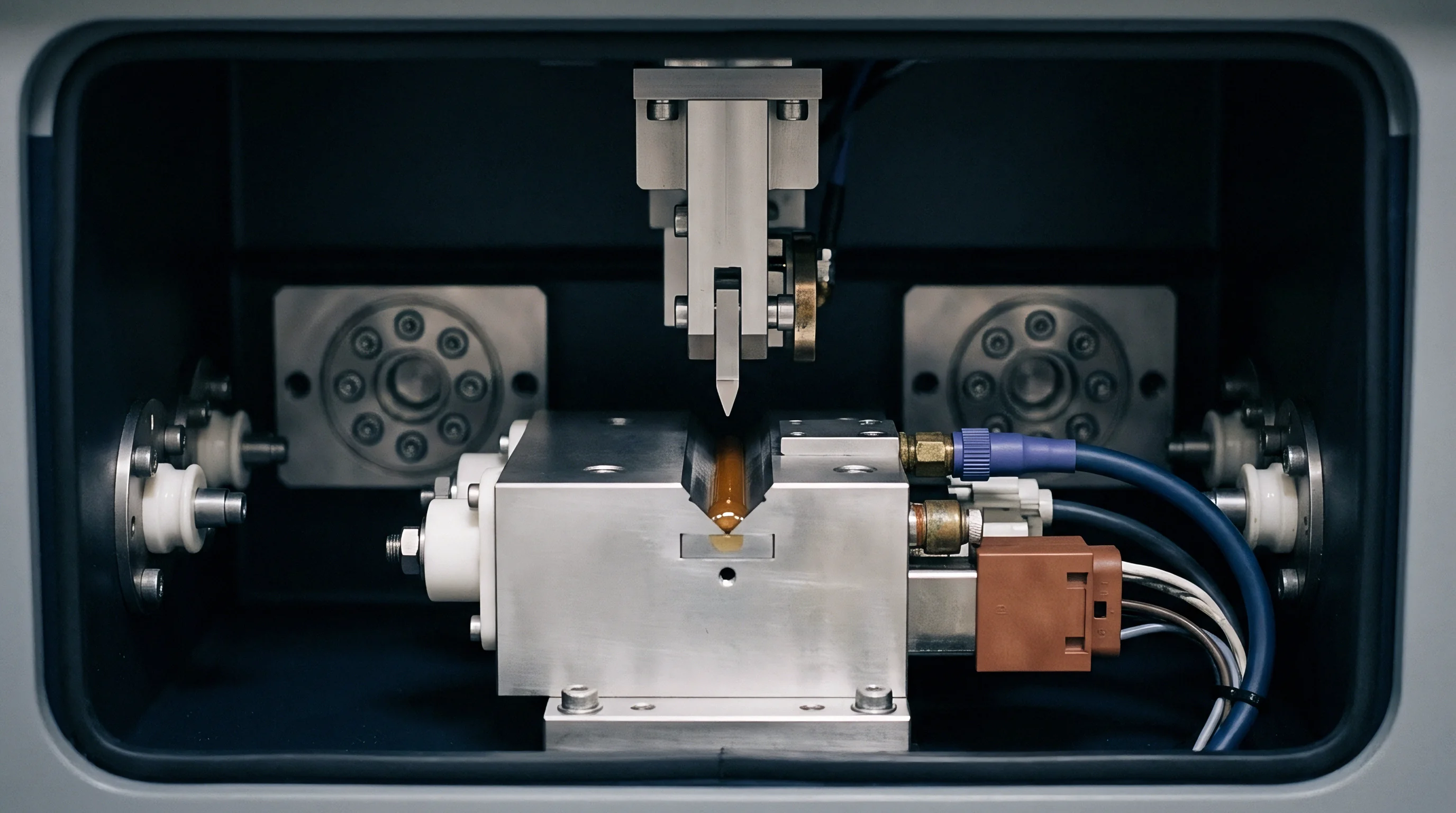
Acoustic emission monitoring provides real-time detection of crack initiation events by capturing transient elastic stress waves released when brittle polymer bonds break. Piezoelectric sensors clamped directly to metal base plates or embedded mounting lugs detect the high-frequency surface waves generated during micro-fracturing events. These acoustic bursts operate in the frequency window between one hundred kilohertz and one megahertz, cleanly isolating mechanical crack growth from low-frequency rail bogie rumble and locomotive vibration profiles governed by EN 61373 standards.
Calibrating piezoelectric sensor placement to record acoustic bursts requires careful impedance matching using silicone grease or high-modulus adhesive tapes rated for sub-zero exposure. Wave attenuation across filled polymer compounds is severe, decaying at fifteen to thirty decibels per meter at three hundred kilohertz. Sensor spacing along long busbars or large transformer housings must remain under seven hundred millimeters to avoid missing low-amplitude crack initiation signals.
IEC 60270 requires partial discharge test circuits to achieve background noise levels below two picocoulombs during factory acceptance testing of rolling stock traction converters.
Broadband dielectric spectroscopy tracks chemical and physical structure alterations across frequencies from ten microhertz to ten megahertz. By measuring complex permittivity and dielectric loss factor, instrumentation identifies polymer chain immobility, moisture accumulation, and micro-void percolation before physical gaps cause audible electrical discharges. Transit validation campaigns install autonomous battery-powered dielectric loggers that apply swept low-voltage frequencies across critical bus duct assemblies every three hours of transport time.
- Acoustic emission dataloggers capture micro-fracture energy bursts above eighty decibels during track humping events.
- High-bandwidth partial discharge detectors identify phase-resolved discharge patterns down to one picocoulomb upon test-bay arrival.
- Broadband dielectric spectrometers map changes in loss factor dissipation peaks to quantify moisture ingress along internal fracture planes.
- Tri-axial shock and vibration accelerometers record mechanical shock spikes across all spatial axes throughout intermodal rail transit legs.
Flaw detection improves when acoustic sensor logs synchronize with multi-axis acceleration telemetry. When an acoustic hit coincides with an acceleration spike exceeding three gravities on an unheated rail car, inspectors can directly link track impacts to fracture formation. Because latent flaws routinely escape baseline capacitance tests, acoustic energy metrics sum counts and peak amplitudes into a cumulative damage index, revealing internal microstructural failure even when external insulator geometries appear unblemished.
Brittle crack growth generates acoustic signals long before electrical shorting occurs.

Screening
Incoming inspection protocols for rail electrical components arriving from long-distance winter freight must combine mechanical stress simulation with dielectric verification. Relying purely on room-temperature continuity tests invites field failures. Thermal preconditioning in an environmental test chamber drops component temperatures to minus forty degrees Celsius for twelve hours, stabilizing internal material gradients before applying combined vibrational sweeps designed under EN 61373 Category 1 Class B specifications.

Does Dynamic Mechanical Analysis Correlate with Shock Fracture?
Dynamic mechanical analysis records changes in the storage modulus and loss modulus of insulating polymers across broad temperature intervals. When the loss modulus exhibits a pronounced peak, the polymer undergoes its glass transition, demarcating the exact temperature where energy dissipation collapses and brittle fracture susceptibility escalates. Correlating dynamic mechanical analysis spectra with rail route temperature profiles enables procurement teams to predict whether insulation lots will survive specific winter transit routes through continental rail hubs.
Because sub-zero logistics frequently crack brittle potting resins, inspection programs enforce a sequential validation pipeline to separate packaging failure from inherent component fragility:
- Cryogenic preconditioning holds the crated component at minus forty degrees Celsius for sixteen consecutive hours inside an environmental screening chamber.
- Multi-axis random vibration screening exposes the chilled unit to simulated rail freight spectra spanning five to one hundred and fifty hertz for sixty minutes per axis.
- Phase-resolved partial discharge screening energizes the component up to one point five times nominal working voltage while verifying discharge levels remain below ten picocoulombs.
- Frequency-domain spectroscopy auditing measures dissipation loss angles across the ten millihertz to one kilohertz span to confirm the absence of moisture channels.
| Test Method | Target Defect | Sensitivity Limit | Standard Reference | Cost per Unit Audited (USD) |
|---|---|---|---|---|
| Phase-Resolved Partial Discharge | Internal air voids and delamination | 1.0 picocoulomb | IEC 60270 | 350 to 600 |
| Acoustic Emission In-Situ Log | Dynamic crack propagation events | 10 micrometer crack length | ASTM E1316 | 120 to 250 |
| Broadband Dielectric Spectroscopy | Moisture ingress and polarization loss | 10⁻⁴ dissipation factor | ASTM D150 | 400 to 750 |
| Very Low Frequency Hi-Pot Withstand | Direct dielectric punch-through | 10 microamperes leakage | IEEE 433 | 150 to 300 |
Because cold dry air accelerates charge accumulation, surface tracking across icy or frost-covered outer skirts generates destructive carbon pathways at operating voltages well below nominal ratings. When insulation passes cold screening protocols without discharge inception below operating voltages, engineering sign-offs certify the assemblies for deployment into rolling stock undercarriages.
Master purchasing contracts incorporating EN 50124-1 insulation coordination standards reallocate repair liabilities to component vendors whenever partial discharge levels exceed ten picocoulombs following documented sub-zero transport.
Section 8.2 of the international rail equipment procurement agreement dictates that any component failing dielectric withstand verification following compliant freight handling triggers lot rejection across the entire delivery manifest.

Ledger
Procurement teams evaluating the real cost of winter logistics exposure balance upfront sensor-based transit logging against potential warranty outlays. Field repairs quickly multiply landed costs: replacing a cracked traction motor stator bushing or damaged roofline pantograph insulator on an active locomotive costs between eighteen thousand and forty-five thousand dollars in unscheduled depot labor, track downtime, and penalty fees per incident day. Screening five percent of arriving lots through cryogenic partial discharge chambers introduces a predictable line-item cost that protects rail operators from multi-million-dollar fleet groundings.
Consider a shipment of one hundred and twenty high-voltage traction converter potting assemblies dispatched via rail freight across northern trade lanes in mid-winter. Procurement officers evaluate two validation strategies:
| Commercial Expense Element | Unmonitored Transit with Dock Visual Audit | Sensor-Monitored Transit with Cryogenic Lot Screening |
|---|---|---|
| In-Transit Telemetry and Shock Logging | $0 | $4,800 ($40 per unit logging) |
| Secondary Environmental Chamber Screening | $0 | $7,200 (12 units sampled at $600) |
| Field Failure Rate in First Year Revenue Service | 6.5% (8 catastrophic flashover failures) | 0.0% (Defective lot rejected at receiving) |
| Depot Teardown and Locomotive Downtime Costs | $224,000 ($28,000 average per failure) | $0 |
| Component Replacement and Expedited Freight | $36,000 ($4,500 per module) | $0 (Supplier replaces defective batch under warranty) |
| Net Quality Assurance Program Expenditure | $260,000 | $12,000 |
Screening outlays offer clear financial payback by identifying damage before installation. Because transit vibration widens existing fissures, testing a statistical sample of ten percent of crated modules with phase-resolved partial discharge screening gives ninety-five percent confidence of detecting batch-level curing defects or transit damage prior to assembly. By contrast, unscreened lots risk field short circuits: when an unmonitored batch enters service, internal microcracks propagate under electrical traction stress and eventually cause catastrophic dielectric breakdown during revenue operations.
What remains unresolved across international rail corridors is whether standardized continuous acoustic emission telemetry can be integrated affordably into commodity flatcar telematics before cold-climate logistics contracts are signed.